

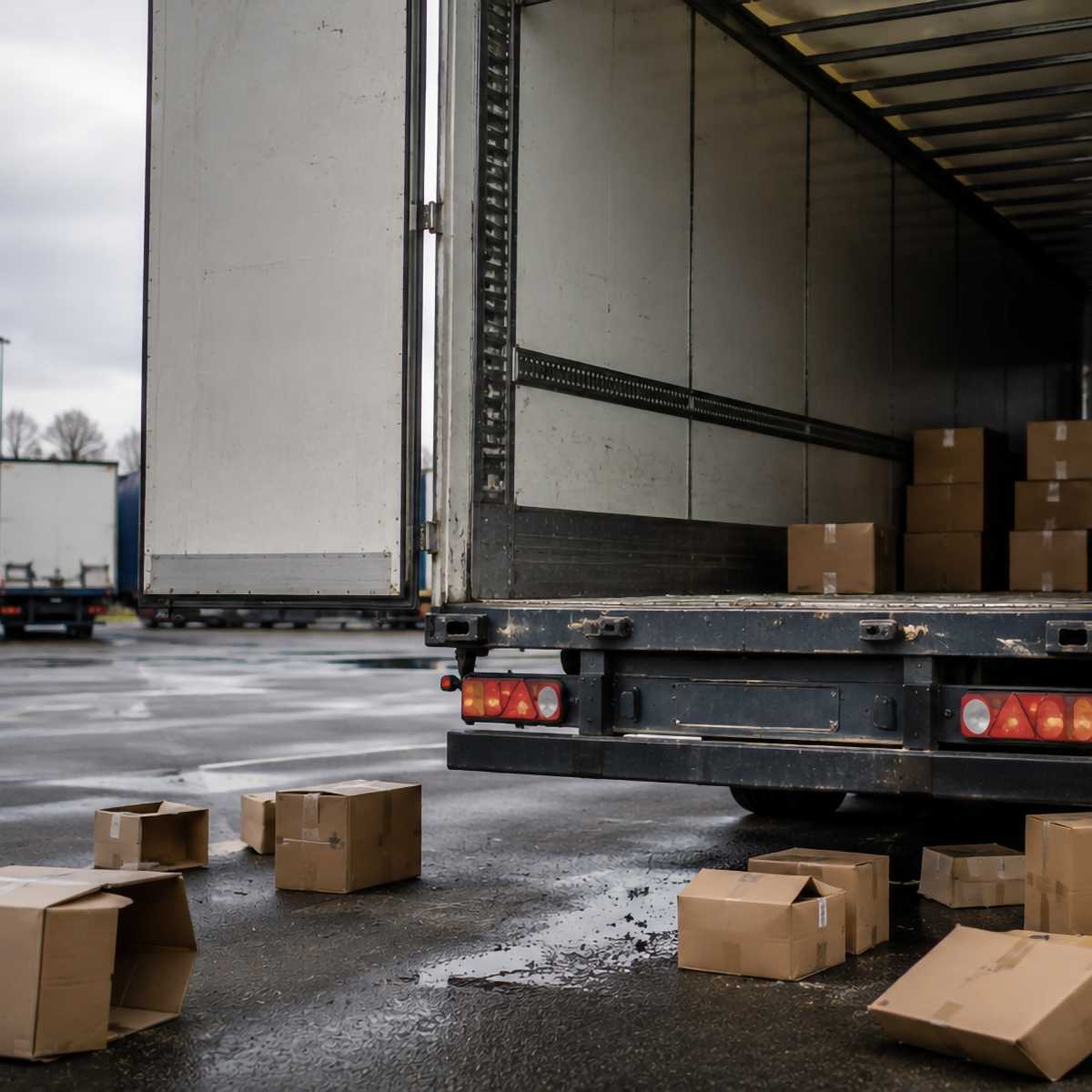
If you are driving I-75, I-285, or I-20 through Atlanta, Georgia, you do not expect a piece of freight to leave a trailer and hit the roadway.
When that happens, the opening question is not simply who was speeding. It is whether the load was secured in the first place.
Under 49 C.F.R. 393.100, when a commercial motor vehicle is used on a public road, it must be loaded, fitted out, and have its freight secured so the load does not leak, spill, blow off, or fall from the vehicle.
The same section also targets a quieter failure. Cargo has to be contained, immobilized, or secured so a shift inside the vehicle does not harm the vehicle’s stability or its ability to be handled.
A load that stays on the trailer, but slides enough to make the truck unmanageable, is still within the rule. The eCFR display of title 49 was current as of November 6, 2026.
Jump to:
Which Vehicles Are Covered?
Section 393.100(a) applies the cargo-securement subpart to trucks and truck tractors. It also reaches a semitrailer, a full trailer, or a pole trailer.
That list reaches the tractor-trailers that use Atlanta’s truck corridors, and it also reaches many smaller commercial trucks.
A company vehicle that fits the list is not excused because the trip was short, or because the load was "only going to the next exit."
If you were hurt on an Atlanta interstate by falling or shifting freight, you often take that securement file to a trusted Atlanta truck accident lawyer.
The Duty Is A Prevention Rule
The duty in section 393.100 is written as a prevention rule. The carrier has to load, equip, and secure the cargo in line with that subpart.
After your wreck, the questions are practical: what was on the trailer, how was it blocked or tied, and did any part of it leave the vehicle or shift before impact?
What A Fallen-Load Investigation Looks Like
Your photographs of straps, chains, blockers, and the remaining freight often matter as much as skid marks.
Bills of lading, scale tickets, and dispatch messages help show what was supposed to be on the trailer and who loaded it.
A hole in that file is itself a fact, especially if the carrier cannot produce a securement inspection from the start of the run.
Those records do not, by themselves, decide who pays you. They test whether the company met the federal securement standard in your section 393.100 file.
A later settlement offer in your case that talks only about speed, and never about the load, is incomplete. Section 393.100(b) is about keeping the freight on the vehicle; subsection (c) is about keeping it from moving enough to make the truck unstable.
Shifting Cargo, Not Just Fallen Cargo
Section 393.100(c) is easy to miss if the freight is still on the trailer when police arrive.
A poorly blocked load can move far enough to change how the truck steers, brakes, or stays upright.
The rule measures that movement by its effect on stability and maneuverability, not by whether a box actually landed in a travel lane.
If you are driving a family vehicle in the next lane, that distinction is cold comfort. The physics of a shifting load can still send a tractor into your path.
Ask for photographs of the interior of the trailer, not only of the pavement.
A load that is still on the trailer can still explain why the truck left its lane on I-285 or I-20. Ask whether the carrier kept a securement inspection from the beginning of the trip, and request that document with the bills of lading.
Road Trips, And A Next Step
Family road trips: keeping everyone safe on the go is a planning problem, and it does not disappear because a commercial truck failed to secure a load.
After a crash on I-75 or I-285, get the truck number, the trailer number, and the name on the door.
Ask law enforcement to note any freight in the roadway, or any obvious securement failure, in your report.



Request, early, the bills of lading, the shipping records, and any inspection or securement documents the carrier keeps in your case.
Under section 393.100, the question is whether the cargo was loaded, equipped, and secured so it would not leave the vehicle or shift enough to make the truck unstable. \
Put those documents with your crash report before they are harder to obtain.
Atlanta’s I-75, I-285, and I-20 corridors move a huge volume of freight, and a securement failure on those roads is a recurring fact pattern, not a freak event in your case.





Leave a Reply