

Getting a child to play independently without a screen can feel like a small miracle some days. It's not that kids don't want to play. They often just need a nudge in the right direction, plus a setup that makes independent play easy to start and easy to return to.
The good news is that independent play doesn't require expensive gear or a Pinterest-worthy playroom. Most of these activities use things you already have around the house, and once kids get the hang of them, they'll often ask for more.
Here are ten screen-free activities that hold a child's attention without needing an adult to referee every five minutes.
A quick note before diving in: independent play usually goes smoother when the setup does most of the work upfront.
That means keeping materials within reach, picking activities that match your child's current age and attention span, and accepting that the first few tries might be short.
A four-year-old who plays alone for five minutes today might stretch that to twenty minutes in a few months, once the routine feels familiar.
Jump to:
- Why Independent, Screen-Free Play Matters
- 1. Building a Blanket Fort
- 2. Creating an Indoor Scavenger Hunt
- 3. Setting Up a Pretend-Play Station
- 4. Sorting and Matching Games
- 5. Drawing and Storytelling
- 6. Creating a Magnetic Play Wall
- 7. Building With Open-Ended Toys
- 8. Simple Sensory Activities
- 9. Letting Kids Invent Their Own Games
- 10. Rotating What's Available
- Conclusion
Why Independent, Screen-Free Play Matters
Kids build real skills when they play on their own. They practice problem-solving, patience, and creativity without someone stepping in to fix things for them. A child stacking blocks that keep toppling over is learning persistence.
A child inventing rules for a made-up game is practicing logic and negotiation, even if the only person they're negotiating with is a stuffed animal.
This kind of structured and unstructured play is something early years experts talk about a lot, and for good reason.
The American Academy of Pediatrics has pointed out that play, including the kind children do on their own, supports the social, emotional, and language skills that build a child's ability to focus and self-regulate.
Some researchers also link solo play to divergent thinking, which is a child's ability to come up with creative solutions instead of just one "right" answer, according to child development resource Lovevery.
Screen-free play also gives kids a break from constant stimulation. Screens do a lot of the imagining for a child.
A blanket fort or a pile of blocks does none of it. The child has to supply the story, the structure, and the purpose.
That's where a lot of the developmental benefit comes from, and it's a point Pathways.org makes well when discussing how independent play builds confidence and problem-solving.
None of this means screens are the enemy. It just means that a few reliable, low-effort activities can fill the gaps where a screen might otherwise be the default.
1. Building a Blanket Fort
This one barely needs instructions, which is part of the appeal. A few chairs, some blankets, and maybe a clothespin or two, and a child has a private hideout that can become a spaceship, a library, or a dragon's cave depending on the day.
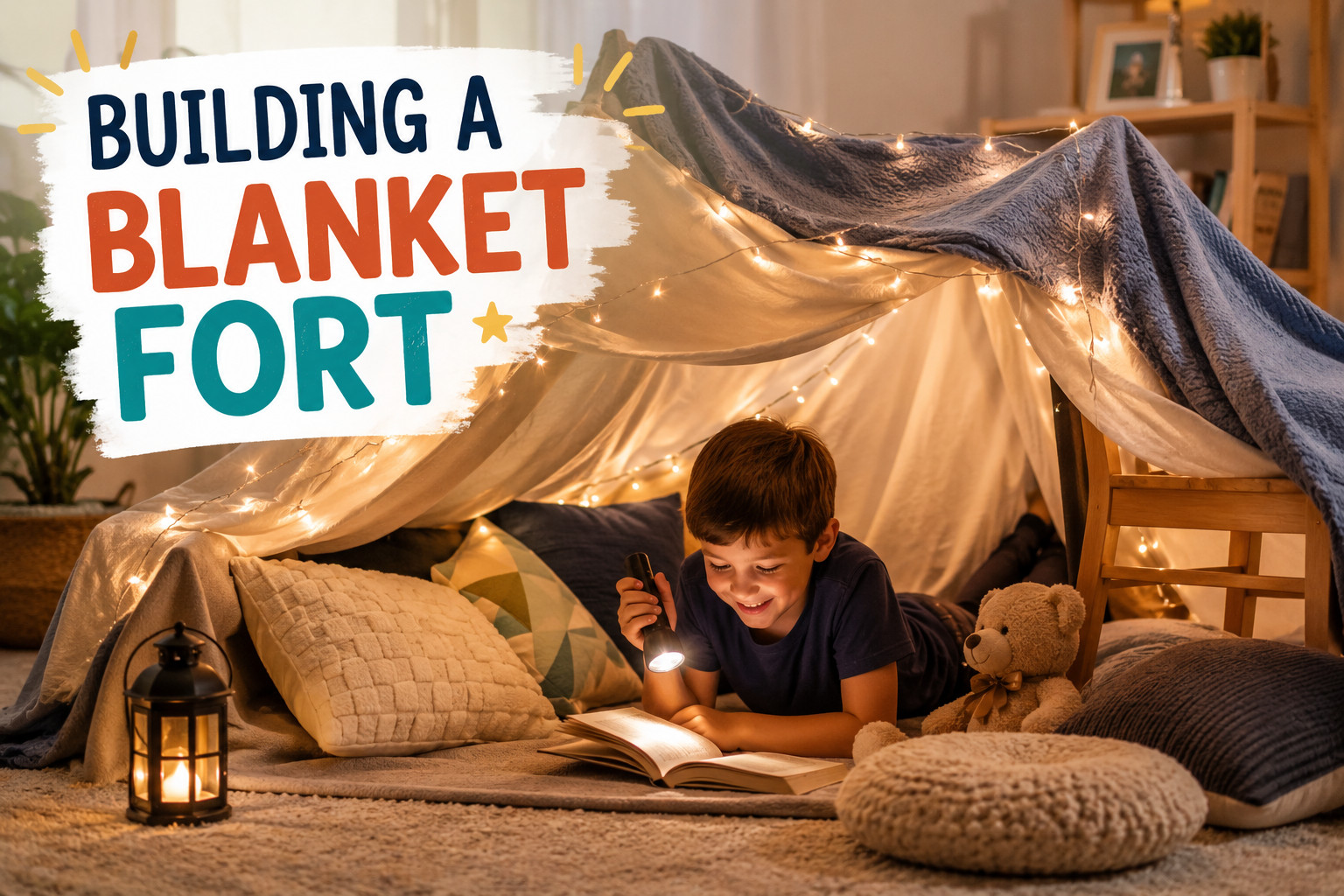
What makes forts good for independent play is that they're never really "finished." Kids rebuild them, rearrange them, and move them to a new spot, which keeps the activity fresh without any new materials.
2. Creating an Indoor Scavenger Hunt
A simple list, five red things, something round, something that makes a sound, turns an ordinary room into a small mission. Younger kids do well with picture clues instead of written ones.
You can write the list once and let your child reuse it, or have them write their own list for a sibling or friend to complete. That second version adds a layer of creativity on top of the hunt itself.
Rotating the theme keeps it interesting. One week it might be colors, the next week it might be shapes or textures like "something soft" or "something bumpy."
Kids often remember their favorite hunts and ask to redo them, which is fine. Repetition is part of how the activity becomes something they can start on their own.
3. Setting Up a Pretend-Play Station
A basket with a few costume pieces, some kitchen tools, or old work badges and clipboards can turn into a restaurant, a doctor's office, or a post office in minutes.
The less structured the props, the more flexible the play becomes. Role play like this is worth encouraging on its own, and there's a good breakdown of why role play matters in the early years if you want to dig into the reasoning further.
Keep the station somewhere accessible, like a low shelf or a labeled bin, so your child can pull it out without needing help. Independent play works best when the setup requires zero adult involvement to start.
4. Sorting and Matching Games
Buttons by color, socks by pattern, coins by size. Sorting games are quiet, low-mess, and genuinely satisfying for a lot of kids.
They also build early math skills like categorization and comparison without feeling like a lesson.
A muffin tin or an egg carton makes a great sorting tray if you don't already own one.
The activity scales easily with age. A toddler might sort by one obvious trait, like color, while an older child can sort by two traits at once, such as color and size, or invent their own categories entirely.
There's no need to buy dedicated sorting toys. Coins, dried pasta, and mismatched buttons work just as well as anything from a toy aisle, and using household objects tends to hold attention longer anyway.
5. Drawing and Storytelling
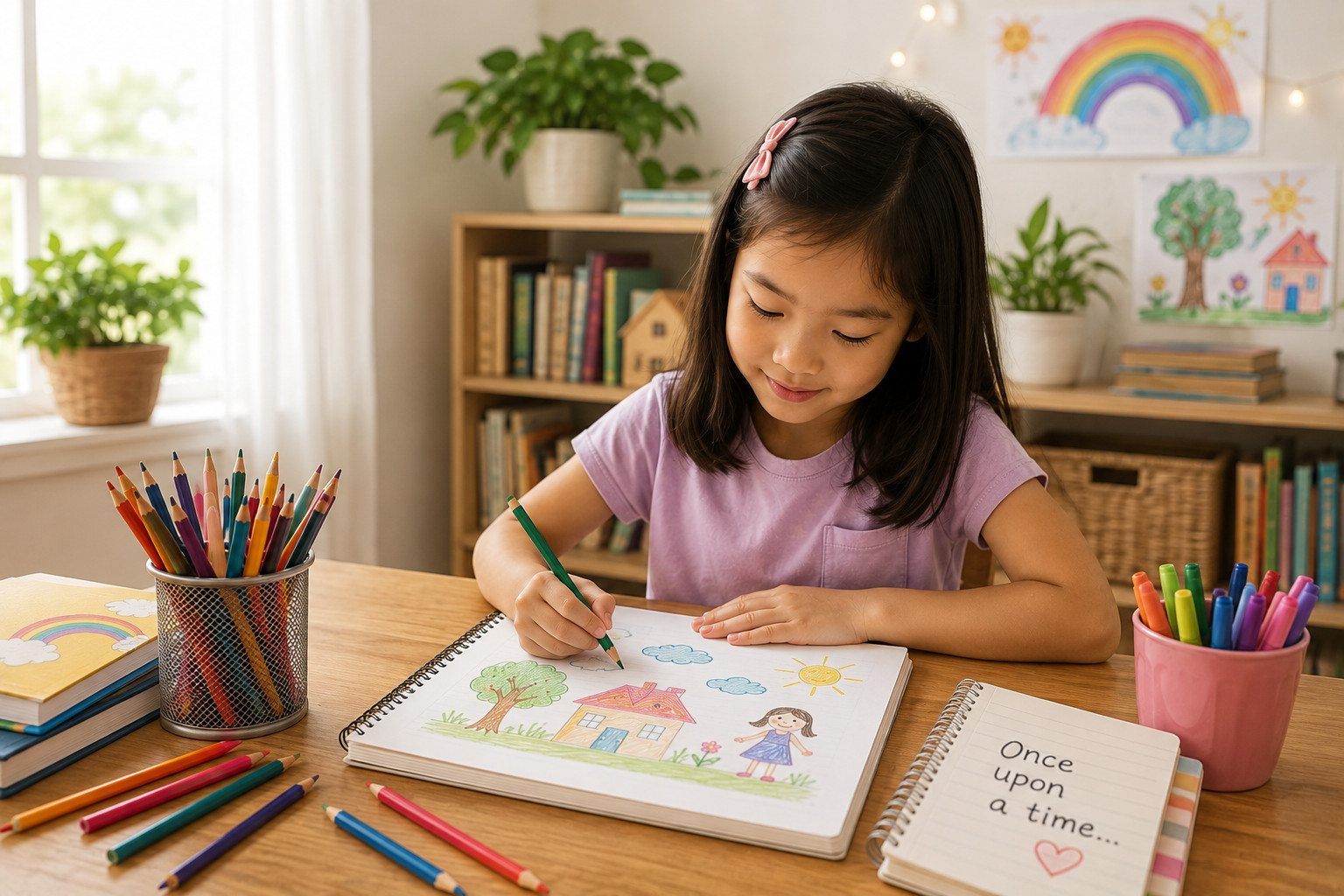
A stack of paper and a few markers can occupy a child far longer than expected, especially if you frame it as storytelling instead of just drawing.
Ask them to draw a comic strip, invent a character, or illustrate what happens "after" a favorite book ends.
Some kids prefer a story they narrate aloud while drawing, even with no one else in the room. That's still independent play. The audience is optional.
A Note on Open-Ended Materials
A theme running through most of these activities is open-endedness. Materials without a fixed "right way" to use them, blankets, boxes, paper, blocks, tend to hold a child's attention longer than toys with one specific function. If you're looking for more ideas along these lines, this list of early years resources that help educate kids covers a few worth having on hand.
6. Creating a Magnetic Play Wall
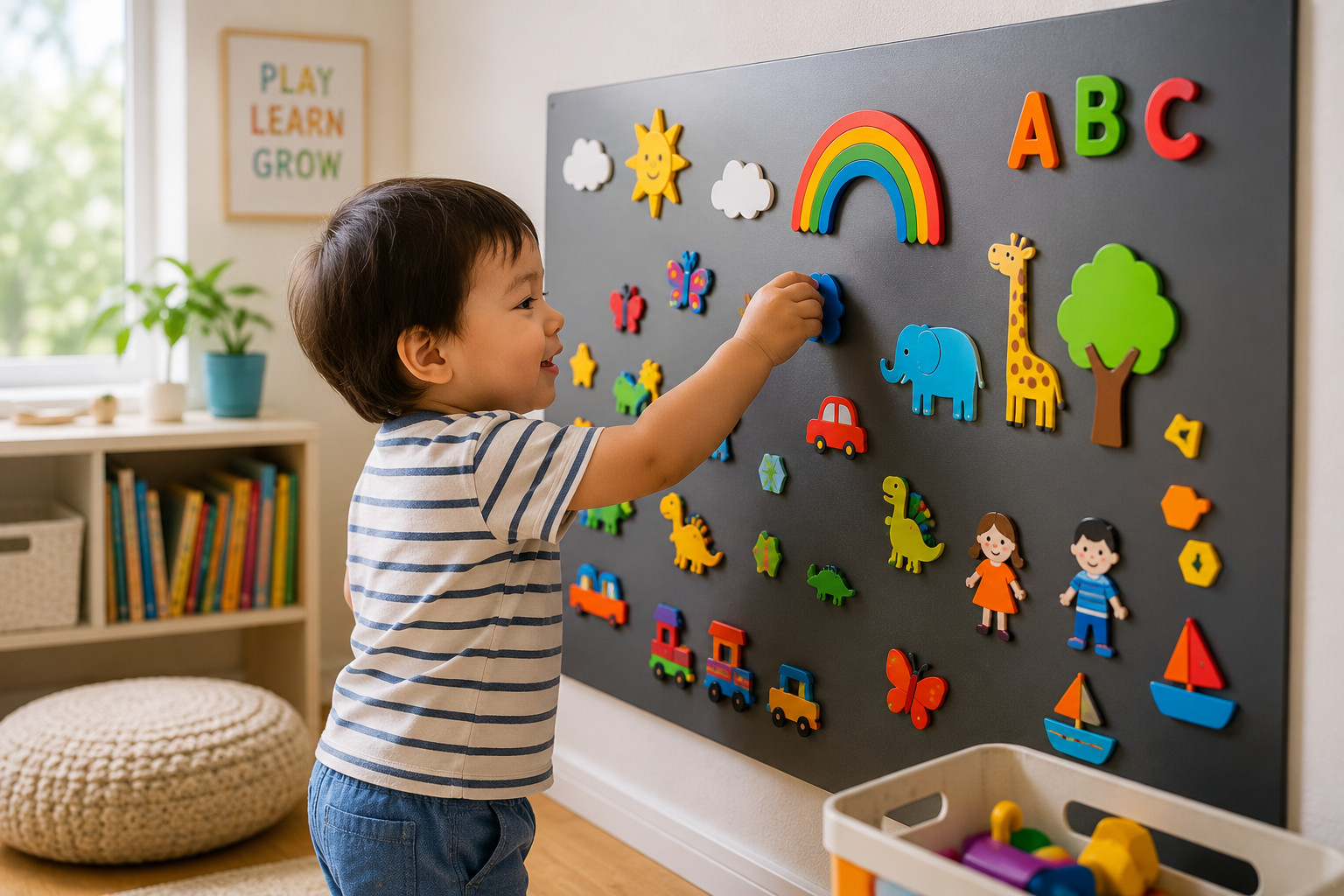
A magnetic wall setup gives kids a vertical surface to build, sort, and rearrange, which is a nice change of pace from floor-based play.
It works well for letters, numbers, shapes, or open-ended magnetic tiles, and it's easy for a child to reset and start something new without needing help.
Setting one up used to mean drilling a metal sheet into the wall, which isn't realistic for renters or anyone hesitant to make holes.
Tix&Mix magnetic wall board takes a different approach with a sticktopress adhesive system, which lets parents create a magnetic play surface without permanently altering the wall.
It's one option worth knowing about if a dedicated play wall sounds appealing, but a full installation doesn't.
7. Building With Open-Ended Toys
Blocks, magnetic tiles, and connector sets all share one thing: anything that can be built one way today and a completely different way tomorrow tends to get more independent play mileage than toys with a single use.
A block set can be a tower one afternoon and a zoo enclosure the next.
If a child seems to lose interest in a building toy quickly, it can help to add a small prompt, like a picture of something to try building, without giving step-by-step instructions.
8. Simple Sensory Activities
A bin of dry rice or beans, a tray of shaving cream, or a bowl of water with cups and spoons can keep younger kids occupied for a surprising amount of time.
Sensory play doesn't need a theme or an educational goal. The texture itself is the draw.
Keep a towel or mat underneath for easier cleanup, and let the mess happen. Sensory bins lose most of their appeal if a child is worried about spilling.
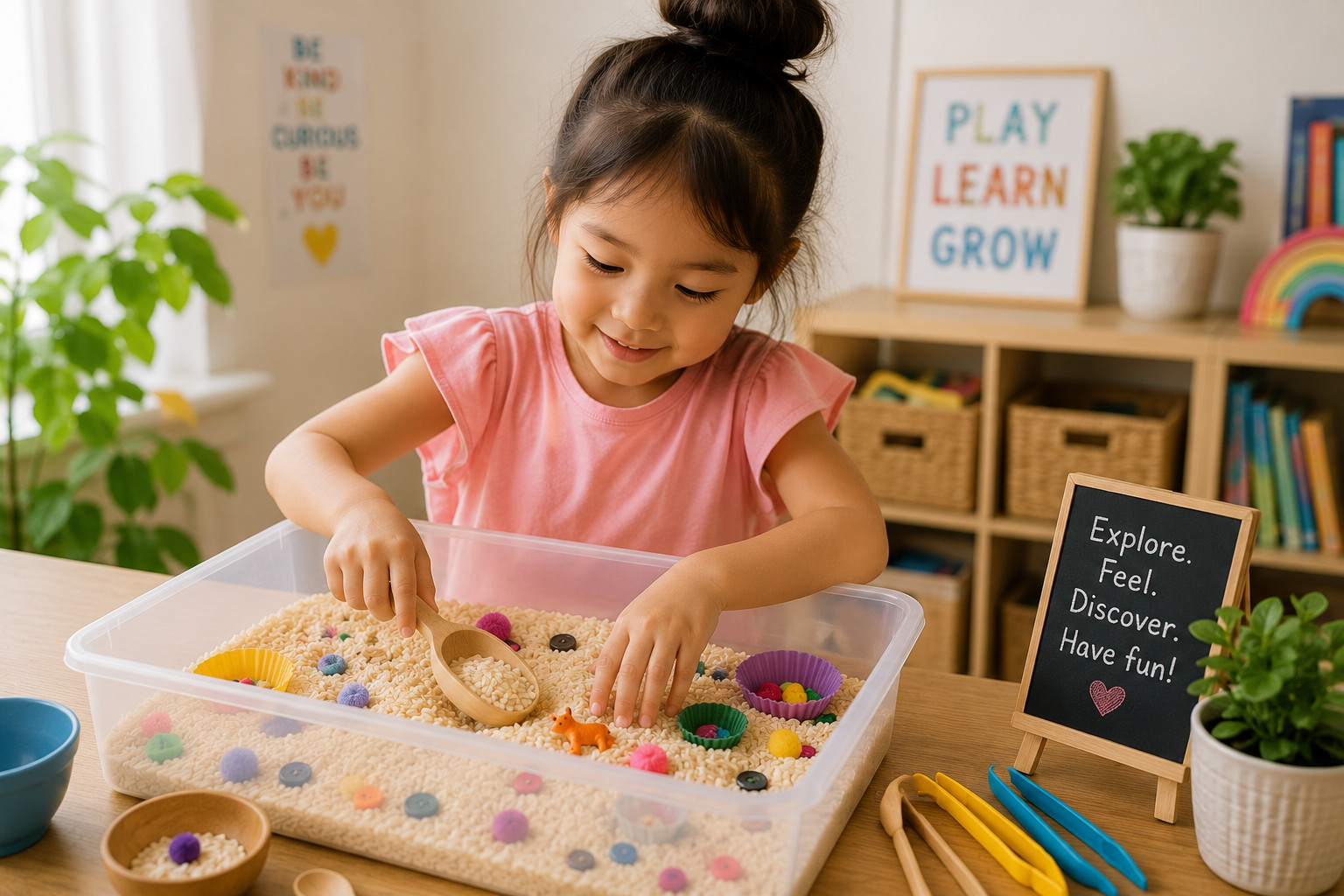
For younger children who still put things in their mouths, stick to edible-safe fillers like cooked pasta or oats instead of small dry goods.
Once that stage passes, the options open up considerably, and a rotating shelf of two or three sensory bins is often enough to cover a whole week of quiet, independent play.
9. Letting Kids Invent Their Own Games
Sometimes the best activity is no activity at all, just space, some loose materials, and permission to make something up.
Kids are often better at inventing games than adults give them credit for, especially once they know there isn't a "wrong" way to play.
For more inspiration on keeping kids engaged this way, it's worth browsing this collection of kids activities and ideas.
If a child says they're bored, resist the urge to solve it immediately. A little unstructured time is often what leads to the most original games.
10. Rotating What's Available
This last one isn't a single activity so much as a strategy that makes all the others work better. Kids lose interest in toys that are always visible and always available.
Rotating a few options in and out of storage, even just every couple of weeks, makes familiar toys feel new again without buying anything.
- Parents Are Prioritising Breathable, Sustainable Fabrics For Children's Seasonal Sleepwear
- Our Homemade Christmas Printables, Made With AI: What Worked, What Didn't, and What I'm Saving for Next Year
- At-Home vs. In-Lounge IV Therapy in the Hudson Valley: Which Makes More Sense?
- Can Passengers Pursue Compensation After a Car Accident?




Conclusion
None of these activities need to happen every day, and none of them require a perfectly organized playroom.
The common thread is materials that are simple, flexible, and easy for a child to start without asking for help.
Start with one or two that fit your space and your child's age, keep the setup low-effort, and expect some trial and error.
Independent play is a skill kids build over time, not something that clicks on the first try. With a few reliable go-to activities, screen-free time gets a lot easier to fill.





Leave a Reply