

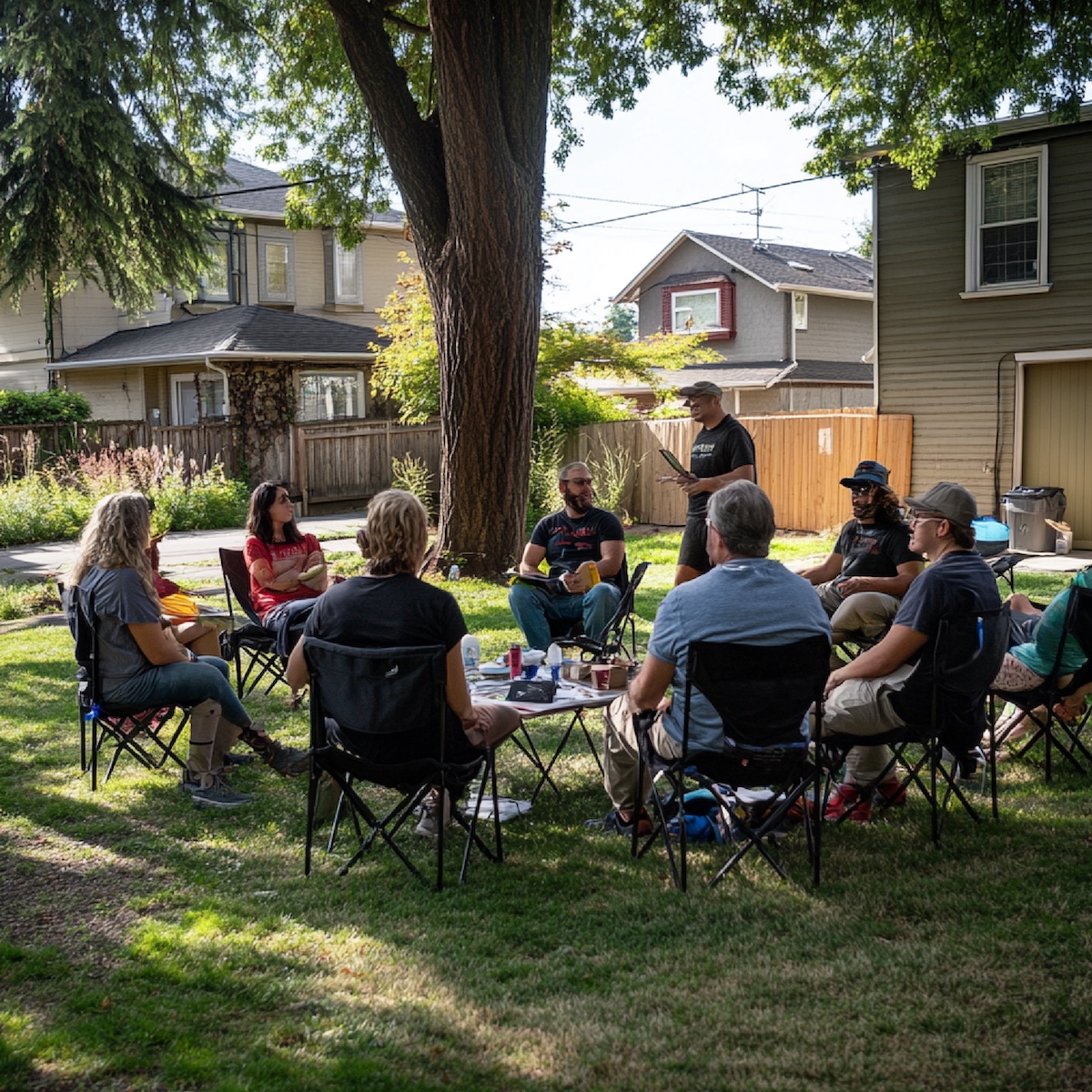
More families are sharing outdoor space than they were a decade ago. Duplexes built around one back lawn, townhomes set on a central green, and apartments with a planted courtyard all put neighbors, kids, and pets on the same ground.
The appeal is real, but a shared yard quietly asks you to sort out things a private one never does: who pays, who does the work, what happens when something breaks, and how to keep plants and pets safe when the space belongs to everyone.
Almost all of it goes smoother when the ground rules come first, not after the first disagreement.
None of these questions is hard on its own. What makes them tricky is that they recur week after week, and an arrangement everyone merely assumed tends to drift until one household feels it is carrying more than its share.
Naming the awkward parts early is what keeps them small, and it is far easier to do while everyone is still getting along.
Jump to:
Split the Costs and the Chores
The most common friction in a shared yard is not dramatic. It is the lawn nobody wants to mow and the leaves that pile up every fall.
Routine upkeep needs an owner, whether that is a rotating schedule, a split fee for a landscaper, or one household trading mowing for another chore.
The same habits behind getting everyone to pitch in on chores at home, clear roles, and a steady routine, keep a shared yard from sliding onto one family.
Seasonal jobs like leaf cleanup, gutter clearing, and snow removal from shared paths are best assigned before the first storm, not during it.
The bills need the same clarity. A single outdoor spigot shared by several units gets tense fast when one home waters daily through a dry summer and everyone splits the tab.
With the share of household water used near a third of the total outdoors, that gap adds up, so decide early how water and any shared equipment will be paid for.
Shared tools and storage deserve a quick agreement, too. One mower, hose, or shed used by several households works fine until it breaks or goes missing, so note who maintains what and where it lives.
It is worth agreeing on how the split itself works. Dividing evenly is simplest, but if one household has a large dog tearing up the lawn or a garden that takes half the beds, a share based on use can feel fairer, and a small fund everyone pays into each month softens the cost of repairs that always arrive at the wrong time.
Fence Off a Piece That's Yours
Shared ground works best when each household still has a patch it controls, whether that is a vegetable bed, a flower border, or a quiet play corner.
Left open, that patch is fair game: pets dig in it, other people's kids cut across it, and in neighborhoods near woods or fields, wildlife grazes it down to the stems.
The only thing that reliably keeps all of that out is a real barrier, and deer set the bar because they are the hardest to stop.
Guidance from Iowa State University on deer damage puts the eight-foot minimum for excluding deer as the height a fence needs, since a determined animal clears anything shorter and ducks under one that does not meet the ground.
Enclosing a plot to that spec is simplest with a tall mesh fence around the patch on no-dig posts, so one household can wall off its own area without a contractor or a torn-up lawn.
The same fence that stops deer keeps a neighbour's loose dog, a wandering toddler, and a hungry rabbit on the other side, and a low metal apron along the base closes the gap at ground level.
Once the space is fenced and clearly yours, a little order keeps it that way.
When more than one household gardens nearby, clear labels marking each planted row stop a well-meaning neighbor from weeding what you planted on purpose.
Plan for Upgrades and Damage
Improvements raise the stakes. A sprinkler system, a paver patio, or a play structure costs money and changes a space used by more than one household, so agree on both the decision and the split before anything goes in.
One neighbor wanting an upgrade that the others never asked for is a classic standoff, and it is easier to settle over coffee than after the trenching is done.
Damage is the same. A ball through a window or a pet that digs up new turf will happen eventually, so decide in advance who repairs what, and whether the cost is shared or falls to the household responsible.
Renters have an extra step. Before changing anything in a shared space, check the lease or community rules, because a landlord or HOA may need to sign off on a fence, a planter, or any permanent structure first.
Insurance is worth a quick look before a project, not after a claim. A shared structure, a trampoline, or a pool can change what a homeowner's or renters' policy will cover, and liability for hazards that attract children can fall on the household that installed it if a neighbor's child is hurt later.
A short call to an agent before building is cheaper than a surprise afterward.
Dogs, Kids, and Who Is Liable
A shared yard also puts children near unfamiliar dogs far more often than a private fence would. That makes one question worth settling early: when a dog bites on common ground, who is responsible?
It is rarely only the person holding the leash. Liability for injuries a dog causes can fall on whoever had the dog in their care, including a walker, a sitter, or a landlord who knew about a dangerous animal and did nothing.
Those claims are not small. Figures on the rising cost of dog-bite claims put the average payout in the tens of thousands of dollars, often more than a standard homeowners or renters policy covers.
Children take the worst of it. Veterinary data records more than four million bites a year, about half of them to kids, with the most serious wounds landing on a small child's head and neck.
Teaching kids to ask before petting, and to leave a dog alone while it eats, prevents a lot of them.
Supervision does the rest. Small children and dogs should not be left alone together, however gentle the pet, and an adult standing close can read the early warning signs: a stiffened body, a turned head, a low growl, before anything escalates.
If a bite still happens, the minutes after go better with a plan. Knowing the immediate steps after a bite before one occurs means no one is improvising at the worst moment.
Noise, Guests, and What Happens Outside
Sound carries in a shared yard, and what feels like a fun evening to one household can be a wall of noise to the family next door trying to get kids to sleep.
Most towns set quiet hours in a local noise ordinance, often overnight, so it is worth knowing the rule and agreeing as neighbors on when music, power tools, and late gatherings wind down.
Guests are the next thing to talk through. One household's barbecue or birthday spills into space everyone shares, taking up parking, the lawn, and the quiet.
A quick heads-up before a big gathering: keeping guests to your own zone and cleaning up the same night helps a good time stay a good time.
Smoking, vaping, and drinking deserve a plain conversation too, especially with children around. Smoke drifts, and with no safe level of secondhand smoke for the kids playing nearby, agreeing to keep it away from common and play areas matters.
Alcohol at a get-together is normal, but glass by a shared pool or play space is not, and cannabis, where it is legal, raises the same drifting-smoke and supervision concerns.
Agree on the Rules Before You Need Them
Most shared-yard conflicts are easier to prevent than to untangle once feelings are involved, and the fix is almost always the same: a short, friendly conversation before there is anything to argue about.
Cover who mows and when, how costs are split, where dogs are walked, and whether they stay leashed, and which corner is the garden.
Giving the space distinct zones helps, so a play area, a dog corner, and the garden each have their own ground. In a larger community, a quick group message or a few written norms saves repeating it every time a family moves in.
It is also worth revisiting the arrangement now and then. Kids grow, pets come and go, and neighbors change, so a rule that fit last spring may need a small update this time.
The same conversation can revisit anything that has started to chafe, before it hardens into a standing grievance.
When a disagreement does surface, it is easier to treat it as a shared problem than a personal one.
Raising it early and in person, rather than letting it stew, keeps the tone friendly.
In a bigger community, a neutral coordinator or a few lines in writing settle the things no one wants to relitigate every season.
The Payoff of Sorting It Out Early
A shared yard rewards the households that plan for it. Costs feel fair when they are agreed in advance, a garden fenced to the right height keeps producing, and dogs and kids share the space safely when the adults set clear expectations.
- Parents Are Prioritising Breathable, Sustainable Fabrics For Children's Seasonal Sleepwear
- Our Homemade Christmas Printables, Made With AI: What Worked, What Didn't, and What I'm Saving for Next Year
- At-Home vs. In-Lounge IV Therapy in the Hudson Valley: Which Makes More Sense?
- Can Passengers Pursue Compensation After a Car Accident?




Most of it comes down to one habit: deciding together and early rather than reacting after the fact.
Settle the hard questions before anyone is upset, and the shared part stays worth sharing.





Leave a Reply