

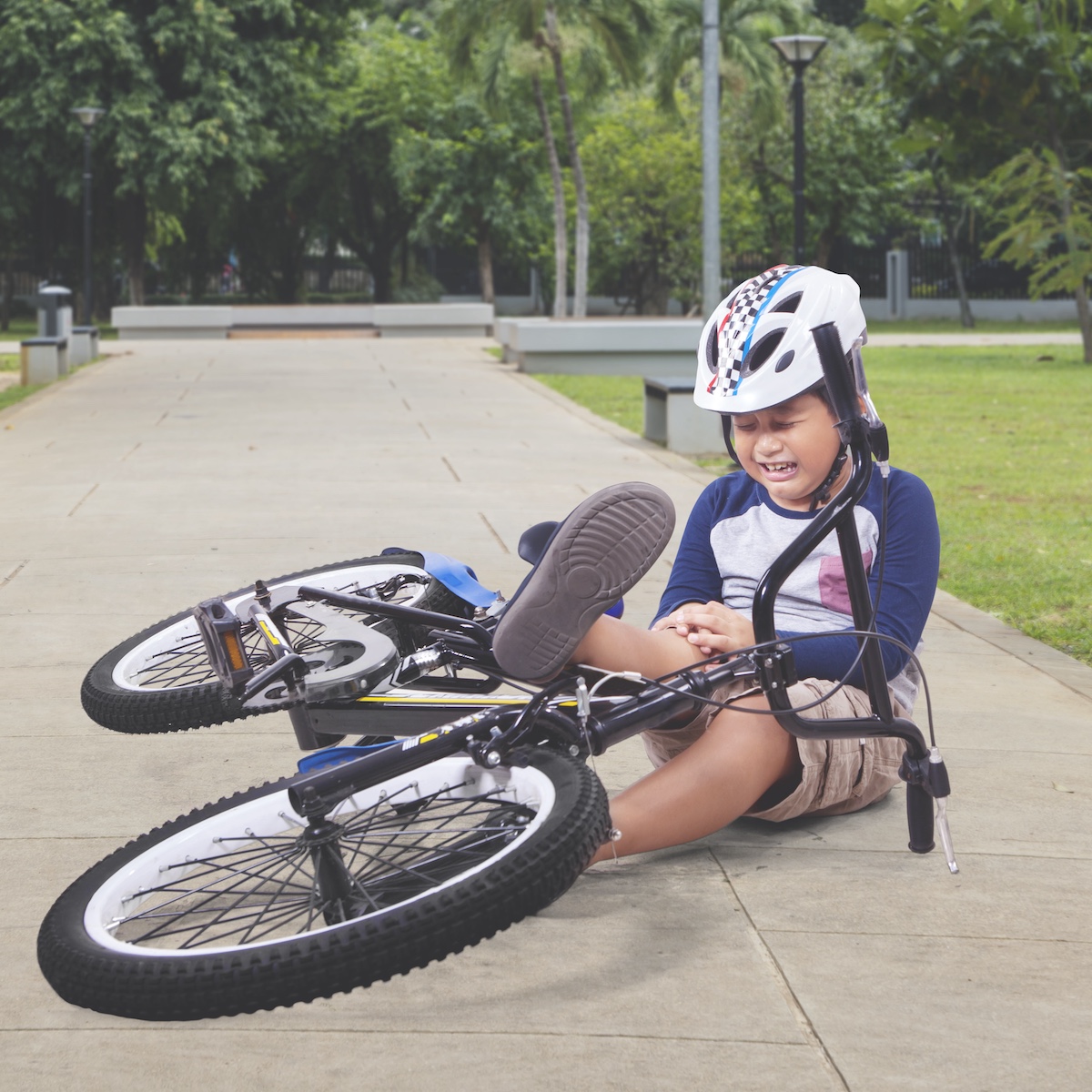
Bike rides can change in a moment. One second, your child is happily pedalling along, and the next, they are on the ground in tears, insisting they are fine before the shock has worn off.
A scraped knee might be the first thing you see, but it is not always the full picture.
After a bicycle accident, some signs of injury or distress take time to appear, which is why the hours that follow matter just as much as the fall itself.
Jump to:
Some Injuries Do Not Show Up Right Away
A child can look fine straight after a fall and still feel much worse later on. Bruises often deepen, swelling can build, and sore muscles tend to show up once the shock starts to wear off.
That is why it helps to look beyond the obvious cuts and scrapes. Notice how your child is walking, how they are moving their arms, and whether they seem quieter or more tired than usual.
A limp, a stiff neck, pain in the wrist or shoulder, or a reluctance to use one arm can all be signs that the fall was more serious than it first seemed.
Headaches, dizziness, nausea, and sensitivity to light matter as well. Younger children do not always have the words to explain what hurts, so changes in mood or behaviour can tell you a lot.
What to Watch for in the First 24 Hours
The first few minutes after a fall do not always tell you much. Once your child has rested, had something to eat, and calmed down, things often become clearer.
That is when you may start to notice smaller changes, like unusual tiredness, irritability, or a child who just does not seem like themselves.
Pay close attention to symptoms that worsen rather than improve. A growing headache, repeated nausea, swelling that keeps building, trouble sleeping, or confusion should not be ignored.
Some concussion signs and symptoms can appear after a fall, even when the accident did not seem that bad at the time.
If something feels off, trust yourself. You may notice subtle changes before anyone else does. If your child has a severe headache, repeated vomiting, confusion, trouble waking up, or anything else that feels alarming, get medical care right away.
The Emotional Side Parents Can Miss
Cuts and bruises are easy to see. The emotional side is easier to miss.
A child who seemed calm at first may get upset later, especially when it is time to go outside again or get back on the bike. Some children keep thinking about the fall.
Others do not want to talk about it at all. Both reactions are normal, and both can show that the accident shook them more than they can say.
You might notice clinginess, hesitation, irritability, or a sudden refusal to ride somewhere they used to feel fine.
It is easy to brush that off, especially if the physical injuries seem minor, but it still matters.
Children do not always bounce back as quickly as adults expect.
Reassurance helps. So does time. Giving your child space to feel safe again can make a big difference.
Why the Details Matter
Even when your child seems stable, the details of the accident may matter later. Where it happened, what caused the fall, and whether a person or vehicle was involved can all affect what comes next.
Falling because of loose gravel is one thing. A car pulling out too fast or a door opening into a bike lane is something else.
Once things have settled, write down what your child remembers and what you saw. Take photos of the bike, the area, and any visible injuries. If anyone saw what happened, keep their contact details if you can.
These are easy things to forget when your child is upset, but they can help later.
That is especially true if symptoms get worse or it becomes clear that the fall was not just a simple accident.
When You May Need More Than Medical Advice
Some bicycle accidents leave parents dealing with more than cuts, bruises, and a doctor’s visit. If a driver was involved, the road or path was unsafe, or the injury turns out to be more serious than it first seemed, it helps to keep clear notes and gather information early.
When a crash involves a driver, serious injuries, or questions about who was at fault, some families end up needing bicycle accident legal help alongside medical and insurance support.
That will not be needed after every fall. Still, when there are bigger questions about fault or lasting injury, the right support can take some pressure off parents who are already trying to look after their child.
The point is not to panic. It is to make good decisions while everything is still fresh.
Helping a Child Feel Safe Riding Again
Getting back on a bike after an accident can be hard. Some children want to try again straight away. Others want nothing to do with it for a while. Both reactions make sense.
A gentle return usually works best. Start somewhere familiar. Keep the ride short. Let your child stop when they need to. At first, the goal is not speed or distance. It is helping them feel safe again.
It also helps to let them talk in their own time. Some children want to go over every detail. Others need quiet encouragement and a slower pace.
If the accident has really shaken them, small steps at home can support rebuilding confidence after a traumatic experience. Confidence often comes back bit by bit.
A Little Extra Care Can Help a Lot
A bicycle accident can look minor at first, especially when a child wants to move on and pretend they are fine. Later on, the real impact often becomes clearer.
It may be pain that gets worse, behaviour that changes, or a child who no longer feels safe doing something they used to love.
- Parents Are Prioritising Breathable, Sustainable Fabrics For Children's Seasonal Sleepwear
- Our Homemade Christmas Printables, Made With AI: What Worked, What Didn't, and What I'm Saving for Next Year
- At-Home vs. In-Lounge IV Therapy in the Hudson Valley: Which Makes More Sense?
- Can Passengers Pursue Compensation After a Car Accident?




Paying attention in the hours that follow, keeping a simple record of what happened, and caring for both the physical and emotional side of recovery can make the next steps feel much easier.
Sometimes that extra care in the early days is what helps a child feel like themselves again.





Leave a Reply