

A 3-carat marquise lab-grown diamond ring tends to attract strong opinions, and most of those opinions arrive secondhand. Friends repeat things they heard years ago, and forums recycle advice that was half-right at best. Couples shopping for engagement rings end up ruling out a style for reasons that don't hold up.
Jump to:
- Myth 1: lab-grown diamonds are softer than mined diamonds
- Myth 2: a 3-carat marquise is too fragile for daily wear
- Myth 3: every marquise shows an ugly bow-tie
- Myth 4: 3 carats looks the same in any shape
- Myth 5: lab-grown stones lack the sparkle of mined ones
- Myth 6: the marquise is stuck in the 1980s
- Myth 7: a jeweler can spot a lab-grown diamond on sight
- Myth 8: lab-grown means giving up serious grading
Myth 1: lab-grown diamonds are softer than mined diamonds
This claim sits near the top of the list, and it collapses under basic chemistry. A lab-grown diamond is carbon arranged in the same crystal structure as a mined diamond, whether it grew by chemical vapor deposition or under high pressure and high temperature. One process grows the crystal layer by layer from a carbon-rich gas; the other recreates the conditions under which diamonds form underground.
Both methods produce the same diamond crystal, and lab-grown stones, like mined ones, can hold trace impurities. The growth method changes where the stone comes from, not what it is.
On the Mohs scale, which ranks how well minerals resist scratching, lab-grown and mined diamonds sit at the same point, the top of the scale. Diamonds resist scratching, but another diamond can scratch them. Hardness isn't the same as toughness, though. Any diamond, from any source, can chip if it takes a sharp hit at the wrong angle, so the honest claim is equal durability, not invincibility.
Myth 2: a 3-carat marquise is too fragile for daily wear
A marquise cut ends in two sharp points, and those points are the thinnest part of the stone. That vulnerability belongs to the cut itself, not to the stone's origin. A mined marquise has the same exposed tips, and a lab-grown round brilliant has none at all. Blaming the laboratory for a geometry problem mixes up two separate things.
The fix is in the setting. V-prongs are shaped to cap each pointed end and help shield it from knocks. A bezel goes further and runs a rim of metal around the entire edge of the stone. Neither option makes a ring immune to damage, and most jewelers still suggest taking any ring off for the gym or the garden.
Someone with an active job or a hands-on routine can wear a marquise every day, as long as the setting was chosen with that life in mind. It also pays to have the prongs checked once a year or so, because even a well-built setting can loosen with daily wear, and a loose prong is a bigger risk to any stone than the shape of its outline.
Myth 3: every marquise shows an ugly bow-tie
The bow-tie is a dark pattern that can appear across the middle of elongated cuts, and it exists because of how light moves through the facets. Some areas of the stone return light to the eye and some return less, and the contrast between those areas forms the shape. Some marquise diamonds show a visible bow-tie, which is where the myth gets its footing.
How much bow-tie a stone shows varies from one to the next. In a well-proportioned cut, it reads as a faint play of light and dark that gives the center of the diamond some depth. In a poorly cut stone, it turns into a heavy band that stays visible from across a room. Stones cut with careful attention to proportion and facet alignment tend to keep the contrast soft, while stones cut to save weight from the rough often show the heaviest shadows.
No grading report scores the bow-tie, so the only reliable test is looking at the actual diamond, ideally through photos and video shot under ordinary room light. Two stones with identical paperwork can behave very differently here, which is why comparing individual diamonds beats trusting the label.
Myth 4: 3 carats looks the same in any shape
Carat measures weight, not size.
Two diamonds can weigh exactly the same and carry that weight in completely different places. A round brilliant holds a good share of its weight in depth, below the top surface. A marquise stretches that weight into length, so more of the stone shows in the face-up view, which is the view everyone actually sees. Jewelers call this the face-up surface area, and it is the measure of how big a diamond looks once it is set. Guidance from the Gemological Institute of America on the marquise cut notes that its elongated shape can appear larger face-up than a round of the same carat weight, and anyone who has compared the two shapes side by side will recognize the effect.
Proportion shapes the result as well. A longer, slimmer marquise covers more of the finger, while a shorter, broader one reads as softer and more compact. The right length-to-width ratio is a matter of taste, not a fixed rule. At 3 carats, that choice becomes even more visible, because small differences in ratio translate into obvious differences in outline. When comparing stones, the millimeter dimensions tell a shopper more than the carat number ever will.
Myth 5: lab-grown stones lack the sparkle of mined ones
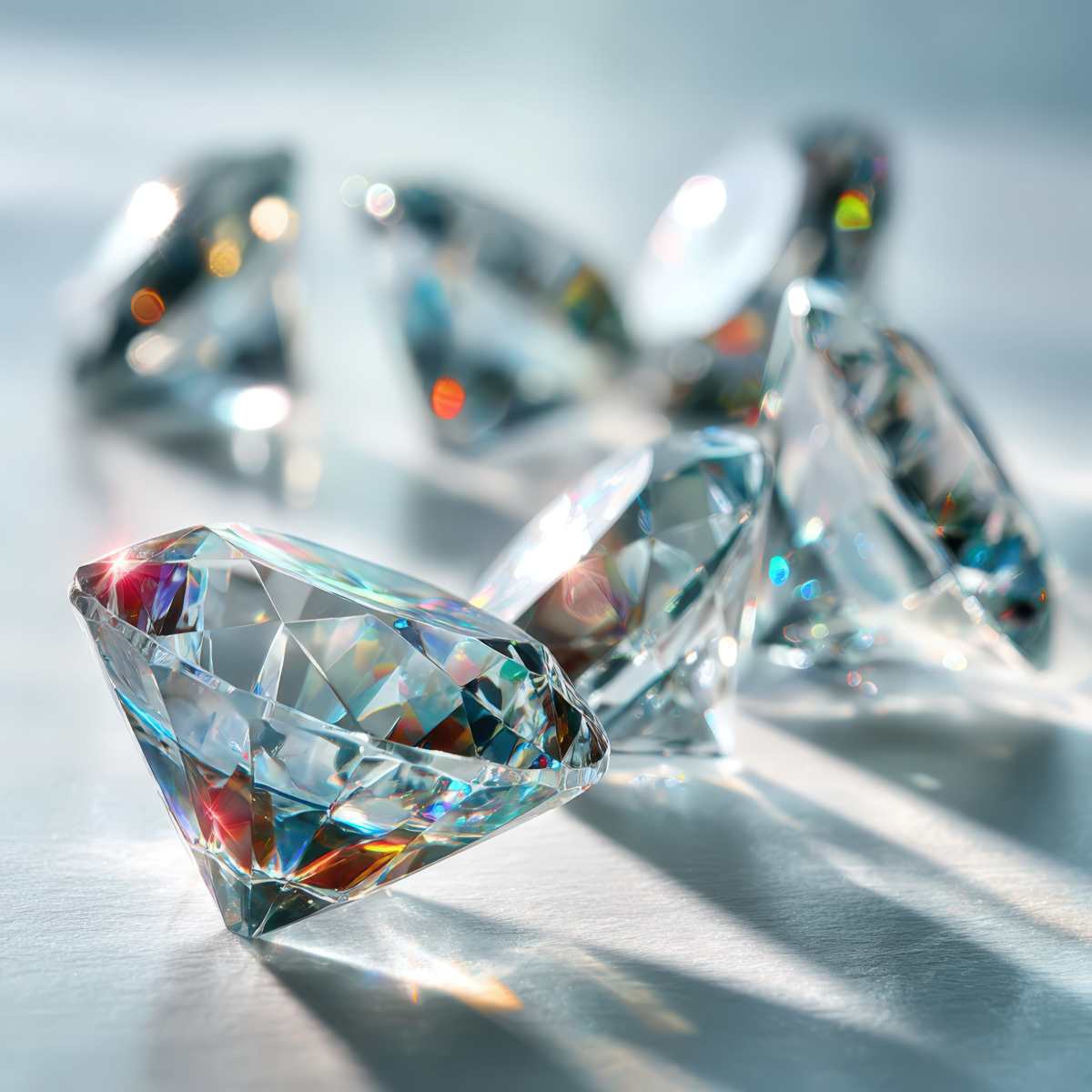
Brilliance and fire are optical events, and a lab-grown diamond handles light the same way a mined diamond does, because it is the same material with the same optical properties. White light enters the stone, bends, splits into spectral colors, and returns to the eye. Nothing about a laboratory origin changes any of that.
What decides sparkle is the cut. Proportions and symmetry control how much light comes back to the eye, and polish decides how clean that return looks. This holds for every diamond regardless of source. A well-cut lab-grown marquise will outshine a poorly cut mined stone, and the reverse is just as true. Buyers weighing two stones should put cut quality at the top of the checklist and view each diamond under more than one kind of lighting before deciding.
Lighting plays along with the myth. Jewelry store spotlights flatter every stone, so a dull diamond can look lively under a display lamp. Daylight and ordinary indoor light can give a better sense of how the stone will look away from the display case.
Myth 6: the marquise is stuck in the 1980s
The marquise had a big moment a few decades back, and the reputation lingered long after the moment passed. What changed is the setting, not the cut. Designers now treat the elongated outline as a starting point, and the current options barely resemble the rings that gave the shape its dated image.
A well-chosen 3 carat marquise diamond ring gives the cut a modern frame, whether the metal is yellow gold, white gold, rose gold, or platinum. An east-west setting turns the stone so its long axis runs across the finger, and the setting itself determines how high the ring sits. A hidden halo tucks a ring of small diamonds beneath the center stone, so the ring gains extra light without any change to its outline. Split shanks, slim solitaires, bezels, and side-stone bands each pull the cut in a different direction.
Metal choice shifts the mood as well. Warm yellow gold plays up the vintage side of the cut while white metals push it toward a cleaner, sharper look. What holds the stone decides whether the shape reads as classic or contemporary. For buyers who want a large center stone that doesn't look like every other engagement ring in the room, that flexibility is the point.
Myth 7: a jeweler can spot a lab-grown diamond on sight
Because lab-grown and mined diamonds are the same material, they look the same, and that holds under a jeweler's loupe. The quick visual tests that expose simulants like cubic zirconia or moissanite don't apply here, because a lab-grown diamond isn't a simulant. It's a diamond.
Separating a grown stone from a mined one takes more than a loupe. The growth patterns and trace features that reveal origin sit beyond what the eye can see. Specialized instruments, along with trained assessment, can make that distinction, and some jewelers have access to this kind of equipment, though appearance alone is never a dependable guide. Documentation is what records an individual stone's assessment, which is why the report that travels with a stone carries real weight for a buyer.
Myth 8: lab-grown means giving up serious grading
Lab-grown diamonds can come with independent grading reports, the same kind of documentation that accompanies mined stones. The IGI grades laboratory-grown diamonds using the familiar framework of carat weight, cut, color, and clarity, and its reports state the stone's origin plainly on the page.
The GIA has chosen a different path. On August 26, 2025, the institute announced that starting October 1, 2025, its laboratory-grown diamond assessments will describe overall quality with Premium and Standard categories rather than the nomenclature used for natural diamonds.
Reports are not identical between laboratories, and the differences are worth understanding before any comparison of stones begins.
The practical steps stay the same either way. Ask which laboratory issued the report and read what that report actually grades. Check whether the stone carries a laser inscription that matches the report number.
- Moving Beyond Toys and Gadgetry: The Ultimate BFCM Gifts for Keeping Your Children Physically Active and Enjoying Themselves
- The Clothing Shopping Mistakes That Leave You With a Wardrobe Full of Nothing to Wear
- Why Streamlined Systems Make Everyday Work Feel Less Cluttered
- How Often Should You Visit a Dentist in Queens?




Treat the paperwork as information about one specific diamond, not as proof that two stones with matching grades will look alike, because they often won't.
The reasons run straight back to the cut and the bow-tie. A report can confirm that a stone is well made and honestly described. It cannot tell a buyer whether that particular stone is the right one, and no certificate settles questions of taste.
Strip the myths away and the 3-carat marquise lab-grown diamond stops looking like a compromise. The material is a diamond in every measurable sense. Sparkle depends on the cut, durability on the setting, and verification on the report.
Among engagement rings, it suits the buyer who wants real presence and an outline with some character, and who is willing to choose a stone on its specifics rather than its label.
Compare actual diamonds side by side and look hard at the prongs. Let the paperwork answer the questions that eyes can't.





Leave a Reply