

Most children should see a dentist when their first tooth appears, or by their first birthday, whichever comes first.
That first appointment is usually short, gentle, and focused on prevention. It gives parents a chance to ask questions about brushing, fluoride, feeding habits, teething, pacifiers, and how to lower the risk of cavities before a problem starts.
A first dental visit is not only for children who already have tooth pain or visible decay. It is a practical way to establish healthy habits early and help a child become familiar with the dental office before treatment is ever needed.
Jump to:
What Happens at a Child’s First Dental Visit?
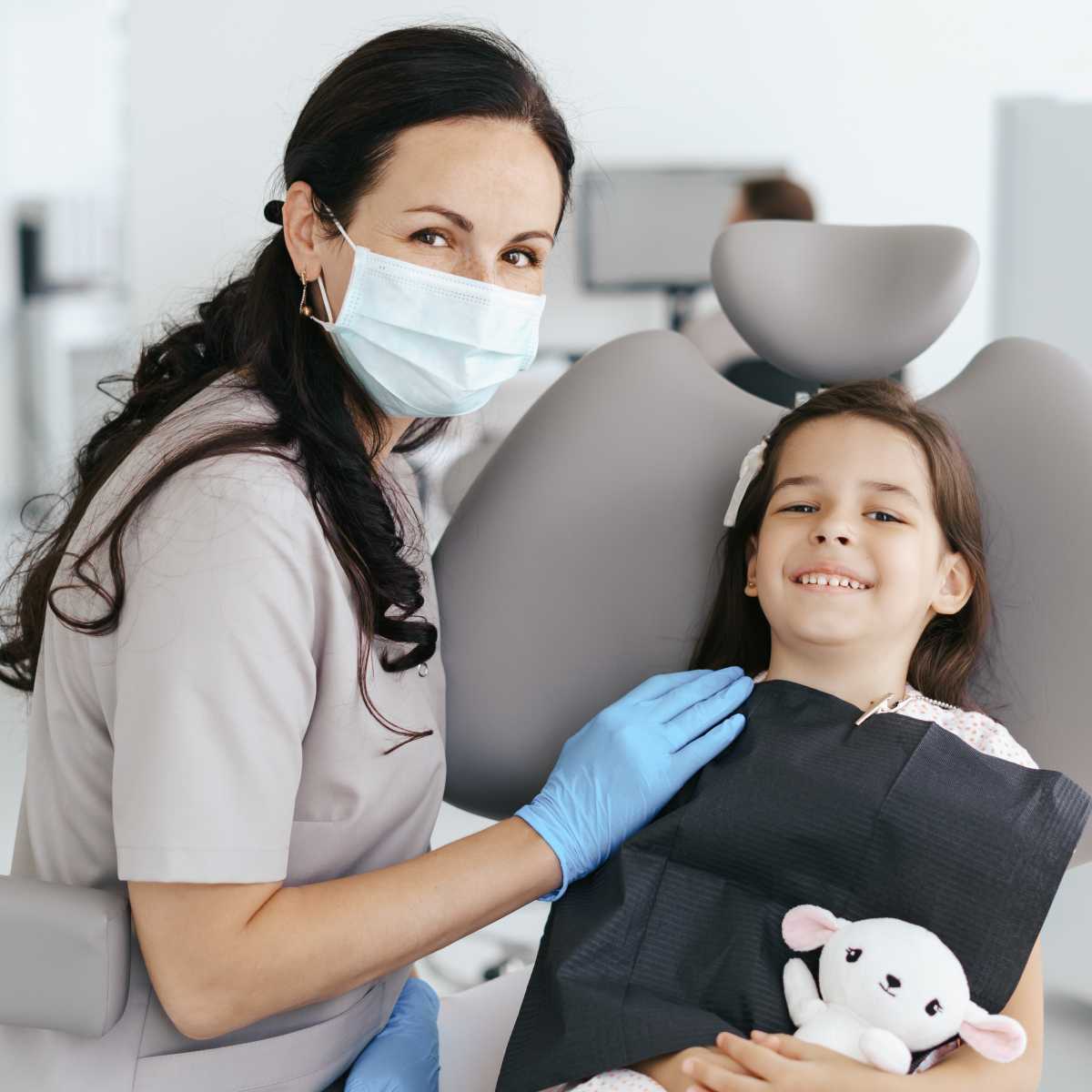
The experience will vary by age and personality. For a baby or toddler, the dentist may examine the mouth while the child sits on a parent’s lap.
Older children may sit in the dental chair, meet the team, and learn what the tools do in simple, child-friendly language.
A first dental appointment may include:
- A gentle look at the teeth, gums, jaw, and bite
- A discussion about brushing and age-appropriate toothpaste
- Guidance on bottles, sippy cups, snacks, and sugary drinks
- A review of thumb-sucking or pacifier habits when relevant
- A cavity-risk assessment
- A gentle cleaning, depending on the child’s age and comfort level
- Advice about when to schedule the next visit
The goal is to make the visit feel routine and positive—not frightening or overwhelming.
First Dental Visit Timeline: What Parents Can Expect
| Child’s age | What parents may notice | Helpful dental focus |
| Before the first tooth | Gum rubbing, drooling, teething questions | Learn how to clean gums and prepare for the first tooth |
| First tooth to age 1 | New teeth appearing, feeding and brushing questions | Schedule the first dental visit and discuss cavity prevention |
| Ages 1–3 | More baby teeth, independence with brushing, possible pacifier use | Parent-assisted brushing, fluoride guidance, snack and drink habits |
| Ages 3–6 | A full baby-tooth smile, more sweets and school routines | Brushing technique, flossing where teeth touch, routine checkups |
| Age 6 and older | Loose baby teeth and permanent teeth erupting | Monitor tooth development, sealant discussions, sports protection |
How to Prepare Your Child for Their First Dentist Appointment
A little preparation can make the first dental visit easier for both you and your child.
Choose an appointment time carefully
Try to book a time when your child is usually rested and not hungry. For many young children, a morning appointment is easier than one scheduled near nap time or after a long day at school.
Keep your explanation simple
Avoid using words such as “shot,” “hurt,” “drill,” or “pull,” especially before a routine first visit. Instead, explain that the dentist will count their teeth and help keep their smile strong.
You might say:
“The dentist will look at your teeth and show us how to keep them clean and healthy.”
Read a book or play dentist at home
A children’s book about visiting the dentist or a short pretend dental checkup with a stuffed animal can make the idea more familiar. Let your child “count” a toy’s teeth, then let them practice opening wide for a few seconds.
Bring comfort items if needed
A favorite small toy, blanket, or stuffed animal can help a toddler feel more secure. For older children, bringing a calm attitude and giving them a simple idea of what to expect may be enough.
Do not promise there will be “nothing scary”
Even if you mean well, a child may begin to wonder why you mentioned something scary in the first place. Focus instead on the fact that a parent will be nearby and the dental team will explain each step.
Everyday Habits That Protect Young Teeth
Dental visits matter, but the routine at home has an even bigger role in protecting a child’s teeth between appointments.
Help with brushing
Young children generally need help brushing thoroughly. Brush twice a day with a soft, child-sized toothbrush. Ask the dentist which amount of fluoride toothpaste is right for your child’s age and cavity risk.
Be thoughtful about drinks and snacks
Frequent exposure to sugary drinks, sticky snacks, and grazing throughout the day can increase cavity risk. Water is usually the best everyday drink between meals. If a child uses a bottle or cup at bedtime, water is the safer choice for teeth.
Start flossing when teeth touch
Once two teeth touch closely together, a toothbrush may not clean the space between them well enough. Parents can help floss these areas until the child has the coordination to do it effectively.
Make dental care routine
Children often respond better when brushing and dental visits are presented as an ordinary part of the day, like putting on pajamas or buckling a seat belt.
When Should You Contact a Pediatric Dentist Sooner?
A routine first dental visit should not be delayed if you notice a possible problem. Contact a dentist promptly if your child has:
- Tooth pain or sensitivity that keeps returning
- Facial swelling, gum swelling, drainage, or fever
- A chipped, broken, loose, or knocked-out tooth after an injury
- White, brown, or black spots on a tooth
- A tooth that is turning gray after a fall or bump
- Difficulty chewing, sleeping, or eating because of mouth pain
- A permanent tooth erupting behind or in front of a baby tooth that remains firmly in place
If your child has tooth pain, swelling, a dental injury, or visible changes in a tooth’s color, it is sensible to arrange an evaluation with a pediatric dentist in Falls Church, VA.
FAQ'S
A child should usually have a first dental visit when the first tooth appears or by their first birthday. This gives parents early guidance on preventing cavities and caring for baby teeth.
No. It is still worthwhile to schedule an appointment as soon as possible. However, parents do not need to wait until age 2; preventive care can begin much earlier.
Crying is common, especially for toddlers in a new environment. Pediatric dental teams are used to helping children feel comfortable and can adapt the visit to the child’s age and comfort level.
Yes. A child does not need a full set of baby teeth to benefit from a dental visit. Early appointments focus on development, prevention, and parent education.
Many children benefit from routine checkups every six months, but the best schedule depends on their individual oral-health needs and cavity risk.




The Bottom Line
Your child’s first dental visit is an opportunity to build healthy habits early, get trusted answers to parenting questions, and make future appointments feel familiar.
Keeping the visit positive and routine can help children see dental care as a normal part of looking after their health.





Leave a Reply