

People living and working in Manhattan, Brooklyn, Queens, the Bronx, and Staten Island have very busy lives which include work, travel, staying active, and thinking about their hair.
A hair transplant in New York City may seem like a solution; however, the first step is to understand the causes of thinning.
No wonder New York boasts incredible marketing, impressive results, and a number of promising treatments.
The better solution is to be more cautious and personally analyze your reason for hair loss, think of your family history, scalp condition, hair type, budget, and time that can be devoted to the recovery.
Jump to:
- Why a Personal Approach is Needed when Making a Decision about Hair Restoration
- Understand the Causes of Hair Loss
- Evaluate the Main Treatment Options
- How to Identify The Candidate?
- FUE, FUT, and Others
- Queries to Pose During a Consultation
- Healing is a Step-by-Step Process
- How to Avoid Misleading Conclusions
- Risks, Limits and Warnings
- The Essence of Conversations about Hair Restoration
- Checklist
- Summary
Why a Personal Approach is Needed when Making a Decision about Hair Restoration
Even if two people look similar when it comes to hair loss, their approaches can differ dramatically.
It is important to take into consideration age, gene background, accompanying illnesses, stressful events, diet, hair type, and scalp condition. The aim is not to replicate someone's hairline.
It is about finding the right solution that feels and looks good even as your looks may change over the years.
Understand the Causes of Hair Loss
There are different types of hair loss, including hereditary hair loss, temporary hair loss due to physical or emotional problems, traction hair loss due to continuous tension and stress, autoimmune patchy hair loss, and scarring hair loss.
If you experience sudden hair loss along with itching, scaling, redness, pain, or borders that are very visible, you should consult with a doctor before undergoing any cosmetic treatment.
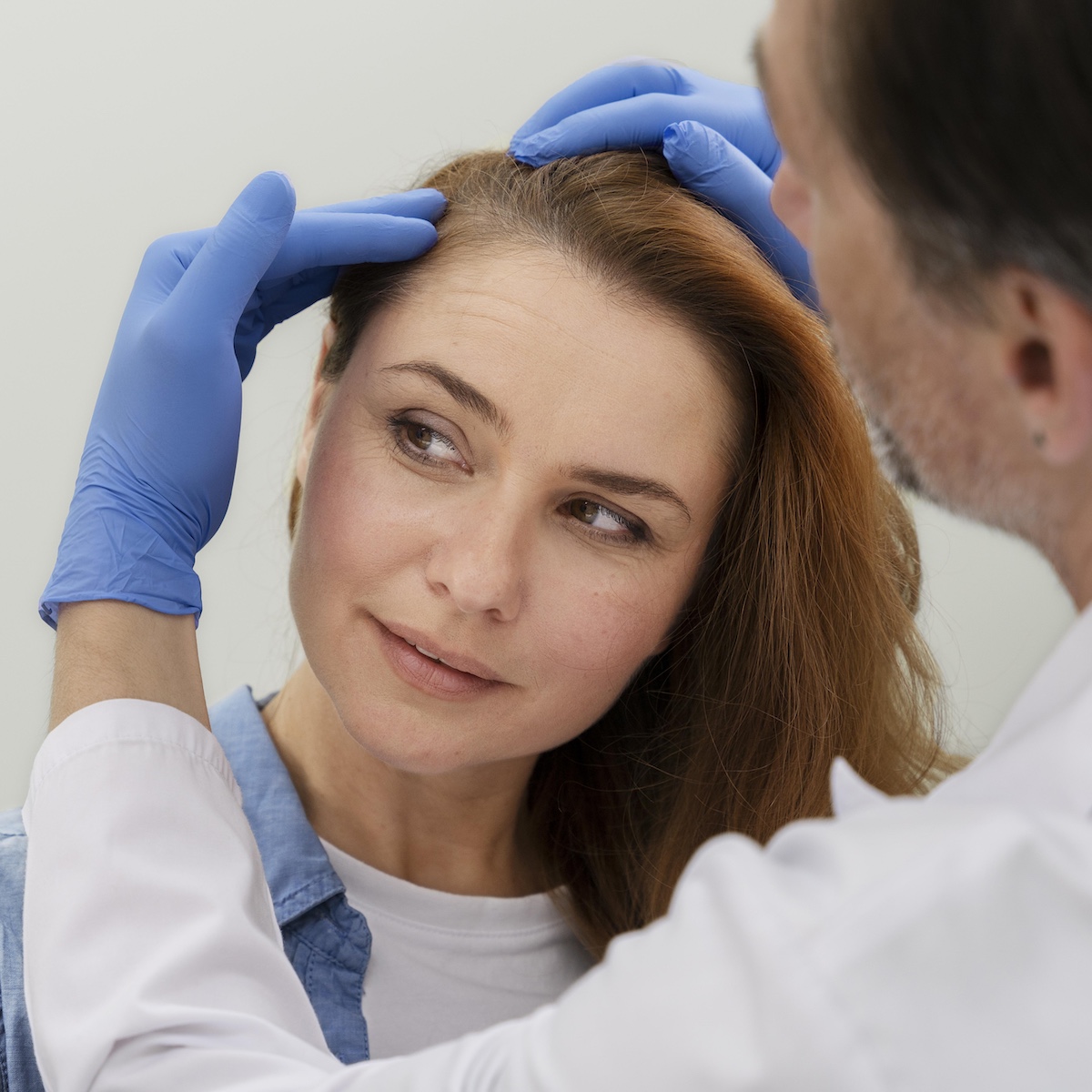
The doctor may inquire about any illness, birth, diet, medications, thyroid problems, family history, stress, and hair care habits.
Depending on the case, the doctor may check the scalp, perform blood tests, or even do dermoscopy.
According to the American Academy of Dermatology, different types of hair loss develop in different ways and require different treatments; that’s why you cannot diagnose yourself and start a treatment.
Evaluate the Main Treatment Options
- Observation and changes in hair care. In case of having mild or temporary hair loss, it may be solved once the problem is gone. Soft styling and less traction can matter a lot too.
- Medication, either topical or systemic. Some medications may help certain types of hair loss under adequate diagnostic and supervision.
- Non-surgical options. Fibers, scalp products, hair systems, right hair cuts, colors, and styles may help make an immediate difference in appearance without surgery.
- Hair transplantation. This is when follicles are taken from the donor area, usually the back or side area of the scalp.
- Commonly, the use of medical treatment, camouflage, and surgical procedures can be combined to conserve the existing hair and improve the amount of hair.
How to Identify The Candidate?
A great candidate is one who has a healthy scalp and sufficient hair in the donor area to provide enough hair for transplantation.
In case the individual experiences sudden hair loss, thinning of hair, or has other health problems, a person may not become an ideal candidate.
Sometimes people might require medical treatment to slow down the loss before any surgical procedures start.
Realistic expectations are highly needed. A limited amount of donor hair makes it hard to achieve the density of hair. Therefore, thoughtful planning of the hairline should be more crucial than maximizing the number of grafts.
FUE, FUT, and Others
FUE (Follicular Unit Extraction) is the process of separating the follicular units from the donor area. FUT (Follicular Unit Transplantation) is the method of separating the strip of donor material into units.
It is important to be aware of the differences between the methods, as the choice of the technique will depend on the condition of the donor area, the hairstyle that the client prefers, and other factors.
A medical summary on hair-transplant candidacy, methods and aftercare also focuses on donor evaluation as well as realistic planning.
Queries to Pose During a Consultation
- What is the probable source of my hair loss?
- Is my pattern considered stable?
- How much donor hair is viable?
- Which hairline design and density is suitable?
- How will the continual loss of hair be dealt with?
- Who performs every procedure step?
- What are the recovery guidelines, aftercare plan, potential risks and total expenses?
Healing is a Step-by-Step Process
- Initial days: Tenderness, swelling, and diligent scalp care are to be expected. A plan of working in an office, using the subway, physical activity and social events must follow the clinician’s directions.
- Initial weeks: Healing is followed by crusting and redness. Do not rub or touch the operated area, as it may hinder recovery.
- Initial months: Transplanted hairs may fall off before the end result can be seen.
- After six months, New hair growth is expected to continue.
How to Avoid Misleading Conclusions
Compare photos only when lighting, angle, distance from the camera, hair length and style are the same. Images on social media may be influenced by the use of fibers, wet/dry hair, selected lighting/angle, and shadowing. Correct modeling proportions, suitable hairline placement, and balanced results are more important than a single eye-catching photo.
Risks, Limits and Warnings
Included risks include infection, scar formation, poor hair growth, unevenness in density, temporary loss of hair, and more.
Be careful with guaranteed results, pressure on you to decide straight away, unclear pricing and vagueness of performed procedures.
Ask for a second opinion if the diagnosis or agenda does not feel satisfactory.
The Essence of Conversations about Hair Restoration
Today’s discussions focus more on a natural look and individual approach, rather than maximum hair density.
Among some patients treated are women with diffuse thinning, facial hair restoration, scar covering, and individuals with long-term plans in mind.
The best strategies make sure that donor areas are preserved and actual problems are solved.
Checklist
- Establish the cause of hair loss.
- Check if the disease is stable.
- Check non-surgical alternatives.
- Find out the amount of donor hair and your goals.
- Review recovery process, risks, expenses and procedures.
- Inquire what will happen in case of thinning.
- Take your time before committing to the therapy.
- Parents Are Prioritising Breathable, Sustainable Fabrics For Children's Seasonal Sleepwear
- Our Homemade Christmas Printables, Made With AI: What Worked, What Didn't, and What I'm Saving for Next Year
- At-Home vs. In-Lounge IV Therapy in the Hudson Valley: Which Makes More Sense?
- Can Passengers Pursue Compensation After a Car Accident?




Summary
The best hair restoration method for people living in New York is determined by diagnosis, timing, health status, availability of donor hair, lifestyle, and finances going forward.
Sometimes straightforward answers and conservative decisions are more valuable than quick conclusions based on photos or uncertain promises.





Leave a Reply