

Could swim lessons become your family's favorite time of the week? Learning to swim does not have to feel like a chore when parents and children learn, play, and practice together.
Family swim time can include simple games, friendly challenges, water safety skills, and plenty of encouragement.
These shared moments can help children feel more comfortable in the water while giving parents a chance to support their progress.
With the right approach, every lesson can become a fun way to learn new skills, build confidence, and spend meaningful time together. Read on to discover simple ideas that make swimming fun for everyone.
Jump to:
- Make Swimming A Shared Family Goal
- Choose Games That Build Water Skills
- Let Everyone Take Part
- Keep Lessons Safe And Comfortable
- Praise Small Swimming Wins
- Plan Family Swim Lessons Around Fun
- Practice Without Making It Feel Like Work
- Find Supportive Swim Programs
- Build Family Bonds Through Water Play
- Make Every Swim Session Count
Make Swimming A Shared Family Goal
A shared goal gives every family member a reason to join the lesson in a positive mood. Young children may want to float alone, while older children may want to improve strokes or swim farther.
Parents can choose goals that match each swimmer's age, skill, and comfort level.
Keep goals simple and easy to notice. A child might work on putting their face in the water, while a parent practices breathing during freestyle.
When everyone has a goal, each person can feel proud of progress without judging skills.
Choose Games That Build Water Skills
Games can make practice feel fun while helping swimmers repeat skills in an easy way. Try simple games such as kicking races, floating contests, treasure hunts, or gentle races to a marked spot.
Each game should match the swimmer's skill and have a safety rule that everyone knows.
Use games to practice swimming skills. A floating game can help children stay calm, while a kicking game can build leg strength and control. Keep the games short so swimmers stay keen and have time to learn other skills.
Let Everyone Take Part
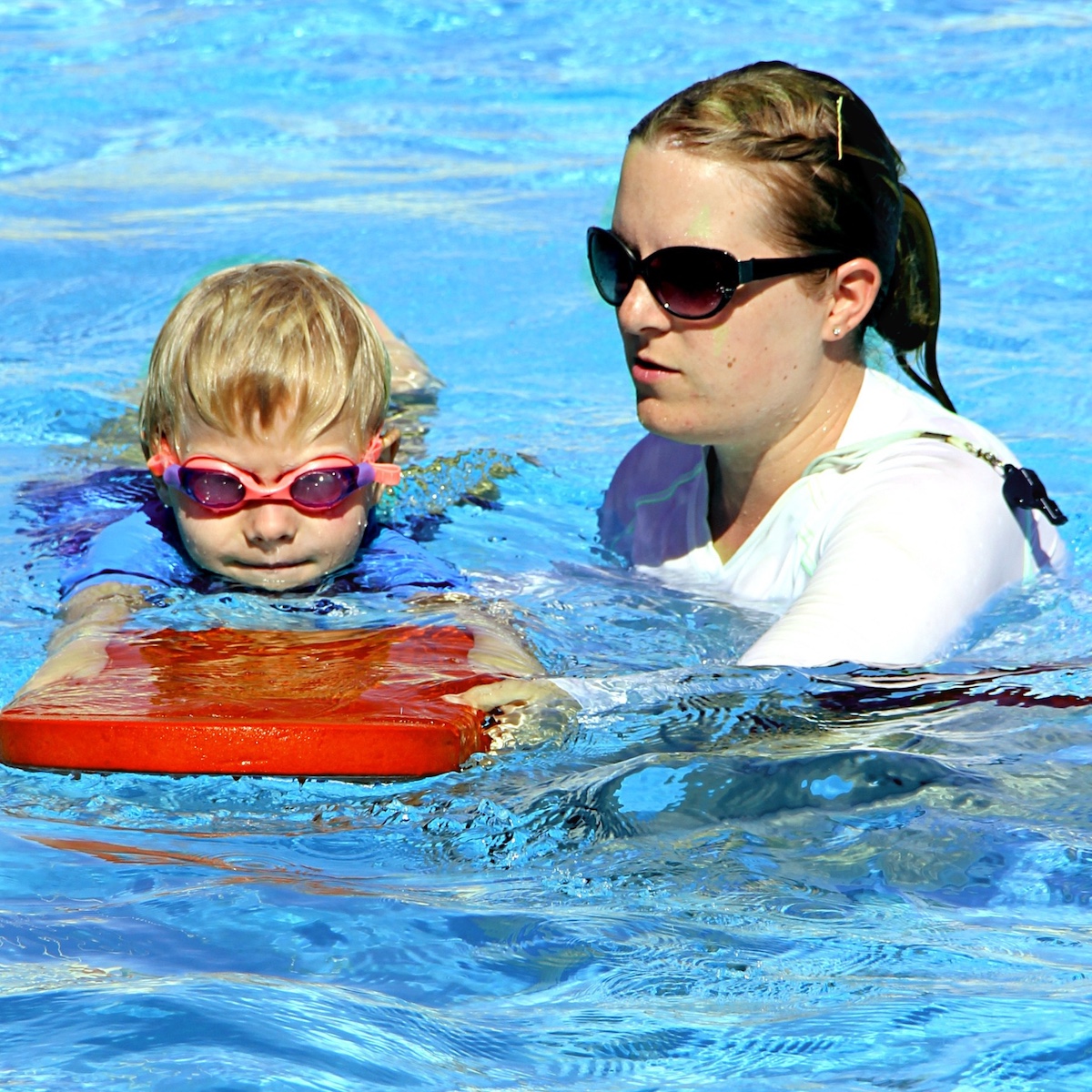
Family swim time works best when everyone has a role. Parents can join practice, cheer from the pool edge, or help younger children follow the teacher.
Older children can also cheer younger siblings without taking over their learning time.
Let each family member choose one activity during the lesson. This can help children feel heard and more excited to join. It also creates a shared routine that families can enjoy each week.
Keep Lessons Safe And Comfortable
Fun should always go together with safe swimming habits. Families should follow the teacher's rules, stay within the proper area, and use gear only as instructed.
Children should also know that an adult must be close when they are in or near the water.
Pay attention to signs that a swimmer feels tired, cold, scared, or upset. A short break can help a child regain comfort and return to the lesson with a better mood.
Building trust matters because children learn water skills more easily when they feel secure.
Praise Small Swimming Wins
Small wins can make children feel proud and help them stay interested in learning. Praise simple progress, such as floating longer, blowing bubbles, kicking with better control, or using a safety rule.
A smile, a kind word, a high five, or a family cheer can make the moment special in class.
Praise effort instead of focusing only on perfect results. Saying that a child worked hard or stayed calm while learning a new skill shows that practice matters.
This approach can help children see mistakes as part of learning rather than something to fear.
Plan Family Swim Lessons Around Fun
The time and setting of a lesson can affect how much a family enjoys it. Choose a schedule that gives everyone enough time to arrive calmly, change, and get ready without rushing.
A relaxed start can help children enter the pool with more drive and focus, without feeling rushed.
Families can create a routine before and after each lesson. A favourite song on the way to the pool, or a snack afterwards, can make swim day feel very special. These simple habits can turn weekly lessons into family moments.
Practice Without Making It Feel Like Work
Extra practice can build skills without feeling like a new chore. During open swim time, families can repeat one or two lesson skills and then enjoy free play.
Keeping practice short can help children stay keen and avoid feeling pressured.
Parents can follow the teacher's advice when choosing what to practice. If a child is learning to float, for example, the family can spend a few minutes working on relaxed body form before playing a safe water game.
This balance gives children good practice while keeping the mood light and enjoyable for the whole family.
Find Supportive Swim Programs
A friendly swim program can make family learning easier and more enjoyable. Look for instructors who explain skills clearly, use age-appropriate games, and welcome questions.
A good program should also place a strong focus on water safety and each swimmer's comfort.
Families looking for local options can explore swim lessons near you to find a program that fits their needs.
Before choosing a class, ask about lesson size, teaching methods, age groups, and safety.
Learning what to expect can help your family feel prepared and comfortable from the first session.
Build Family Bonds Through Water Play
Swimming can give families time to talk, laugh, and cheer one another during busy family days. A simple game can create shared moments while also giving children a chance to practice listening and teamwork.
These moments can strengthen family bonds through shared time, laughter, trust, teamwork, and moments children can carry home after each lesson.
Keep the focus on connection rather than competition. A child does not need to swim fastest or learn first to have a meaningful experience.
When families praise one another, the pool can become a place where children feel supported as they grow.
Make Every Swim Session Count
Family swim lessons can bring learning, play, and safety together in a way everyone can enjoy.
- Parents Are Prioritising Breathable, Sustainable Fabrics For Children's Seasonal Sleepwear
- Our Homemade Christmas Printables, Made With AI: What Worked, What Didn't, and What I'm Saving for Next Year
- At-Home vs. In-Lounge IV Therapy in the Hudson Valley: Which Makes More Sense?
- Can Passengers Pursue Compensation After a Car Accident?




Set simple goals, play skill-building games, and give each family member a chance to join the fun. Keep lessons relaxed, praise small wins, and allow breaks when someone feels tired or unsure.
These simple steps can help children build confidence while parents create positive memories with them.
Family swim lessons can also teach teamwork, trust, and safe water habits that last beyond the pool. When swimming becomes shared family time, each session can feel rewarding and special.
Did this guide help you? Browse the rest of this section for more advice on a variety of topics.





Leave a Reply