

Hydrofoil boarding has exploded in popularity across surfing, kiteboarding, and downwind paddling. Here's what beginners need to understand before getting on a foil.
Riding a hydrofoil is one of those experiences that's difficult to describe until you've done it.
The sensation of lifting out of the water and skimming above the surface, supported only by a wing underwater generating lift, is genuinely unlike anything else in water sports.
-It's also one of the more technically demanding things you can do on a board, with a learning curve that humbles people who are already competent in conventional water sports.
Setting realistic expectations about the learning process, understanding what makes foiling different from conventional surfing or kiteboarding, and getting the right setup for your skill level are the foundations for a productive start with foil boarding.
Jump to:
How a Hydrofoil Works
A hydrofoil consists of a mast, a fuselage, a front wing, and a stabilizer. The front wing is the primary lift generator.
As the board moves through the water and the rider shifts weight toward the front or back, the angle of attack of the wing changes, generating more or less lift.
Above a threshold speed, the lift exceeds the combined weight of the rider and equipment, and the board rises out of the water.
Managing altitude, which is the height above the water, requires constant balance and weight adjustment.
Quality gear from suppliers like foil board specialists provides the engineering needed to make this learning process tractable.
The wing's aspect ratio, which is the ratio of span to chord, significantly affects the riding characteristics.
High aspect ratio wings (long and narrow) are efficient and generate lift with less drag at higher speeds, making them popular for racing and downwind foiling.
Lower aspect ratio wings (shorter and wider) generate lift at lower speeds and are more forgiving of technique variation, which is why they're recommended for learning.
Disciplines: Which Entry Point Makes Sense
Hydrofoiling has spread across multiple water sport disciplines, and the easiest entry point depends on where your existing skills are.
Kiteboarding foil is often considered the most accessible because the kite provides consistent, controllable power that makes maintaining foil speed easier than depending on wave energy.
Pumping foils, which use rider pumping motion to sustain flight between waves or swells, is a discipline where the technique is learnable in flat water conditions.
Surf foiling is generally considered harder to learn than kite foiling because you're dependent on wave energy to generate lift, and wave selection and timing add complexity to the already-demanding foil balance challenge.
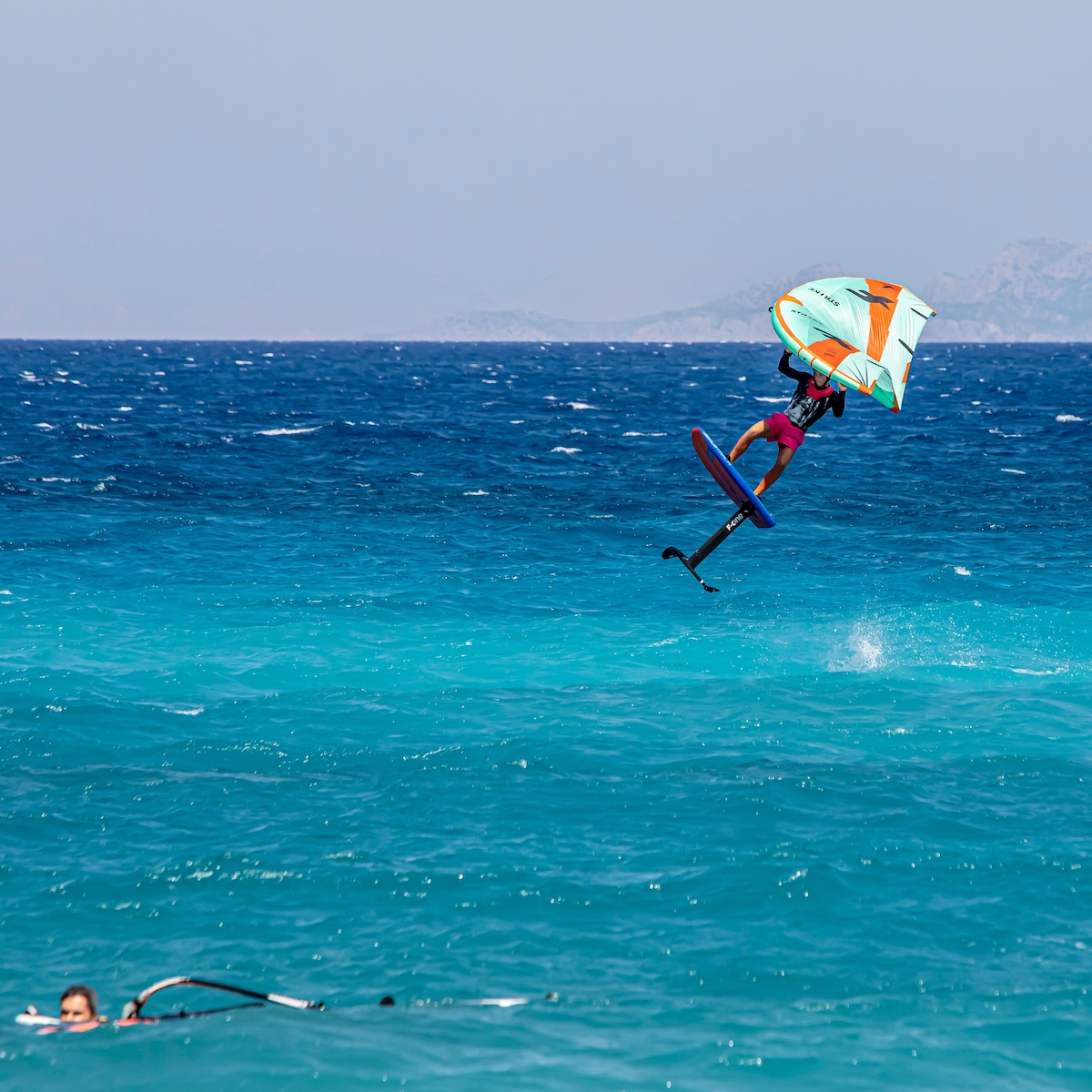
Wing foiling, which uses a handheld inflatable wing for power, has grown rapidly and has a learning curve that many find manageable because the wing can be depowered easily and doesn't have the line management complexity of a kite.
The Learning Curve: Honest Expectations
Learning to foil takes longer than most people expect, even those with strong conventional water sport backgrounds.
Experienced kiteboarders and surfers typically need fifteen to thirty hours on a foil before they're riding consistently. Some people progress faster; others take longer.
The skills that transfer most directly from conventional water sports are balance and wave reading.
The specific skill of managing altitude on a foil, which has no good analog in conventional surfing or kiteboarding, is genuinely new and takes dedicated practice.
The crash pattern for beginners is also specific to foiling. When the foil breaches the surface during a fall, the board and foil assembly can be a hazard for both the rider and other people in the water.
Learning in uncrowded conditions with plenty of space, using appropriate personal protective equipment including a helmet and impact vest, and keeping other people clear during the learning phase are important safety practices.
Choosing a Learning Setup
The equipment choice for a beginner affects the learning curve significantly. Bigger boards, longer masts, and lower-aspect-ratio front wings are more stable and forgiving than the setups experienced foilers use.
Starting with a larger board provides more flotation and a larger platform for balancing before the foil lifts.
A longer mast, typically 65 to 85 cm for learning, provides more altitude room before the mast tip exits the water.
As skills develop, many foilers progress to smaller boards and higher-performance wing setups.
Starting on the right gear for your level and progressing as your skills warrant produces a better experience than trying to skip to advanced equipment before the fundamentals are solid.
Foil Safety Practices
The foil assembly, particularly the front wing, is made of carbon fiber or aluminum and travels at significant speed through the water. Contact with a foil wing during a fall can cause serious injury.
This is not an exaggerated concern; foil-related injuries have increased as the sport has grown. Understanding and practicing the safety behaviors that reduce this risk is a prerequisite for responsible foiling.
Keeping the foil away from your body during falls, always falling away from the board rather than toward it, using protective equipment including a helmet and impact vest, foiling in uncrowded conditions particularly during the learning phase, and wearing a leash appropriate for foiling that won't pull the foil into you if you fall are all standard safety practices in the foiling community.
Conditions for Learning
Flat water with steady, consistent wind is the ideal learning environment for kite foiling. Small, consistent waves with no crowd are ideal for learning wing foiling and surf foiling.
Choppy, unpredictable conditions add difficulty to an already challenging learning process.
Inland lakes with steady thermal winds or protected bays are often better learning environments than exposed ocean locations with variable conditions.
Seeking instruction from an experienced foiling coach accelerates the learning process considerably.
A coach who can observe your position and technique, give feedback in real time, and help you understand what you're doing that's producing specific outcomes compresses the time to consistent flight significantly.
Self-taught foiling is possible but takes longer and sometimes involves ingraining bad habits that are harder to fix later.
FAQ'S
This depends entirely on the power source and discipline. Kite foil racers can exceed 50 knots (about 57 mph). Surf foilers ride at wave speed, typically 10-20 mph. Wing foilers typically cruise at 15-25 mph depending on wind strength. Pumping foil riders, who sustain flight through rider pumping alone, travel at much lower speeds, often 5-12 mph. The sensation of speed on a foil feels greater than the actual speed because of the smoothness of flight above the water surface.
Previous experience in surfing, kiteboarding, or windsurfing definitely helps and shortens the learning curve. However, people without prior water sport experience have successfully learned to foil, particularly wing foiling, which some beginners find more approachable than expected. The prerequisites are being comfortable in water, having reasonable balance and coordination, and being willing to commit to the longer learning timeline that comes with starting without an existing foundation.
- Parents Are Prioritising Breathable, Sustainable Fabrics For Children's Seasonal Sleepwear
- Our Homemade Christmas Printables, Made With AI: What Worked, What Didn't, and What I'm Saving for Next Year
- At-Home vs. In-Lounge IV Therapy in the Hudson Valley: Which Makes More Sense?
- Can Passengers Pursue Compensation After a Car Accident?




Wrapping Up
Hydrofoil boarding is one of the most exciting developments in water sports in recent years, offering a sensation that no other equipment can replicate.
The learning curve is real and steeper than most beginners expect, but it's manageable with appropriate equipment, good instruction, and realistic expectations about the timeline to consistent riding.
The riders who put in the time with appropriate gear and proper safety practices get to experience something genuinely remarkable.





Leave a Reply