

You blame the oak tree outside your bedroom window, but the real culprit is probably the metal box in your basement.
Your HVAC system acts like a giant vacuum cleaner for the neighbourhood, pulling in whatever the wind carries: pollen, mould spores, exhaust particles.
Then it redistributes that mess through every room you sleep, eat, and work in.
The fix isn't a better air purifier. It's understanding the path allergens take and cutting it off at each step.

Jump to:
- What Exactly Is Your HVAC Pulling Indoors?
- The Filter Myth Most Homeowners Believe
- Why Your Ductwork Becomes a Pollen Reservoir
- Condensate Lines and the Mold Problem Nobody Mentions
- A Seasonal Checkup That Cuts Allergens, Not Just Repair Bills
- Your Spring Allergy HVAC Checklist
- Signs Your Indoor Air Needs Professional Help
- Treating the System, Not Just the Symptoms
What Exactly Is Your HVAC Pulling Indoors?
Spring is the worst season for this because the temperature swings force your system to cycle constantly. One morning it's 40 degrees, so the furnace kicks on. By afternoon it's 70, and the AC compressor starts. Every cycle means fresh outdoor air gets drawn into the ductwork.
The Environmental Protection Agency has long pointed out that indoor air can hold two to five times more pollutants than outdoor air, and your heating and cooling setup is the main delivery vehicle.
The particles themselves vary by region and week. Tree pollen dominates early spring. Grass pollen takes over by late May. Mold spores spike after the first warm rain.
And if you live anywhere near a road, you're also pulling in fine particulate matter from tires and exhaust. Your system doesn't filter these out by default. It just moves them.
The Filter Myth Most Homeowners Believe
Here's the part that catches people off guard: that 1-inch fiberglass filter you bought at the hardware store is basically a screen door for mosquitoes.
It stops dust bunnies and pet fur, but the tiny pollen grains and mold spores that trigger your allergies are far smaller. They slip right through.
Upgrading to a pleated filter with a higher MERV rating helps, but it creates a new problem. Those denser filters restrict airflow, forcing your blower motor to work harder.
Push the rating too high and you can freeze the evaporator coil in summer or overheat the heat exchanger in winter.
The sweet spot for most residential systems sits between MERV 8 and MERV 13, depending on what your equipment manufacturer allows.
And you have to change it more often than you think. A filter that looks fine at the edges can be completely clogged in the middle where the air actually flows. Check it every 30 days during peak allergy season. Not every 90.
Why Your Ductwork Becomes a Pollen Reservoir
Think about what happens when you close your windows for a week in April.
The system keeps running, pulling in air, filtering out the bigger stuff, but the pollen that gets through settles along the inside of your ducts.
Then the next time the blower kicks on, the vibration shakes those particles loose and pushes them right into your living room.
This is why a fresh filter alone never solves the problem. The contamination is already sitting in the ductwork, waiting for the next cycle.
If you have flexible ductwork, the ridges and bends trap even more debris than smooth metal runs do.
Add in the fact that most homes have small leaks at the joints, and you're looking at a system that actively recycles last week's pollen back into the air you breathe today.
Condensate Lines and the Mold Problem Nobody Mentions
Here's a corner most homeowners never check. Your air conditioner creates condensation as it removes humidity from the air. That water drains through a small hose called the condensate line.
In spring, when the AC runs sporadically, that line stays damp for days between cycles. Mold loves that environment.
The mold doesn't stay in the drain line. It releases spores that get picked up by the airflow and distributed through the vents. You might notice a musty smell when the AC first kicks on after a few days of mild weather. That's not your imagination. That's the mold colony in your condensate pan sending you a message.
Pouring a cup of white vinegar through the condensate line every few weeks during transition seasons kills the buildup before it becomes a problem. It's a five-minute job that most people never hear about until they're paying for a mold remediation visit.
A Seasonal Checkup That Cuts Allergens, Not Just Repair Bills
You can do a lot yourself, but some parts of the system genuinely need a professional eye. The blower wheel, for instance, accumulates a fine layer of dust that you can't reach with a vacuum attachment.
The evaporator coil sits deep inside the air handler, and cleaning it requires disassembly.
And checking the ductwork for leaks means running a pressure test that most homeowners don't own the tools for.
That's where signing up for regular HVAC maintenance services pays off beyond just preventing breakdowns.
A good technician will clean the blower assembly, treat the condensate pan, check the duct connections, and verify your refrigerant levels.
Each of those steps reduces the particulate load circulating through your home. You're paying for allergen control as much as equipment longevity.
When you book these hvac maintenance services, ask specifically about allergen reduction. A tech who only checks the temperature split and walks away isn't doing the full job.
You want someone who inspects the indoor coil, cleans the drain line, and seals any visible duct gaps.
Your Spring Allergy HVAC Checklist
Work through this list before the pollen count peaks in your area. Each item takes under an hour, and together they make a measurable difference in your symptoms.
- Replace the filter with the highest MERV rating your system manual allows. Write the date on the cardboard edge with a marker so you remember when it went in.
- Check the outdoor condenser unit and clear away any leaves, grass clippings, or debris that accumulated over winter. Trim bushes back at least two feet from the unit.
- Pour vinegar through the condensate line and let it sit for 30 minutes before running the AC.
- Vacuum the return air grilles with a brush attachment. These collect visible dust that eventually ends up in the filter.
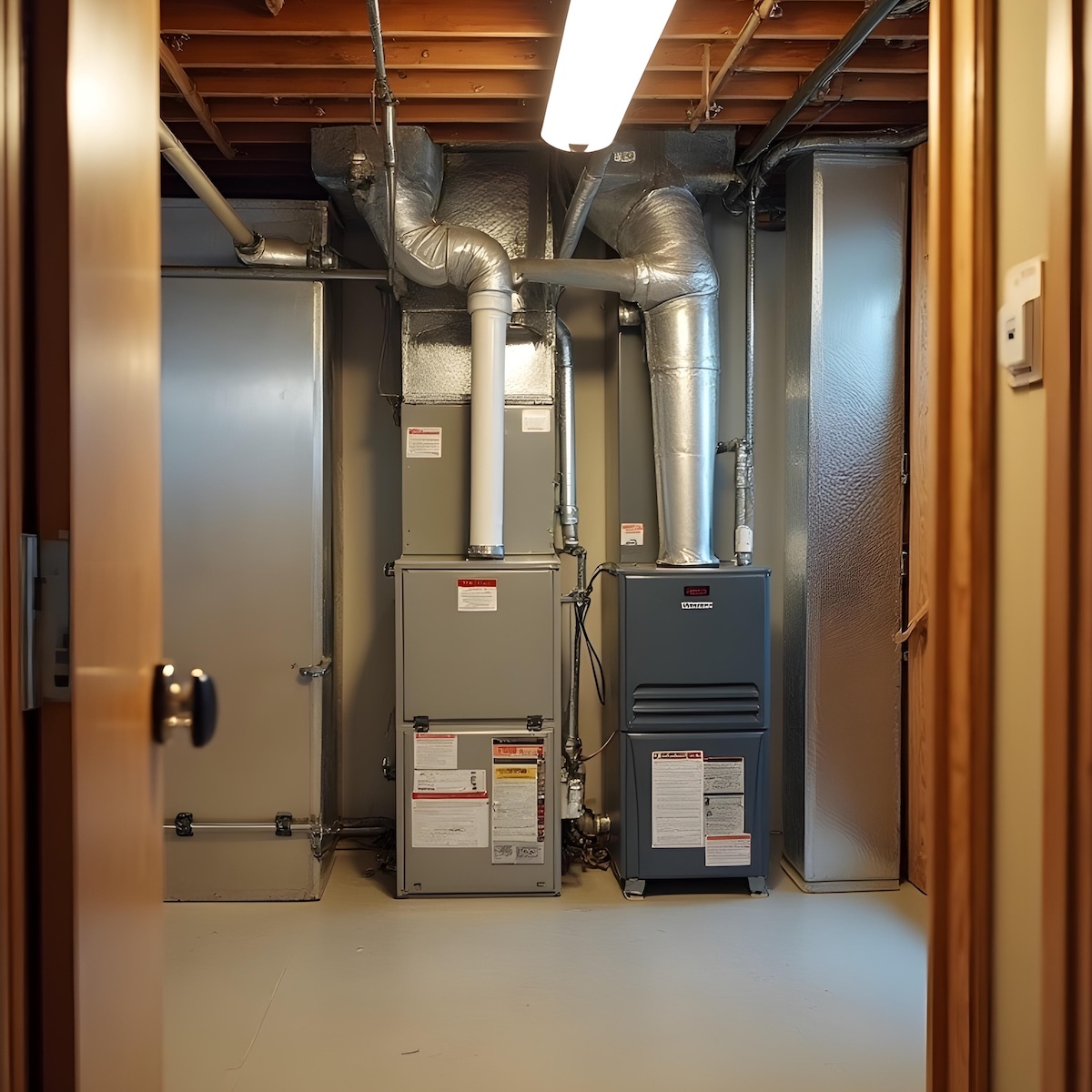
- Walk your ductwork in the basement or crawlspace and seal any visible gaps with foil tape. Not duct tape. That stuff fails within a year.
- Keep your windows closed during peak pollen hours, typically mid-morning to early afternoon, and rely on your system to condition the air.
One thing I would skip: the expensive electrostatic air purifiers that attach to your ductwork. The Department of Energy notes that these units can produce ozone, which is a lung irritant on its own.
A high-quality filter plus a clean system does more for allergies without introducing a new pollutant.
Signs Your Indoor Air Needs Professional Help
How do you know if you're past the DIY stage? Pay attention to the physical cues. If you wake up congested every morning despite running a decent filter, that points to contaminants living inside the system itself.
If you see dust accumulating on your furniture within days of cleaning, your ducts are likely leaking or the blower is recirculating settled debris.
If you smell a musty odor when the heat or AC kicks on, mold is growing somewhere in the air path.
The American Society of Heating, Refrigerating and Air-Conditioning Engineers sets the design standards for how much fresh air a building should bring in.
But those standards assume a clean distribution system. Once the ducts, coil, and blower are dirty, the fresh air gets contaminated on its way to your lungs.
Professional duct cleaning gets a mixed reputation, and honestly, some companies oversell it.
But there is a targeted version that matters: having the evaporator coil and blower wheel professionally cleaned during your spring tune-up.
Those two components are the biggest harbors for biological growth in the entire system.
Treating the System, Not Just the Symptoms
The allergy medication you take masks the reaction. The air purifier you run in the bedroom only cleans one room.
Neither addresses the fact that your entire house has a distribution network pulling in pollen every time it cycles.
You wouldn't keep mopping a floor while a pipe above it leaks. Treating spring allergies works the same way: fix the source first.
- Parents Are Prioritising Breathable, Sustainable Fabrics For Children's Seasonal Sleepwear
- Our Homemade Christmas Printables, Made With AI: What Worked, What Didn't, and What I'm Saving for Next Year
- At-Home vs. In-Lounge IV Therapy in the Hudson Valley: Which Makes More Sense?
- Can Passengers Pursue Compensation After a Car Accident?




Start with the filter, then the condensate line, then the professional inspection. Do those three things and you'll notice the difference by the time the grass pollen peaks.
Your eyes will itch less. Your nose will run less. And you'll stop blaming that innocent oak tree for something your own basement has been doing all along.





Leave a Reply