

Artificial intelligence is changing the way people search for information, make decisions, and understand complex subjects. Astrology is no exception. Today, AI-powered astrology tools can generate birth charts, identify planetary placements, explain zodiac signs, and provide interpretations within seconds. This raises an interesting question: Can AI understand a birth chart better than a professional astrologer?
The answer is not as simple as choosing one over the other. AI can process information quickly and consistently, while a human astrologer can bring experience, intuition, context, and personal interaction into a consultation. Understanding the difference between these approaches can help people decide when technology is useful and when human guidance may be more valuable.
Jump to:
- What Is a Birth Chart?
- How AI Interprets a Birth Chart
- Where AI Has an Advantage
- Why Human Astrologers Still Matter
- Can AI Understand Context?
- AI Can Reduce the Learning Curve
- The Importance of Accurate Birth Information
- AI vs. Professional Astrologer: Which Is Better?
- Could AI Become Better in the Future?
- A Balanced Approach May Be the Best Choice
- FAQs
- Final Thoughts
What Is a Birth Chart?
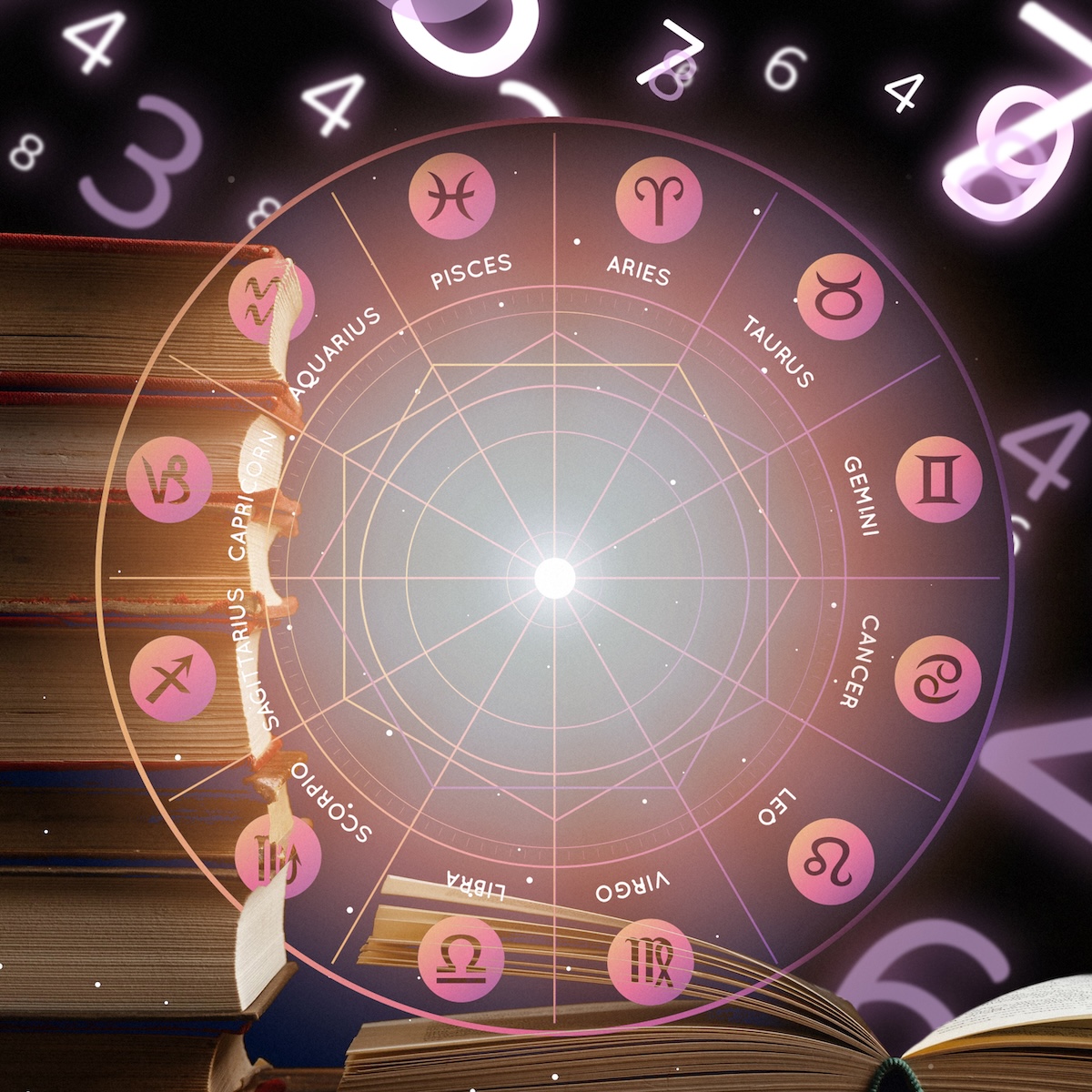
A birth chart, also called a natal chart, is an astrological map created using a person's date, time, and place of birth. In traditional astrology, the chart is used to examine the positions of planets, zodiac signs, houses, and different planetary relationships.
A complete interpretation can involve many factors. For example, an astrologer may consider the Ascendant, Moon sign, Sun sign, planetary placements, house positions, aspects between planets, and planetary periods depending on the astrological system being followed.
This is where the comparison between AI and professional astrologers becomes interesting.
How AI Interprets a Birth Chart
AI can analyze large amounts of structured information extremely quickly. Once birth details are entered into an astrology platform, an AI system can identify planetary positions and generate explanations based on programmed rules, databases, or learned patterns.
For someone who is new to astrology, this can be convenient. Instead of spending hours learning terminology, users can ask questions in simple language.
For instance, a person might ask:
- What does Saturn in the tenth house mean?
- What does my Moon sign indicate?
- Which planets influence my career?
- What does a particular planetary combination traditionally represent?
AI can provide immediate answers and explain basic astrological concepts in an accessible way.
Another advantage is consistency. An AI system can review the same information repeatedly without becoming tired or distracted. It can also compare multiple chart elements quickly.
Where AI Has an Advantage
One of the biggest strengths of AI is speed. A professional astrologer may spend considerable time calculating and examining a chart, while software can process astronomical data almost instantly.
AI is also useful for organizing information. A complicated chart contains numerous elements, and technology can present them in a structured format. Beginners may find this particularly helpful.
Another advantage is accessibility. AI-based astrology tools can be available at any time, allowing users to explore their charts whenever they have questions. They can also ask follow-up questions without feeling rushed.
AI can therefore work well as an educational companion. It can help people understand basic terminology before they decide whether they want a detailed consultation.
Why Human Astrologers Still Matter
Despite its technological capabilities, AI has important limitations. A professional astrologer does more than identify planetary positions. They interpret the chart within a broader personal context. Two people may have similar planetary placements but completely different experiences because of their circumstances, choices, environment, and life history.
Human communication can also make a major difference. During a consultation, an astrologer can ask questions, understand what the person is concerned about, and adjust the discussion accordingly.
For example, someone asking about career prospects may actually be worried about changing industries, starting a business, dealing with workplace uncertainty, or balancing professional and family responsibilities. A human consultant can explore these concerns through conversation.
This is one reason people continue to seek guidance from an experienced career astrologer when they want to discuss professional questions through an astrological perspective.
Can AI Understand Context?
Context is perhaps the biggest challenge for AI astrology. An AI system can recognize that certain planetary combinations have traditional interpretations. However, translating those interpretations into a meaningful discussion about an individual's life can be more complicated.
Consider two people with a similar Saturn placement. One might be building a business, while another might be pursuing a creative career. Their questions, priorities, and expectations could be completely different.
A human astrologer can ask relevant questions and interpret the chart within the conversation. AI may provide a technically organized interpretation but may not fully understand the emotional or practical context behind the user's question.
This distinction becomes particularly important when people are looking for guidance rather than simple information.
AI Can Reduce the Learning Curve
Although AI may not replace professional astrologers, it can make astrology easier to explore.
Beginners often find astrological terminology confusing. Words such as houses, aspects, conjunctions, transits, exaltation, retrograde motion, and planetary periods can seem overwhelming.
AI can explain these concepts in everyday language. Users can ask the same question in different ways and receive simplified explanations.
For example, instead of searching through multiple astrology books to understand a particular term, someone can ask an AI system for a beginner-friendly explanation followed by examples.
In this way, AI can serve as a learning assistant rather than a replacement for human expertise.
The Importance of Accurate Birth Information
Whether someone uses AI or consults an astrologer, the quality of the birth information matters.
A birth chart depends heavily on accurate birth time and location. Even a relatively small difference in birth time can affect certain chart calculations, particularly the Ascendant and house placements.
Therefore, users should be careful when entering their details into automated tools. An AI-generated interpretation cannot compensate for inaccurate input data.
A professional astrologer may also discuss uncertainties surrounding birth time and, depending on their approach, may use traditional methods to address those uncertainties.
AI vs. Professional Astrologer: Which Is Better?
Rather than viewing AI and astrologers as competitors, it may be more useful to see them as different tools.
AI is particularly useful for:
- Quick explanations
- Learning astrology basics
- Organizing chart information
- Answering general questions
- Exploring planetary placements
- Getting an initial overview of a birth chart
Professional astrologers may be more useful for:
- Personalized consultations
- Discussing complex life circumstances
- Exploring specific concerns in depth
- Asking follow-up questions
- Providing conversational guidance
- Interpreting a chart within personal context
The best choice depends on what the person wants from astrology.
If someone simply wants to understand what a particular planetary placement traditionally means, AI may be sufficient. If they want an extended discussion about their individual circumstances, a human consultation may offer greater value.
Could AI Become Better in the Future?
AI technology is developing rapidly. Future systems may become better at combining chart calculations, traditional astrological rules, conversational context, and personalized explanations.
However, technological improvement does not necessarily eliminate the role of human professionals. Many fields use AI to support experts rather than replace them.
Astrology could follow a similar model. An astrologer might use AI to organize information, perform calculations, research traditional interpretations, or prepare questions before a consultation. The astrologer can then focus more attention on communication and individualized interpretation.
This combination could potentially provide a more efficient experience without removing the human element.
A Balanced Approach May Be the Best Choice
The debate over whether AI can understand a birth chart better than a professional astrologer ultimately depends on what “understand” means.
If understanding means processing chart data quickly, identifying patterns, and explaining standard interpretations, AI has significant advantages.
If understanding means listening to a person's concerns, considering their circumstances, asking meaningful questions, and providing a personalized conversation, human expertise remains important.
It is also worth remembering that astrology is a traditional belief system rather than a scientifically established method for predicting future events. Astrological interpretations should therefore be approached as guidance or personal reflection rather than guaranteed predictions.
The smartest approach may be to use technology for exploration and education while turning to qualified human professionals for online astrology consultation when deeper personal discussion and guidance are desired.
FAQs
Yes. AI-powered astrology platforms can use birth date, time, and location to generate or interpret natal-chart information. The accuracy of the underlying chart depends on the quality of the astronomical calculations and the birth details provided.
An AI reading can accurately explain programmed or learned astrological interpretations, but it should not be treated as a guaranteed prediction of future events. Results can also vary between different AI systems.
AI can replace some basic tasks, such as explaining planetary placements or generating general interpretations. However, human astrologers can provide personalized conversations and contextual understanding that automated systems may not fully reproduce.
It can be useful. AI can help you understand basic terminology and prepare questions. A professional consultation can then provide an opportunity to discuss specific concerns in greater depth.
Generally, a birth chart requires the person's date of birth, exact or approximate birth time, and place of birth. More accurate information can produce a more precise chart calculation.
Final Thoughts
AI has made birth-chart information more accessible than ever. It can calculate information quickly, explain complicated terminology, and help beginners explore astrology without requiring extensive prior knowledge.
- Parents Are Prioritising Breathable, Sustainable Fabrics For Children's Seasonal Sleepwear
- Our Homemade Christmas Printables, Made With AI: What Worked, What Didn't, and What I'm Saving for Next Year
- At-Home vs. In-Lounge IV Therapy in the Hudson Valley: Which Makes More Sense?
- Can Passengers Pursue Compensation After a Car Accident?




However, a birth chart is not simply a collection of planetary positions. Interpretation involves multiple factors, and personal context can significantly influence how people understand astrological traditions.
For that reason, AI is unlikely to make professional astrologers irrelevant anytime soon. Instead, the two can complement each other. AI can handle speed, organization, and basic explanations, while experienced astrologers can provide conversation, context, and personalized interpretation.
Ultimately, the question may not be “AI or astrologer?” but rather “How can AI and astrologers work together to make birth-chart interpretation more useful?” That perspective allows technology to enhance the astrology experience while preserving the human element that many people value most.





Leave a Reply