

Dogs are really good at hiding pain. It's an evolutionary hangover, honestly; an animal that shows weakness gets picked off.
So by the time your dog is limping, refusing food, or lying around all day, whatever's going on has usually been building for a while.
A dog drinking 15% more water than usual for four straight days. A dog eating slower, or skipping the evening meal twice a week instead of never.
These are exactly the kinds of shifts a smart pet bowl is built to catch, and they're nearly impossible for even the most attentive owner to track by memory alone.
Why Feeding Bowls Became the Obvious Place to Put Sensors. Pet tech spent years chasing the wearable model: straps, collars, and harnesses.
Best in theory. In practice, many dogs hate them, chew them off, or just refuse to wear them consistently.
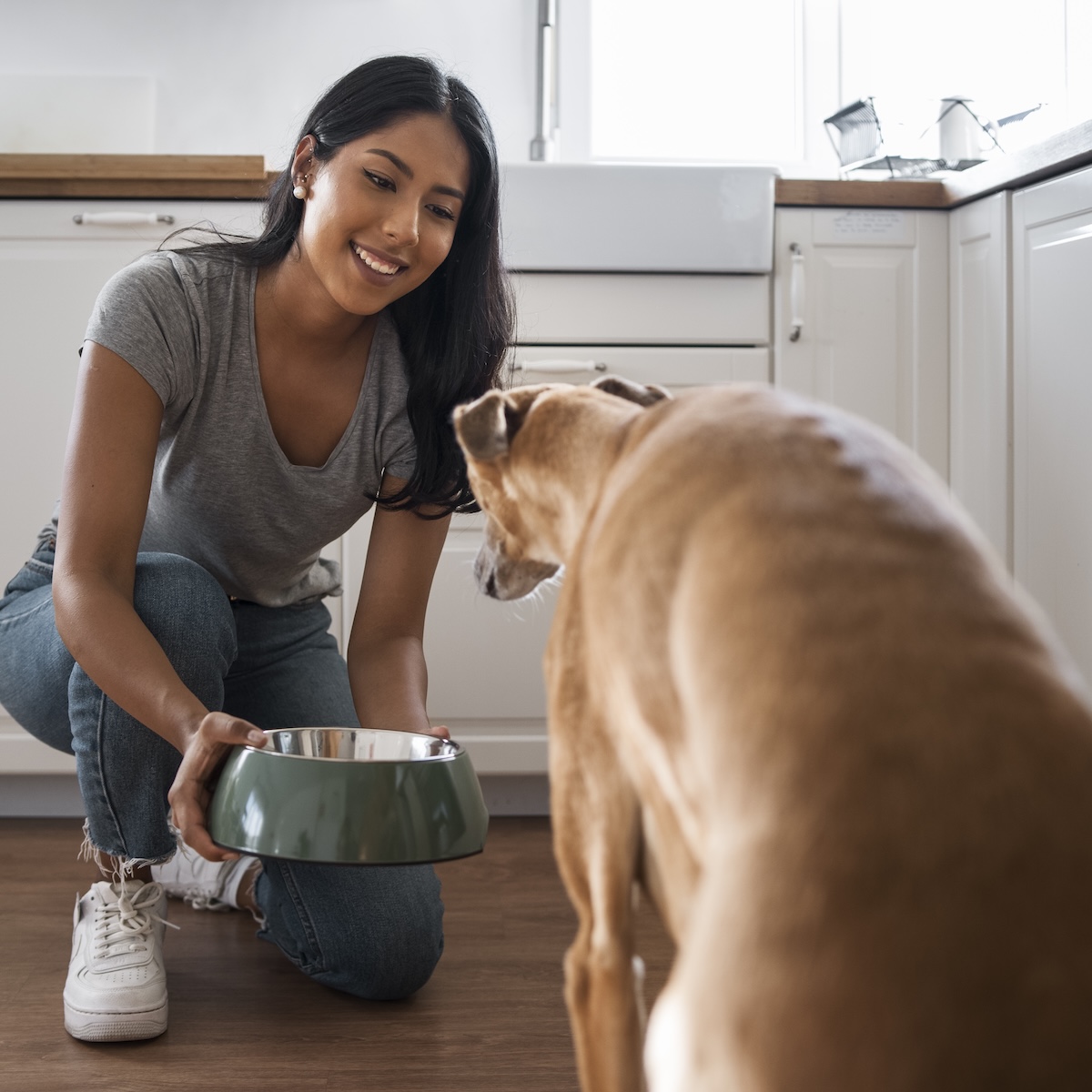
A bowl doesn't have that problem. Your dog already visits it three, four, sometimes five times a day without being asked.
That's a lot of free data collection points if you've got the sensors to catch it.
This is the logic behind a smart pet bowl like Hoomanely's EverBowl: dual stainless-steel bowls with multi-sensor fusion and Edge AI, quietly logging feeding pace, portion consistency, and water intake in the background. No training required. It just sits there and works.
Jump to:
What a Smart Pet Bowl Actually Measures
- Feeding speed and frequency: sudden slowdowns can flag dental pain, nausea, or GI discomfort
- Water intake trends: spikes can point to kidney issues, diabetes, or early-stage infection; drops can signal dehydration or fever
- Meal-skipping patterns: one skipped bowl is nothing; three in a week is a signal worth watching
- Behavioral timing shifts: a dog who suddenly eats breakfast at 10am instead of 7am might be telling you something about their energy levels
None of these on their own means "call the vet right now." But together, tracked over weeks, they build a baseline.
And a baseline is what lets Biosense AI, Hoomanely's ML and LLM-powered engine, flag when something's actually off instead of just normal day-to-day noise.
Where Dog Activity Trackers Fit Into the Picture
A smart pet bowl tells you what's going in. A dog activity tracker tells you what's happening with that energy once it's inside your dog. Together, they're a lot more useful than either one alone.
Think about it this way: a dog eating normally but moving 30% less than their usual baseline might be dealing with joint pain, not appetite loss. A dog activity tracker catches that.
Meanwhile, a dog whose water intake has quietly crept up over two weeks, with activity levels unchanged, might be showing early signs of something metabolic. The bowl catches that one.
Neither device alone tells the full story. That's really the point.
The Combined Data Advantage
| Signal Source | Catches |
| Smart pet bowl | Eating pace, hydration trends, meal timing, portion consistency |
| Dog activity tracker | Movement levels, rest patterns, mobility changes, calorie expenditure |
| Combined (Biosense AI) | Cross-referenced anomalies, breed-adjusted baselines, early pattern flags |
This is where Hoomanely's three-tier structure earns its keep. The EverBowl handles physical intelligence (the raw sensor layer).
Biosense AI and the EverWiz app turn that raw data into something readable.
And the pet-parent exposome, the community layer, lets your dog's numbers be compared against those of similar dogs (same breed, age, and size) instead of floating in a vacuum.
What Owners Should Actually Look For in a Smart Pet Bowl
Not all smart bowls are created equal. A few things worth checking before you buy one:
- Sensor accuracy: cheap bowls estimate weight and volume roughly; better ones use multi-sensor fusion for gram-level precision
- Whether it processes data on-device (Edge AI) or only in the cloud: on-device processing tends to mean faster anomaly detection and less lag
- Whether it connects to a broader ecosystem: a bowl that talks to a dog activity tracker and builds a shared health profile is worth more than one that just sits alone collecting numbers nobody reads
- Vet-relevant reporting: can you actually export or share the data with your veterinarian, or is it stuck in an app only you can see?
FAQs
Yes. The value isn't just measuring food and water; it's tracking those measurements over time and flagging deviations from your dog's personal baseline. That kind of pattern analysis needs cloud or app-based processing (or Edge AI on the device itself) to actually mean anything.
No. A dog activity tracker is a monitoring tool, not a diagnostic one. It's there to flag changes worth mentioning to your vet, not to diagnose anything itself.
It depends on the issue. Sudden changes, like a dog refusing food entirely, show up immediately. Gradual shifts, like slowly increasing water intake tied to early kidney changes, might take one to two weeks of data to establish a clear trend versus normal daily variation.
Honestly, that's often when it's most valuable. Establishing a healthy baseline early means any future deviation is easier to catch. Waiting until a dog is already a senior with symptoms means you're playing catch-up instead of getting ahead of it.
A standard smart feeder mostly just automates portions and timing. EverBowl, Hoomanely's flagship device, layers in multi-sensor fusion and Edge AI specifically to catch behavioral and health-relevant shifts, then feeds that data into Biosense AI for personalized, clinical-grade insight rather than just a feeding schedule.
Conclusion
Traditional pet care runs on an annual checkup and a gut feeling in between. That model made sense when there was no alternative. There is one now.
- Parents Are Prioritising Breathable, Sustainable Fabrics For Children's Seasonal Sleepwear
- Our Homemade Christmas Printables, Made With AI: What Worked, What Didn't, and What I'm Saving for Next Year
- At-Home vs. In-Lounge IV Therapy in the Hudson Valley: Which Makes More Sense?
- Can Passengers Pursue Compensation After a Car Accident?




A smart pet bowl paired with a dog activity tracker doesn't replace your vet.
What it does is hand your vet (and you) something they've never really had before: a continuous timeline instead of a single snapshot once a year.
Early pattern detection instead of guesswork. Data instead of "he seems a little off lately."
That shift, from occasional glimpses to continuous presence, is what Hoomanely calls Precision Presence: watching over your dog not just with love, but with clinical-grade data backing it up.
Every signal matters. Every detail counts. And now, for the first time, someone's actually collecting them.





Leave a Reply