

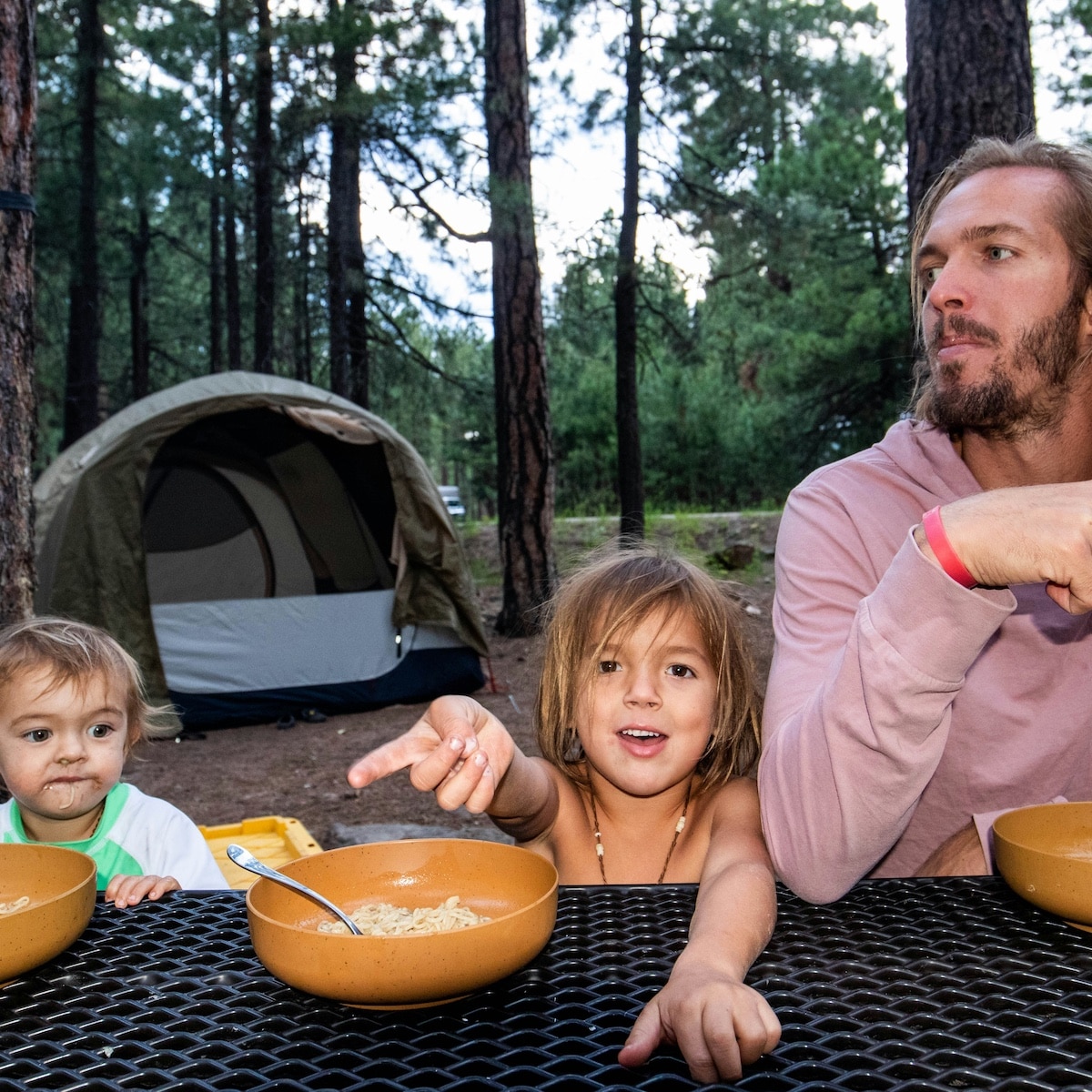
Family camping has a strange way of making everything at home suddenly seem essential. Extra blankets might be useful. The children might want six different toys.
Someone suggests bringing another table, a second cooler, three kinds of cookware, and enough clothes for every possible weather condition.
By departure morning, the car looks as though the family is moving permanently into the woods.
Comfort matters, especially with children, but successful camping does not require recreating your entire home outdoors.
The better approach is to understand the campsite, plan around what you will actually do, and make every item earn its space in the vehicle.
Jump to:
Pack Around the Campsite You Have Actually Booked
Before opening cupboards and filling bags, check what will already be available at your destination.
A developed campground with drinking water, toilets, showers, picnic tables, and fire rings requires a very different packing strategy from a basic site with few facilities.
Once you know what is provided, think about the small things that make shared camping spaces more pleasant.
Keeping the tent and sleeping area fresh becomes especially noticeable when several people are sharing a confined space, and Azuna air fresheners can be considered as part of keeping personal spaces pleasant rather than filling the car with multiple household cleaning and fragrance products.
The same logic should guide everything else. If there is a picnic table, you may not need another large table.
If potable water is available nearby, reconsider how much you need to transport from home.
If you are camping for two nights, packing enough toiletries for two weeks only consumes space.
Check the forecast shortly before leaving as well. Packing for realistic conditions is much easier than trying to prepare equally for every temperature imaginable.
Build the Trip Around a Few Multipurpose Essentials
Overpacking often happens because people prepare for individual situations rather than categories of needs.
Instead, organize around shelter, sleeping, cooking, clothing, hygiene, safety, and a small amount of entertainment.
For sleeping, each person needs an appropriate sleeping bag or bedding and insulation from the ground.
You do not need to recreate everyone's bedroom with multiple decorative pillows and several blankets unless the expected temperatures genuinely justify them.
Apply the same rule to the camp kitchen. Plan the meals first and then pack only the equipment required to prepare those meals.
If breakfast needs one pan and dinner can be cooked in one pot, bringing half the kitchen cupboard adds work without improving the food.
Choose items that perform several jobs. A headlamp is useful for walking to the bathroom, cooking after dark, finding something inside the tent, and reading at night.
A plastic storage container can transport equipment and then become organized campsite storage once emptied.
Every multipurpose item removes several potential single-purpose objects from the packing list.
If you already use glasses with camera, they can capture quick photos and short videos of family walks or campsite activities hands-free, saving you from packing a separate camera for casual snapshots.
Organize the Vehicle Around When You Will Need Things
Efficient packing is not only about reducing the amount of gear. It is also about preventing the gear you do bring from becoming one enormous pile.
If your family travels in a Jeep, the way equipment is arranged can matter almost as much as the total amount.
Equipment from CavFab can be relevant when configuring a Jeep for carrying and organising gear, particularly for families who regularly use the vehicle for outdoor trips.
The objective is to create predictable places for equipment rather than squeezing another loose bag into whichever gap remains.
Think about the order in which items will be needed. The tent and setup equipment should not be buried underneath objects that will not be touched until bedtime.
Rain jackets should remain accessible if rain is possible during arrival. First-aid supplies, flashlights, water, and important documents should never require unloading the vehicle to reach them.
Separate smaller items into clearly defined containers rather than one miscellaneous camping box.
A kitchen container, campsite container, and personal bag for each family member can make both packing and unpacking easier.
This organization becomes even more valuable on the journey home. Everyone knows where equipment belongs, making it less likely that small items disappear somewhere around the campsite.
Give Everyone a Limit for Clothes and Entertainment
Children can make packing particularly difficult because almost anything can be defended with the phrase “I might need it.” Without boundaries, one child's bag can quickly end up containing multiple jackets, several pairs of shoes, stuffed animals, books, electronics, games, and enough clothing for a much longer vacation.
Pack clothing based on the number of days and expected conditions, and include sensible extras for children who are likely to get wet or dirty.
Layers are more versatile than several completely different outfits. Include appropriate rain protection and footwear without packing every jacket and shoe anyone owns.
Entertainment deserves similar limits. Camping itself should provide much of what the family does during the day. Hiking, exploring, swimming where appropriate, wildlife watching, cooking together, and simply spending time around the campsite reduce the need to transport a portable entertainment center.
Let each child choose a small number of personal items. One book, a favorite comfort item, and perhaps a compact game can provide enough familiarity without filling another bag.
A deck of cards or one travel game can entertain the entire family. A ball or Frisbee can provide hours of activity while taking up relatively little space.
Choose entertainment according to how many people can use it rather than packing separate options for every possible moment of boredom.
Make a Master List and Remove Things Before You Leave
The final stage of packing should actually involve taking things out. Create one master list for the family rather than allowing everyone to pack independently without coordination.
Shared items such as sunscreen, toothpaste, cooking equipment, first-aid supplies, chargers, and insect protection do not need to appear separately in every person's bag.
Once everything is gathered, review it by asking three questions: Will we definitely use this? What problem does it solve? Do we already have something packed that can perform the same job?
If nobody can provide a convincing answer, consider leaving it home. Keep the final list after the trip. When you return, mark what was never used and note anything genuinely important that was missing.
After two or three camping trips, your family will have a personalized packing system based on experience rather than generic ideas about what campers supposedly need.
There will always be exceptions. Medication, safety equipment, appropriate shelter, weather protection, sufficient food and water, and necessities for babies or very young children deserve more caution than optional comfort items. Minimal packing should never mean leaving behind something essential to health or safety.
- Parents Are Prioritising Breathable, Sustainable Fabrics For Children's Seasonal Sleepwear
- Our Homemade Christmas Printables, Made With AI: What Worked, What Didn't, and What I'm Saving for Next Year
- At-Home vs. In-Lounge IV Therapy in the Hudson Valley: Which Makes More Sense?
- Can Passengers Pursue Compensation After a Car Accident?




Everything else can be questioned. The best family camping setup is not the one with the most equipment surrounding the tent.
It is the one where everyone has what they genuinely need, and nobody spends half the weekend searching through boxes.
Pack according to the campsite, simplify meals, give everyone sensible limits, and organize the vehicle so essential gear remains accessible.
When the trunk finally closes without anyone sitting on it, you will have already made the first part of the camping trip easier.





Leave a Reply