

Here is how it usually goes. Someone decides to start training at home, buys a cheap adjustable dumbbell set, uses it for six weeks, then outgrows it or breaks it.
Six months later, they buy the thing they should have bought first, and the original purchase is in the garage under a bag of Christmas decorations.
The problem is almost never motivation. It is that most people buy for the version of themselves who is starting out, rather than the version who has been training for a year.
Jump to:
Why Strength Work Earns Its Space
The official guidance is unusually clear on this one. The World Health Organization recommends adults do muscle-strengthening activities at moderate or greater intensity, involving all major muscle groups, on two or more days a week.
The CDC says the same thing in the same terms. Both frame it as an addition to aerobic activity rather than a substitute for it, meaning that walking or the school run does not count.
For older adults specifically, the WHO notes that physical activity helps prevent falls and declines in bone health and functional ability.
That is the part worth holding onto, because the payoff here is being able to carry things and get off the floor easily in thirty years.
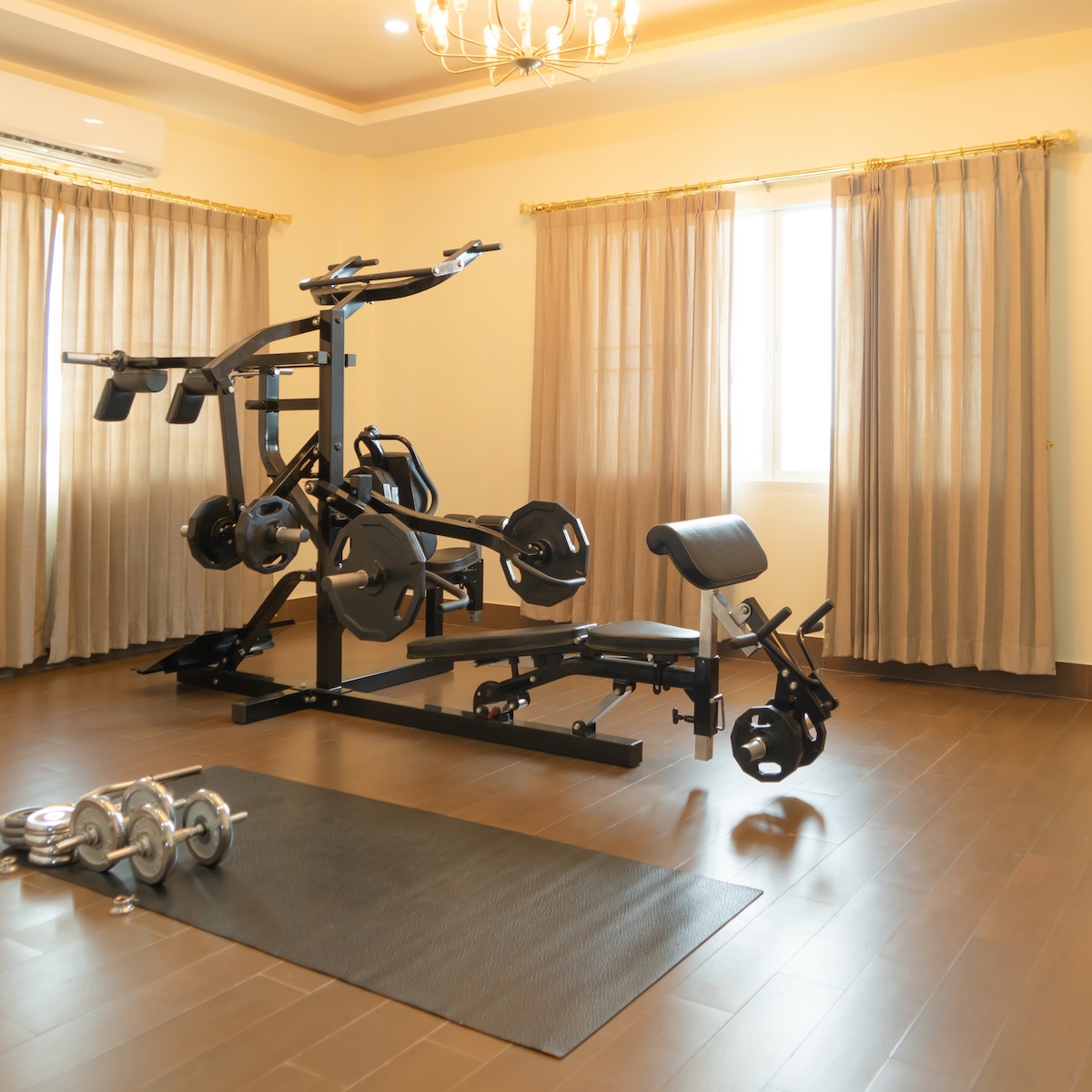
None of this requires a gym membership or an hour a day. It requires something to lift and somewhere to put it, which is why home setups have become the practical choice for many households.
If you are working on this alongside a partner, shared health goals tend to hold up better than solo ones, and shared equipment is considerably cheaper than two gym memberships.
The Buying Too Light Problem
Strength adapts fast at the beginning. That is the good news and also the trap.
Most of the early gains are neurological rather than muscular. Your nervous system gets better at recruiting what you already have, which is why the jump in what you can lift over the first two months is steeper than at any point afterwards.
It means the equipment that felt appropriately hard in January can feel almost pointless by March. People read that as a sign they have plateaued when it is actually a sign the load is too light.
A set of dumbbells that tops out at 10kg feels challenging in week one and is comfortable by week eight for most people who do consistent work.
Lower-body movements, in particular, outgrow light equipment almost immediately, since legs are simply stronger than arms.
So the useful question when buying is not what you can lift today. It is what you will be lifting in twelve months, and whether the equipment covers that without a second purchase.
There is a second version of the same error, which is buying adjustable equipment on the assumption it will scale.
Most budget adjustable dumbbells top out well below where a committed beginner ends up, and the mechanisms are the first thing to fail.
Fixed weights have almost nothing to break. That is unglamorous, but it is the reason secondhand plates from the 1980s still sell.
The other thing people underestimate is how much the setup itself affects whether they train.
Equipment that takes four minutes to assemble before a twenty-minute session quietly falls out of use, usually within a month or two.
This is where bundled sets tend to make more sense than they first appear. Kinta Fitness sells a weights set range built around this idea, with barbell plate bundles in 100kg, 140kg and 150kg totals, dumbbell sets running from 1kg to 10kg up to 10kg to 35kg and kettlebell progressions from a 6/8/10kg starter trio through to a full 6kg to 32kg range with rack.
The pricing logic is straightforward. Bundles are priced at package level rather than as the sum of individual pieces, and everything arrives in one delivery, which matters when the items in question are extremely heavy.
They are refreshingly direct about the downside, too, noting on their own site that a bundle offers less flexibility in weight increments than buying plates individually. That is a real trade-off and worth knowing before you commit.
Kinta is Australian-owned and veteran-founded, based in Malaga in Western Australia, with next-day delivery across Perth metro and standard freight nationwide. They also run discounts for emergency services, defence personnel and trainers, which is worth asking about if it applies to you.
What Actually Matters When You Compare Sets
Check the sleeve standard first. Olympic plates use a 50mm center hole and fit any 7ft Olympic bar, rack or weight tree, and mixing standards is how people end up with plates that will not fit the bar they already own.
Think about matched pairs rather than total weight. A bundle built around symmetrical loading means you can actually load a bar evenly, which sounds obvious until you own an odd number of 10kg plates.
Consider the surface underneath. Bumper plates are designed to be dropped and cast iron is not, so the plate type you pick determines whether you also need rubber flooring.
Storage is not optional with a home setup. Loose plates on a garage floor become a trip hazard and a stubbed toe, and dumbbell sets sold with a rack are usually cheaper than buying the rack separately later.
And think about noise and neighbours if you are in a townhouse or apartment. Cast iron on concrete travels further than you would expect.
The Family Safety Part
Weights and small children in the same house need a plan, and it is a boring one: everything gets put away every time.
A 20kg plate leaning against a wall is a genuine crush hazard for a toddler, and dumbbells left on the floor are the single most common cause of household weight injuries. A rack is a safety item as much as a storage one.
If older kids want to join in, that is generally a positive, and youth resistance training under supervision is well supported when it emphasises technique over load. Get guidance from a coach or physio rather than handing over the heavy set.
Anyone with existing joint problems, high blood pressure or a recent injury should check with their doctor before starting, and anyone new to lifting benefits from a few sessions with a trainer to get form right.
The injuries that end home training programs are almost always technique-related rather than equipment-related.
Starting Sensibly
For most households starting from nothing, Kinta's own recommendation is reasonable: a 100kg plate bundle plus either a dumbbell or kettlebell set covers most training for a long while.
If space is tight, kettlebells do more per square metre than anything else, since a three-bell set handles swings, squats, presses and carries in a footprint the size of a shoebox.
If budget is the binding constraint, buy fewer pieces of better quality rather than a wide range of cheap ones. Plates last decades and adjustable plastic-shelled dumbbells often do not.
And buy the storage at the same time as the weights, not six months later, because that is the difference between a home gym and a pile of metal in the corner.
FAQ'S
More than feels necessary. Strength improves quickly in the first few months, and lower body movements outgrow light equipment almost immediately. A bundle in the region of 100kg total plate weight gives most beginners a year or more of progression.
Bumper plates are rubber-coated and designed to be dropped, which suits Olympic lifting and protects floors. Cast iron is more compact for the same weight and usually cheaper, but should not be dropped.
Only if the sleeve standard matches. Olympic plates use a 50mm center hole and fit standard 7ft Olympic bars. Check what your bar takes before ordering anything.
Kettlebells cover more movement types per item and take up less room, so a set of three handles a surprising amount. Dumbbells offer finer increments and suit accessory work better.
Store everything on a rack rather than the floor, and treat putting equipment away as part of the workout rather than an optional extra. Plates leaning against walls are the main hazard to eliminate.
That is what both the WHO and CDC recommend for adults, working all major muscle groups. It is a floor rather than a target, and consistency at two sessions beats an ambitious plan you abandon.
The Bottom Line
The equipment question is genuinely secondary. Two sessions a week with a modest set beats an elaborate setup you use twice.
- Parents Are Prioritising Breathable, Sustainable Fabrics For Children's Seasonal Sleepwear
- Our Homemade Christmas Printables, Made With AI: What Worked, What Didn't, and What I'm Saving for Next Year
- At-Home vs. In-Lounge IV Therapy in the Hudson Valley: Which Makes More Sense?
- Can Passengers Pursue Compensation After a Car Accident?




But the one decision worth getting right at the start is capacity. Buying something you will outgrow in two months is how most home gyms end up costing double.
Buy for the person you will be in a year; put it somewhere you will actually see it, and keep it tidy enough that it is easy to use.
This article is general information and not medical or fitness advice. Speak with your doctor before starting a new exercise program, particularly if you have an existing health condition or injury.





Leave a Reply