

A home gym used to mean claiming an entire garage, basement, or spare room and filling it with large machines.
That image is changing. More people now want training spaces that can share a room with work, storage, family life, or everyday furniture.
The goal is not to own less for the sake of minimalism. It is about choosing equipment that does more while requiring less permanent space.
Compact fitness has become attractive because it aligns with how many homes actually function.
A dining room may become a workout area before breakfast. A home office may need to return to work mode after training.
An apartment may have enough room for strength exercise but not enough room for a line of fixed machines.
In these settings, the most useful equipment is often the equipment that can be moved, adjusted, stored, or used for several exercises.
Before buying, write down the movements you perform most often. If an item supports only an occasional exercise, it may not deserve valuable floor space.
If it supports several recurring movements, it has a stronger reason to stay.
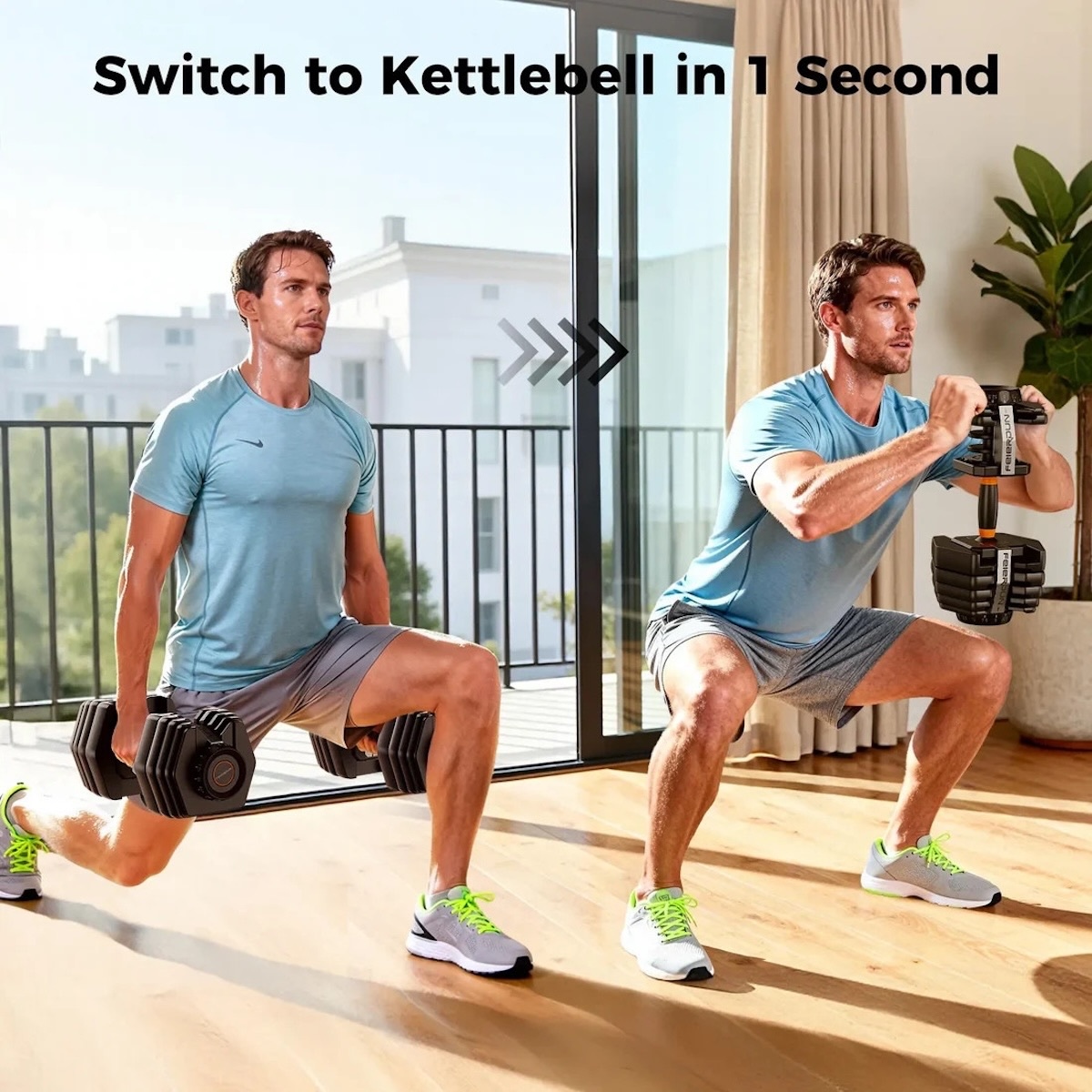
This is where adjustable dumbbells can appeal to home trainees: one compact resistance system can support different exercises without requiring a separate fixed pair for each movement.
Jump to:
- Compact Does Not Mean Compromising on a Serious Training Plan
- The Hidden Advantage Is Faster Setup, Not Just Smaller Storage
- One Open Floor Area Can Be More Valuable Than Another Machine
- Compact Fitness Also Makes Shared Spaces Easier to Share
- When a Large Home Gym Still Makes More Sense
- FAQ'S
- Build the Smallest Setup That Fully Supports Your Routine
Compact Does Not Mean Compromising on a Serious Training Plan
People sometimes assume that a small home gym is only suitable for beginners or light workouts. That depends more on programming and available resistance than on room size.
Strength training can be organized around squats, lunges, hinges, presses, rows, carries, and core work without filling a room with specialized stations.
The real limitation is whether the setup allows safe, repeatable progression.
A person needs enough room to move, appropriate resistance for the exercises, and a way to make training gradually more challenging.
If those conditions are met, a compact setup can support structured training instead of functioning as a collection of occasional fitness accessories.
The FED Fitness Feierdun Series DB1 Quick Adjustable Dumbbell 52.5LBS can fit naturally into this kind of setup for someone who wants one dumbbell system to support different strength movements.
The important point is not the product label or the promise of saving space. It is whether the equipment matches the user's grip, room, exercise selection, and preferred style of training.
The Hidden Advantage Is Faster Setup, Not Just Smaller Storage
Storage gets most of the attention, but setup time matters just as much. If a workout requires moving furniture, assembling several pieces, finding accessories, and clearing a large area, a short session can feel inconvenient before it begins.
Compact equipment can reduce that friction. A user can define one small training zone, keep frequently used items nearby, and begin with fewer steps. When the session ends, the same equipment can return to a consistent storage location instead of remaining scattered around the room.
A Simple Reset Routine Keeps the Gym From Taking Over the House
The end of the workout should be part of the plan. Return equipment to the same place, clear the floor, wipe down surfaces when needed, and restore any shared furniture. This creates a boundary between training time and normal household use.
That small habit matters in apartments and multipurpose rooms because clutter can make equipment feel larger than it really is. Compact products work best when storage is deliberate rather than improvised.
One Open Floor Area Can Be More Valuable Than Another Machine
A crowded home gym can reduce the number of movements that are actually comfortable to perform. Open floor space supports warm-ups, mobility work, lunges, carries, bodyweight exercises, and safe transitions between equipment.
Before adding another machine, ask what the purchase will remove from the room. Will it block a walking path? Will it make floor exercises awkward? Will another family member need to move it every day? A product can be useful in isolation and still be wrong for the layout.
A bench can also be useful in a compact strength setup when the chosen model fits the room and supports several planned exercises. The decision should come from the program and available space, not from the idea that every home gym needs one.
Compact Fitness Also Makes Shared Spaces Easier to Share
A large dedicated gym is simple because the room has one purpose. A compact gym requires better organization, but that can make it more compatible with household life. One person may train early while another uses the room later for work. Equipment that returns to a predictable location makes that transition easier.
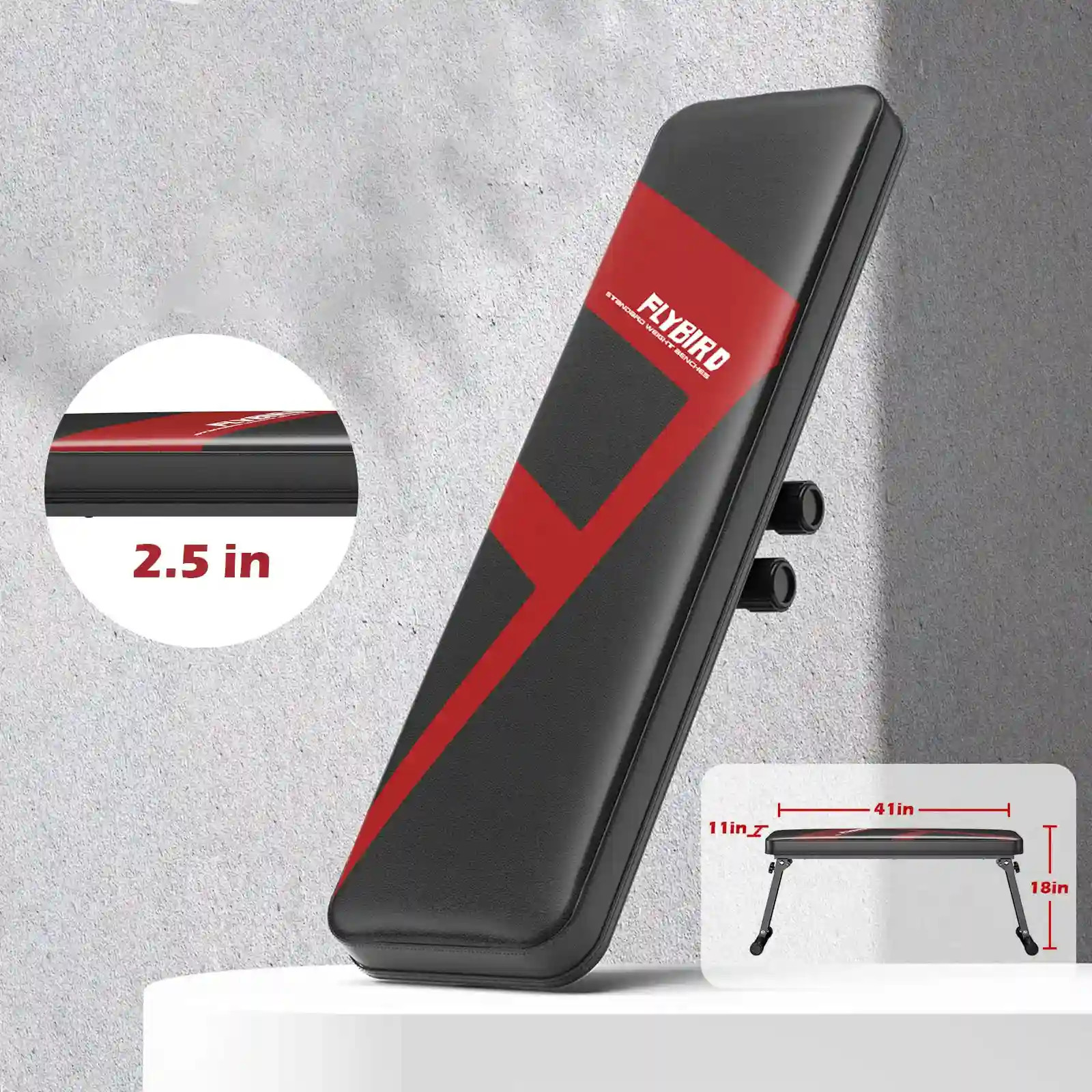
Shared use also changes equipment priorities. A couple may train at different levels, while a family may need clear storage rules so loose equipment stays away from children or pets. In a multipurpose room, an adjustable weight bench can make sense when it supports several users and can be managed without blocking the room's everyday function. That flexibility can matter just as much as the equipment itself in a busy household.
Buying Less Can Make Future Upgrades Smarter
Starting compact leaves room to learn. After several months, users know which exercises they repeat and where progression feels limited. That is more useful than predicting every future need on day one.
A smaller first setup can become a better foundation because each future purchase answers a real training problem.
When a Large Home Gym Still Makes More Sense
Compact equipment is not automatically best. People with dedicated space or specific goals may benefit from larger equipment. A rack or specialized station may justify its footprint when used consistently.
The key is intentionality. A large gym works when the room and routine justify it; a compact gym works when flexibility matters more.
Compact planning can also simplify cleaning and maintenance. Fewer crowded corners make it easier to inspect equipment, protect flooring, and notice when something needs attention. That advantage is easy to overlook, but it helps a small training area remain usable over time.
FAQ'S
No. It also works well in houses where a garage, bedroom, office, or basement serves more than one purpose.
Yes. With suitable resistance, a simple setup can support squats, hinges, presses, rows, lunges, carries, and core work.
Not automatically. Foldability helps when storage is practical and safe. A fixed item may be better if it has a permanent location.
Start with your routine. Buy what supports the exercises you plan to perform, then add equipment when a repeated limitation becomes clear.
Confirm space, movement clearance, user fit, intended exercises, storage guidance, floor conditions, and current product information.
Build the Smallest Setup That Fully Supports Your Routine
Compact fitness treats space as part of the training plan. A good home gym does not need to fill a room; it needs to make exercise easier to begin, organize, and repeat.
- Parents Are Prioritising Breathable, Sustainable Fabrics For Children's Seasonal Sleepwear
- Our Homemade Christmas Printables, Made With AI: What Worked, What Didn't, and What I'm Saving for Next Year
- At-Home vs. In-Lounge IV Therapy in the Hudson Valley: Which Makes More Sense?
- Can Passengers Pursue Compensation After a Car Accident?









Leave a Reply