

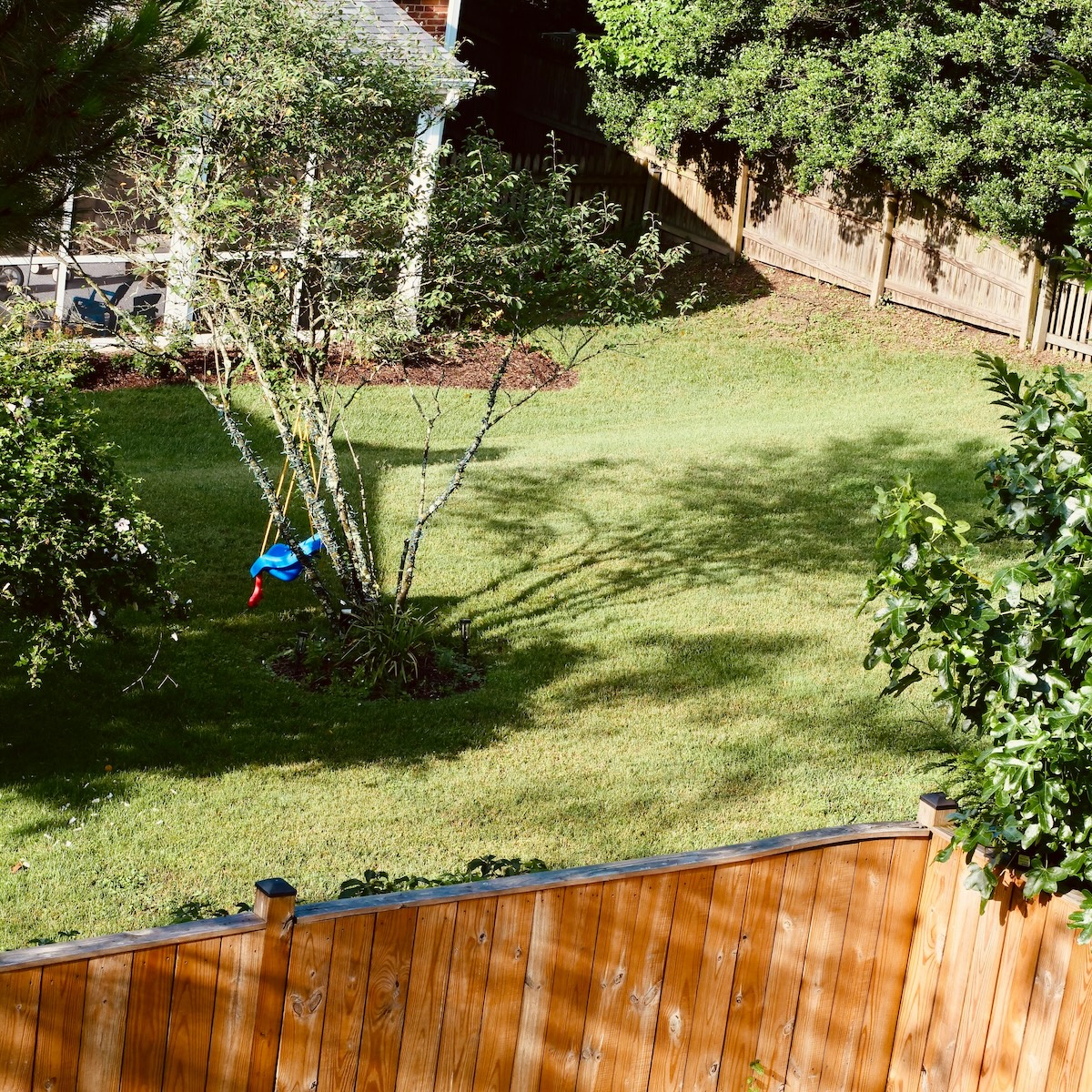
A sloped backyard can add character and scenic views to a property, but it also introduces unique challenges when planning outdoor improvements.
While flat lots typically offer greater flexibility, changes in elevation require additional planning to ensure that landscaping, patios, and other outdoor features are both functional and durable.
Understanding how a slope affects design decisions can help homeowners make informed choices before beginning a project.
From drainage and retaining walls to accessibility and excavation, every element must work together to create a safe and attractive outdoor space.
Jump to:
Retaining Walls and Drainage Are Often Essential
One of the first considerations with a sloped backyard is controlling water flow.
Rainwater naturally travels downhill, which can lead to erosion, standing water, or damage to landscaping if drainage is not properly managed.
Retaining walls are commonly used to stabilize soil, create level areas, and reduce erosion.
Depending on the property's grade, multiple retaining walls may be necessary to support terraces or separate outdoor living spaces.
Although these features add to the project's overall cost, they also improve long-term stability and usability.
Proper drainage systems, such as French drains or strategically placed grading, help protect both the landscape and nearby structures from water-related issues.
Elevation Influences Layout and Accessibility
A sloped yard often requires creative design solutions to maximize usable space.
Instead of one large open lawn, homeowners may choose to divide the property into multiple functional areas connected by stairs, walkways, or gently sloped paths.
Patios, outdoor kitchens, fire pits, and seating areas must be carefully positioned on stable, level surfaces.
Accessibility is another important factor, especially for families with young children, older adults, or individuals with mobility concerns.
By incorporating thoughtful transitions between different elevations, homeowners can create an outdoor environment that is both attractive and easy to navigate.
Larger Features Require Specialized Planning
Installing major outdoor features becomes more complex when working with uneven terrain.
Projects such as swimming pools require detailed site evaluations, soil analysis, and structural planning to ensure long-term performance.
Homeowners considering a fiberglass pool builder in Columbia MD should understand that slope conditions can influence excavation methods, foundation preparation, drainage solutions, and the overall placement of the pool.
Experienced professionals evaluate these factors early in the planning process to create a design that complements the property's natural landscape while maintaining structural integrity.
Although sloped installations may involve additional engineering and preparation, careful planning can produce impressive results that enhance both functionality and visual appeal.
Conclusion
A sloped backyard presents unique opportunities as well as additional design considerations.
Factors such as drainage, retaining walls, accessibility, erosion control, and excavation all influence the overall cost and layout of outdoor improvements.
- Parents Are Prioritising Breathable, Sustainable Fabrics For Children's Seasonal Sleepwear
- Our Homemade Christmas Printables, Made With AI: What Worked, What Didn't, and What I'm Saving for Next Year
- At-Home vs. In-Lounge IV Therapy in the Hudson Valley: Which Makes More Sense?
- Can Passengers Pursue Compensation After a Car Accident?




By addressing elevation challenges early in the planning process, homeowners can create outdoor spaces that are safe, practical, and visually appealing.
Whether adding patios, landscaping, or larger features like a swimming pool, working with experienced professionals helps ensure the finished project performs well for years to come.
With the right approach, a sloped yard can become one of the property's most attractive and functional features.





Leave a Reply