

Most shoppers do not compare foam types in a lab. They compare them while remembering a bed that felt too hard at the shoulder, too soft under the hips, or too warm at 4 a.m. The real question is not "Which material is better?" It is "Which feel will help me sleep comfortably in my actual room?"
Traditional memory foam and gel memory foam can both be comfortable, but they solve slightly different problems. One may emphasize contour and motion control, while the other may add help for localized warmth. The better answer depends on what your current bed gets wrong.
Choose by the problem you are trying to fix
Start with the reason you are replacing or upgrading. If your current bed feels flat, rigid, or sharp at the shoulder and hip, pressure relief may matter more than cooling language. If your current bed feels comfortable at first but warmer later, temperature management should move higher on the list.
Many people need both. A side sleeper may want a softer upper layer but dislike the heat that comes with deep contour. A back sleeper may want contour under the lower back without too much sink. Naming the problem keeps the decision from becoming a battle of marketing terms.
If you love a hugged feel
Memory foam is known for close contour. If you enjoy feeling the bed slowly meet your shape and you do not change positions often, that steady cradle can be comforting. It may also reduce the sensation of a partner moving nearby, depending on the full construction.
The warning is sink. A hugged feel should not become a trapped feel. When you lie down, notice whether your shoulders and hips settle while your waist and midsection still feel supported. If you need to push hard to roll over, the surface may be too slow or too deep for your comfort.
If contour and motion comfort are your main priorities, a broader foam comparison can help you separate gentle pressure relief from the overly deep feel you may be trying to avoid.
If you hate feeling stuck
If you dislike sinking into foam, do not assume gel will automatically solve that. Gel changes heat behavior more than it changes the basic response of the foam. A gel memory foam bed can still feel slow or enveloping if the comfort layer is thick and soft.
At this point, a memory foam mattress collection can help because you are comparing feel, firmness, and response together. The right model should solve the sleep problem you named, not simply match a material preference.
Look for words and diagrams that point to responsiveness, transition support, and firmness choice. During a home trial, roll from side to back several times. A good fit should let you move without feeling like the mattress is holding your previous shape too long.
If you wake up warm
Gel may be helpful if warmth gathers in specific places, such as under your hips, shoulders, or torso. It can help spread or absorb some heat in the comfort layer. That is most useful when the rest of the bed also allows heat to move away from the surface.
If you are a serious hot sleeper, read beyond the gel label. Check the cover, ventilation, comfort-layer depth, and bedding compatibility. A cool-to-the-touch cover may feel nice at bedtime, but your decision should be based on overnight comfort, not the first five minutes.
If your partner feels different from you
Shared beds make this choice trickier. One person may love a deep contour while the other wants easier movement. One may sleep hot while the other sleeps neutral. In that case, the best mattress is often the one that avoids extremes rather than the one that wins one category.
Look for balanced contour, controlled sink, and clear return terms. During the trial, both people should record warmth, turning, edge use, and whether the center of the bed feels crowded. A mattress that performs well for only one partner may create a new problem even if it fixes the old one.
Do not let cooling words hide firmness
Temperature features cannot make the wrong firmness feel right. If a mattress is too firm for your shoulder, you may toss and turn even if the surface feels cool. If it is too soft under your midsection, you may feel unstable even if the cover breathes well.
At this stage, compare feel, firmness, and response together. The right model should solve the sleep problem you named, not simply match a material preference.
Compare firmness and cooling together. For side sleepers, the upper layer should give enough at the shoulder and hip. For back sleepers, the torso should feel evenly supported. For stomach sleepers, too much midsection sink can feel uncomfortable for many people. These fit checks come before marketing claims.
A first-week comparison plan
Use the same bedding for at least several nights. On the first night, record the initial feel, pressure points, and whether warmth appears before morning. By the third or fourth night, notice whether turning feels easier or harder as the foam warms. By the seventh night, look for patterns rather than one-off reactions.
Also test with your normal pillow and bed frame. A pillow that worked on a firmer bed may feel too tall if your shoulder sinks deeper. A weak or uneven foundation can make support feel worse than the mattress itself. These details affect the judgment more than shoppers expect.
When plain memory foam makes sense
Plain memory foam can make sense if you sleep temperature-neutral, like slow contour, want motion reduction, and use breathable bedding. It may also be the simpler choice if your main problem is pressure comfort rather than heat.
Choose it carefully if you are sensitive to warmth or dislike deep enclosure. You can still consider it, but pay attention to foam depth, response, cover materials, and trial terms. Do not buy only because the product page says "pressure relief."
When gel memory foam makes sense
Gel memory foam makes sense if you want the familiar contour of foam but have had issues with hot spots or a warm surface. It is especially worth comparing when you sleep on your side and notice warmth under compressed areas.
At this point, looking at a specific model with gel memory foam is more natural because you already know what problem you want the gel feature to address. Check whether the rest of the bed supports movement, airflow, and stable comfort.
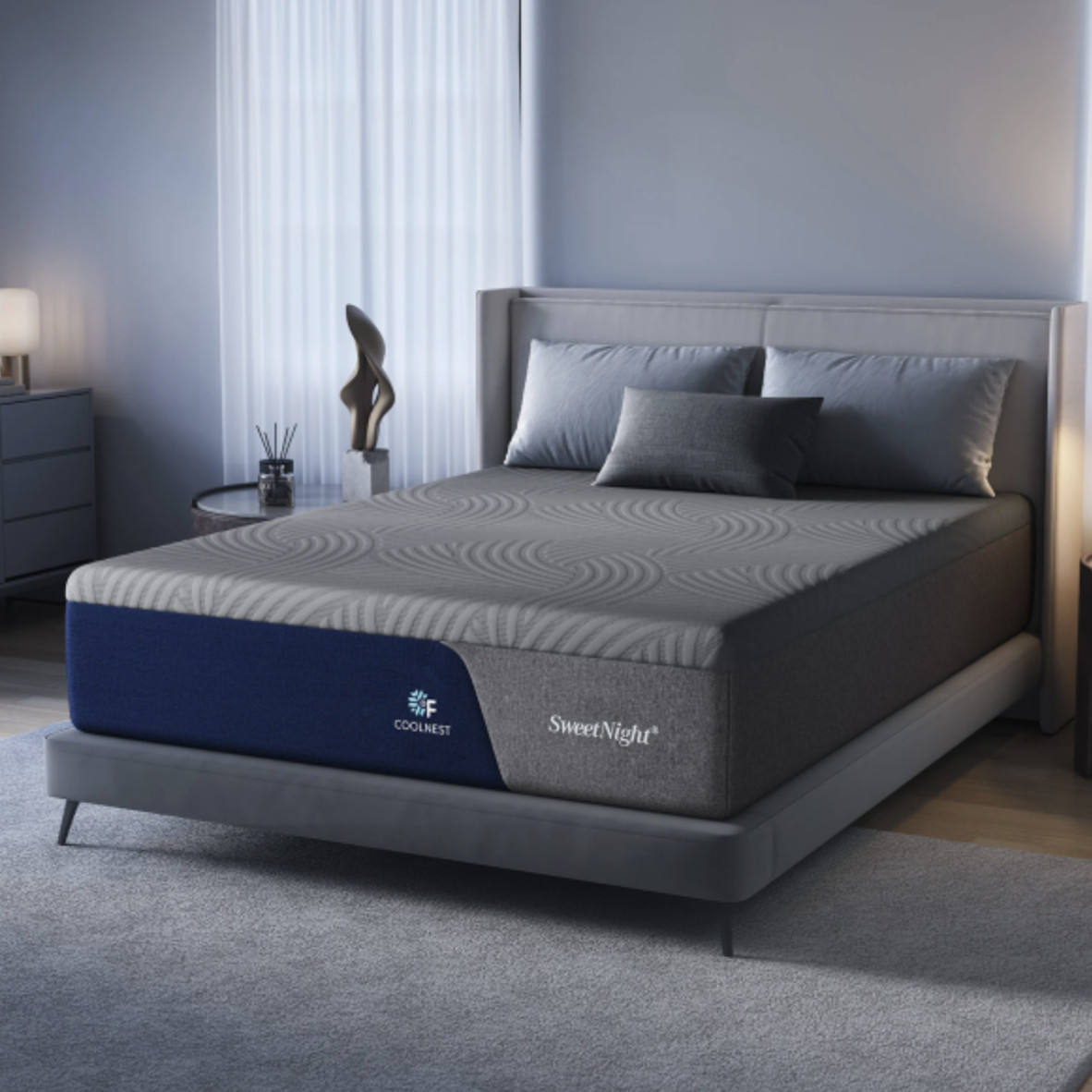
For a branded next step, compare the SweetNight CoolNest® lineup rather than treating all foam models as interchangeable. SweetNight lists the CoolNest® Memory Foam Mattress with a 5-zone support design, while the CoolNest® Ultra Memory Foam Mattress is positioned with a refined 7-zone support system, AirMesh™ breathable memory foam, ventilated gel memory foam, and a five-stage cooling design. That comparison gives you a practical way to match your preference: standard memory-foam contour, gel-assisted cooling, or a fuller cooling-and-support build. Use the product page to confirm current construction and trial details.
It is not the automatic winner for every hot sleeper. If the room is warm, bedding is heavy, or the bed allows deep sink, gel alone may not be enough. Treat it as one useful feature inside a complete sleep setup.
The choice should sound like your sleep habits
Before deciding, describe your sleep in one plain sentence: "I sleep on my side and wake warm under my hip," or "I like a hugged feel but hate rolling out of a hollow." That sentence is more useful than a material preference by itself. It points you toward the feature that actually needs to change.
Then check whether the mattress page speaks to that sentence. If it talks only about foam type, keep reading. You want information about firmness, response, cooling location, support, and trial rules. A good choice should make sense for your body, not just for a comparison chart.
If you still cannot decide, choose the mattress with the clearer return path and the more complete construction details. Uncertainty is normal when two foam types overlap. Clear information gives you a better trial, and a better trial gives you a better answer than guessing from labels.
Bottom line
Choose memory foam when contour and motion comfort are the main goals and heat is not a major complaint. Choose gel memory foam when you want that contour with extra help against localized warmth. In both cases, the winning mattress is the one that fits your body, bedding, partner, and room after several full nights.





Leave a Reply