

Planning what to wear to a wedding can feel like one more thing on a long list. The good news is that a few clear choices can help the family look coordinated in photos and stay comfortable through a long day.
This guide keeps the process simple. A-line dresses give brides a flexible starting point, while a short list of accessories helps grooms pull a look together without overdoing it. Parents and kids get a few easy rules, too.
Jump to:
A-Line at a Glance
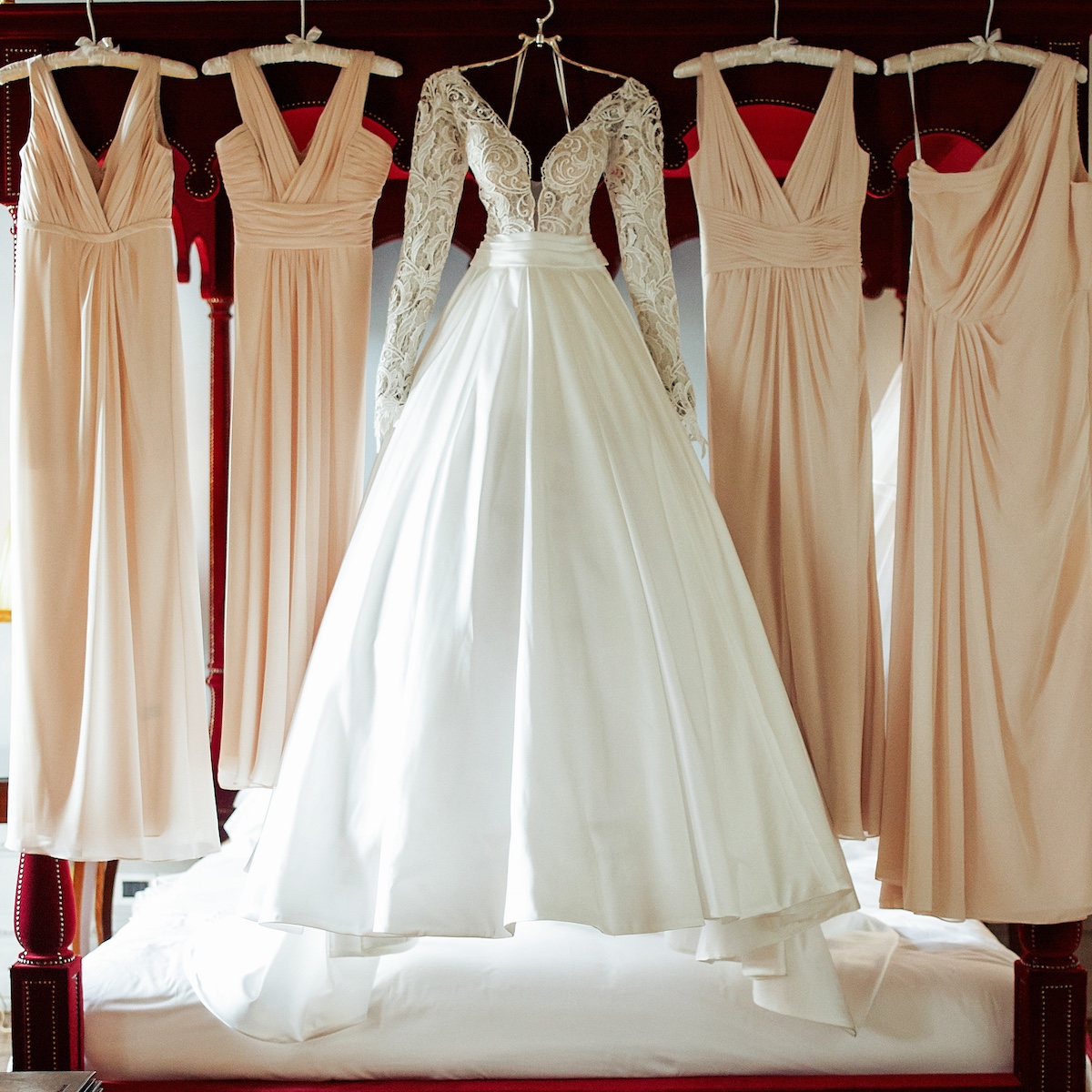
An A-line wedding dress fits at the natural waist and flares softly toward the hem, creating the practical A shape that gives the style its name. Bridal Secrets describes the silhouette as a fitted bodice with a gently flaring skirt, and that simple structure is what makes it widely wearable.
The shape moves well, which helps with walking, dancing and sitting during a full event. It also photographs cleanly from most angles because the skirt has shape without feeling too heavy.
How to Personalize an A-Line
The A-line base takes small changes well. You can swap necklines, adjust sleeve length or add a belt, veil or gloves in moderation.
Recent bridal trend coverage has pointed to lace, bows, fuller skirts and modular gowns with detachable sleeves or overskirts. These details can add interest, but they work best when they support the dress rather than compete with it.
Shopping and Fitting Tips
Give yourself time to try styles on and then time again for alterations. Bring the shoes and undergarments you plan to wear so the fit reflects reality.
When you talk with a fitter, describe how you want to move and where you feel unsure. Clear notes make adjustments easier for everyone.
Readers based in Australia who want to try styles in person can browse and book a fitting for A-line wedding dresses at a boutique. Bridal Secrets describes this silhouette as a fitted bodice with a gently flaring skirt and offers in-store appointments in Wetherill Park, NSW.
If you visit Bridal Secrets or another bridal salon, treat that appointment as one useful step rather than the whole decision. Fit and feel vary from person to person, so comparing a few places is reasonable.
Groom Accessories That Elevate the Look
A groom does not need many pieces. A few well-chosen items tie the outfit together and read well up close.
GQ advises a slim, discreet wedding watch matched to the ring's metal, along with a small fresh boutonniere. Both details stay understated and coordinated.
A pocket square is a friendly way to add personality within a formal dress code, as The Knot notes. Cufflinks fasten dress-shirt cuffs and work best with French or convertible cuffs, so check the shirt before buying a pair.
Wallets and Small Leather Goods
A slim card holder keeps the front line of a suit clean. Carrying only what you need for the day reduces pocket bulge in photos.
If you want to compare compact options, a dedicated brand category page can help. The Louis Vuitton category page lists compact and long wallets, card holders and passport covers, with Client Advisor support for product questions.
Louis Vuitton is one place to look at small leather goods, and the same principle applies wherever you shop: pick something slim you will reuse after the event. If you already own a Louis Vuitton wallet, test it in the suit before the wedding day to make sure it sits flat.
Parents and Kids
Family members look best when they follow the dress code and coordinate colors without matching exactly. Mainstream etiquette still advises guests to avoid white unless the couple says otherwise, and to consider venue needs such as covered shoulders in a church, as Martha Stewart notes.
For mothers, align formality with the wedding and check preferences with the couple. For kids, comfort and safe shoes matter most, since they will move around all day.
Venue often drives the palette and formality. If you are dressing for an outdoor or elevated setting, our guide to a mountain wedding covers a few extra considerations.
Coordinating without matching is the aim for the wider family. Choose two or three shades from the couple's palette, then let each person wear them their own way, whether that is a tie, a wrap or a pair of shoes. Group photos then read as cohesive rather than staged.
Comfort is the other half of the job. Build in a layer for cool venues, break in new shoes before the day and keep a small kit for quick fixes, since a relaxed family looks better in every frame than a stiff one.
Quick Checklists
Bride A-line fit check
- Waist sits at the natural waistline
- Hem allows an easy stride
- Neckline suits the venue and season
- Bustle plan is set for the reception
Groom accessory check
- Watch is slim and matches the ring metal
- Pocket square chosen if desired
- Cufflinks match the cuff type
- Shoes cleaned and pockets kept light
Parent and kid check
- Follow the stated dress code
- Skip white unless invited to wear it
- Coordinate colors without exact matching
- Choose comfortable, safe shoes for children
Budget Cues to Reduce Stress
Rough benchmarks help families plan. The Knot's 2026 Real Weddings Study of 10,474 couples married in 2025 put the overall average US wedding cost at $34,200, with the average wedding dress cost reported at $2,100.
Guest count drives much of the total. The same study reported an average guest count of 117 and an average cost per guest of $292.
Attire can flex. Typical tuxedo rentals often fall around $150 to $300, and the male partner's average ceremony-attire rental was reported at $205. Accessories deserve their own line too, since David's Bridal suggests planning roughly 10 to 15 percent of your attire budget for shoes, undergarments and jewelry.
One quiet way to save is choosing accessories you will actually reuse. If you want a brand category page, browse designer wallets for men before narrowing your choice. Whether you choose a Louis Vuitton card holder, another designer option or a wallet you already own, the best wedding-day choice is slim, practical and useful after the event.
Choose comfort and cohesion over any single trend. When the family looks relaxed and coordinated, the photos and the day both feel better.
FAQ’S
Who does an A-line wedding dress suit?
An A-line fits at the natural waist and flares softly toward the hem, so it flatters a wide range of shapes. It also moves well for walking, sitting and dancing, which makes it practical for a long day.
What accessories does a groom actually need?
Keep it to a few coordinated pieces: a slim watch matched to the ring metal and a small boutonniere, with an optional pocket square for personality. Add cufflinks only if the shirt has French or convertible cuffs.
What kind of wallet works best with a wedding suit?
A slim card holder keeps the line of the suit clean and reduces pocket bulge in photos. Carry only what you need for the day, and test the wallet in the suit beforehand so it sits flat.
How much should we budget for wedding attire and accessories?
Benchmarks vary, but The Knot's 2026 study reported an average US wedding dress cost of $2,100 and a ceremony-attire rental around $205 for the male partner. David's Bridal suggests setting aside roughly 10 to 15 percent of your attire budget for shoes, undergarments and jewelry.
Conclusion
A wedding wardrobe comes together fastest when everyone starts from a simple base and builds out from there.
- Parents Are Prioritising Breathable, Sustainable Fabrics For Children's Seasonal Sleepwear
- Our Homemade Christmas Printables, Made With AI: What Worked, What Didn't, and What I'm Saving for Next Year
- At-Home vs. In-Lounge IV Therapy in the Hudson Valley: Which Makes More Sense?
- Can Passengers Pursue Compensation After a Car Accident?




An A-line dress gives brides a flexible foundation, and a few restrained accessories pull a groom's look together. Clear dress-code cues then keep parents and kids comfortable.
Choose comfort and cohesion over any single trend. When the family looks relaxed and coordinated, the photos and the day both feel better.





Leave a Reply