

The bedroom should be a refuge from the chaos of daily life, yet many people struggle to create a truly restful environment.
While paint colors and furniture placement matter, the foundation of any peaceful bedroom starts with what touches your skin for eight hours each night.
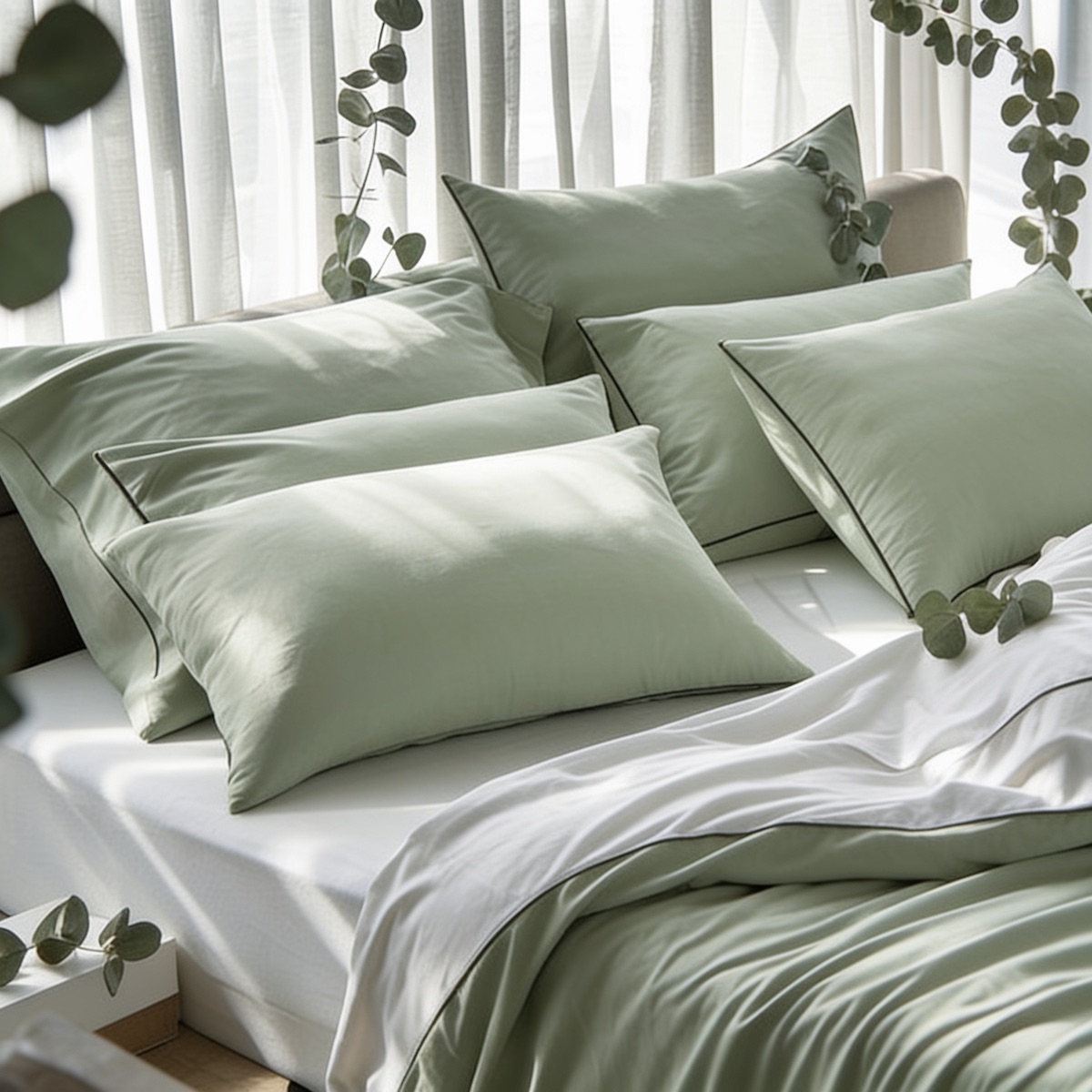
Eucalyptus sheets have emerged as a compelling alternative to traditional cotton and synthetic bedding, offering a combination of comfort, temperature regulation, and environmental benefits that's difficult to match.
Jump to:
The Science Behind Eucalyptus Fiber
Eucalyptus bedding derives its unique properties from the structure of eucalyptus fibers themselves.
These fibers are naturally breathable, allowing air to circulate freely and preventing the heat buildup that plagues many synthetic materials.
The moisture-wicking capabilities are equally impressive, eucalyptus fibers can absorb up to 50% more moisture than cotton while releasing it efficiently to keep sleepers dry throughout the night.
According to TENCEL™, a leading producer of eucalyptus-based lyocell fibers, the material's smooth fiber surface creates less friction against skin compared to cotton.
This translates to a silky texture that many describe as comparable to high-end silk, but without the delicate care requirements or premium price tag.
The practical benefits include:
- Temperature regulation: Natural breathability prevents overheating during warm months while maintaining warmth in winter
- Moisture management: Wicks away perspiration more effectively than cotton, creating a drier sleep environment
- Hypoallergenic properties: Smooth fibers resist dust mite accumulation and reduce skin irritation
- Durability: Maintains softness and structural integrity through repeated washing
These characteristics make eucalyptus bedding particularly appealing for hot sleepers, those with sensitive skin, and anyone seeking a more sustainable approach to bedroom textiles.
Understanding Eucalyptus Silk Sheets
The term "eucalyptus silk sheets" can be misleading, these products don't contain actual silk from silkworms. Instead, they're made entirely from eucalyptus fibers processed into an exceptionally fine, silky fabric.
The comparison to silk is apt in terms of texture and drape, but eucalyptus silk sheets offer several practical advantages over traditional silk bedding.
Key distinctions include:
- Care requirements: Most eucalyptus silk sheets are machine washable, unlike traditional silk which often requires hand washing or dry cleaning
- Durability: Eucalyptus fibers maintain their strength when wet, making them more resistant to damage during washing
- Price point: Generally more affordable than comparable silk bedding while delivering similar tactile qualities
- Temperature performance: Better moisture-wicking than silk, which can feel clammy when damp
For those seeking luxury bedding without the maintenance burden, eucalyptus silk sheets represent a practical middle ground between everyday cotton and high-maintenance silk.
The Environmental Case for Eucalyptus
Cotton production has long dominated the bedding industry, but its environmental footprint raises serious concerns.
A single cotton t-shirt requires approximately 2,700 liters of water to produce, according to the World Wildlife Fund. Eucalyptus cultivation presents a markedly different profile.
Eucalyptus trees thrive in conditions that would challenge cotton crops:
- Water efficiency: Eucalyptus requires minimal irrigation, often relying entirely on rainfall in suitable climates
- Growth rate: Fast-growing eucalyptus trees reach harvest maturity in 10-12 years, compared to annual cotton crops that deplete soil nutrients
- Pesticide use: Natural pest resistance eliminates the need for most chemical treatments
- Land use: Higher yield per acre compared to cotton, reducing pressure on agricultural land
The closed-loop production process used by many eucalyptus fabric manufacturers recycles up to 99% of water and solvents, further reducing environmental impact.
This circular approach to textile production represents a significant departure from traditional manufacturing methods.
Eucalyptus vs. Tencel and Lyocell: Clarifying the Confusion
The bedding market uses terms like eucalyptus, Tencel, and lyocell somewhat interchangeably, creating understandable confusion.
Lyocell is the generic name for the fiber production process that transforms wood pulp into textile fibers.
Tencel is a branded version of lyocell produced by the Austrian company Lenzing AG. Eucalyptus sheets typically use lyocell fibers sourced from eucalyptus trees.
In practical terms, the differences are minimal:
- Source material: All three typically derive from eucalyptus, though lyocell can be made from other wood sources
- Production process: The same closed-loop lyocell process applies across all three categories
- Performance characteristics: Breathability, moisture-wicking, and softness remain consistent regardless of branding
- Sustainability: Environmental benefits depend more on specific manufacturing practices than terminology
When shopping for eucalyptus bedding, focus on certifications like OEKO-TEX Standard 100 or FSC (Forest Stewardship Council) rather than getting caught up in naming conventions.
These certifications verify both environmental standards and the absence of harmful chemicals.
Maintaining Your Eucalyptus Bedding
Despite their luxurious feel, eucalyptus sheets are surprisingly low-maintenance.
Proper care extends their lifespan while preserving the qualities that make them appealing in the first place.
Essential care guidelines:
- Washing: Use cold or warm water on a gentle cycle; hot water can damage fibers over time
- Detergent: Choose mild, liquid detergents without optical brighteners or fabric softeners, which coat fibers and reduce breathability
- Drying: Tumble dry on low heat or line dry; eucalyptus fibers are naturally wrinkle-resistant and often emerge smooth from the dryer
- Frequency: Wash every 1-2 weeks under normal use; the antimicrobial properties of eucalyptus fibers help them stay fresher longer than cotton
- Storage: Keep in a cool, dry location with adequate air circulation to prevent moisture accumulation
Selecting the Right Eucalyptus Sheet Set
Not all eucalyptus sheets deliver the same experience. Several factors influence both immediate comfort and long-term satisfaction.
Consider these elements when shopping:
- Thread count: The 300-400 range typically offers optimal softness and breathability; higher counts aren't necessarily better with eucalyptus fibers
- Weave style: Sateen weaves provide a lustrous, silky surface, while percale weaves offer a crisp, cool feel
- Certifications: Look for OEKO-TEX Standard 100 certification to ensure the absence of harmful chemicals
- Pocket depth: Modern mattresses often exceed 12 inches; verify that fitted sheets accommodate your mattress depth with several inches to spare
- Color fastness: Quality eucalyptus sheets maintain color vibrancy through repeated washing
For those interested in experiencing these benefits directly, SIJO offers eucalyptus-based bedding collections designed to balance comfort, quality, and accessibility.
The company focuses specifically on eucalyptus textiles, applying specialized expertise to its product development process.
Comparable brands such as Sheets & Giggles and Buffy also specialize in eucalyptus-derived bedding products aimed at improving softness, breathability, and temperature regulation.
Creating a Restorative Sleep Environment
Eucalyptus sheets form the foundation of a restful bedroom, but their benefits multiply when integrated into a thoughtfully designed sleep space.
The natural aesthetic of eucalyptus bedding pairs particularly well with certain design approaches.
Complementary elements include:
- Layered textures: Combine eucalyptus sheets with linen duvet covers or cotton waffle-weave blankets for visual and tactile interest
- Natural materials: Wood furniture, stone accents, and live plants reinforce the organic qualities of eucalyptus bedding
- Lighting control: Dimmable overhead lights and warm-toned bedside lamps support the body's natural circadian rhythms
- Color palette: Neutral tones and earth colors create a calming atmosphere that doesn't compete with the subtle sheen of eucalyptus fabric
- Air quality: Good ventilation and air purification enhance the breathability benefits of eucalyptus sheets
According to research published in the Journal of Physiological Anthropology, bedroom temperature significantly affects sleep quality, with most people sleeping best in rooms between 60-67°F.
- Parents Are Prioritising Breathable, Sustainable Fabrics For Children's Seasonal Sleepwear
- Our Homemade Christmas Printables, Made With AI: What Worked, What Didn't, and What I'm Saving for Next Year
- At-Home vs. In-Lounge IV Therapy in the Hudson Valley: Which Makes More Sense?
- Can Passengers Pursue Compensation After a Car Accident?




The temperature-regulating properties of eucalyptus bedding work best when the ambient room temperature falls within this range.
The shift toward eucalyptus bedding reflects broader changes in consumer priorities, a growing recognition that comfort and sustainability need not be mutually exclusive.
As textile technology continues to evolve, eucalyptus sheets represent one of the more successful marriages of performance and environmental responsibility currently available in the bedding market.





Leave a Reply