

Maybe your parent fell recently. Maybe the scare happened outside the home.
A dizzy spell at the grocery store. A stumble in a parking lot. Or a missed call that turned into twenty minutes of panic because they were out walking and you had no idea where they were.
And when you finally learned what happened, they told you they were fine. Maybe they even laughed it off with an “I just lost my balance” or “Don’t make a big deal out of it.”
But you did make a big deal out of it, at least in your own head. Because now you are wondering: What if they had not been able to call you?
What if they had fallen somewhere outside the house, without their phone nearby or the ability to explain exactly where they were?
That is usually when families start looking at medical alert devices. To give their parent a way to call for help quickly, without making them feel like they have to stop living independently.
If you, too, are trying to find a safety net that works beyond the living room, here’s what to look for:
Jump to:
1. Choose a Device That Works Wherever Your Parent Goes
The thing about a home-based device is that it can be helpful, but only inside a limited range and only for someone who rarely leaves the house.
But if your parent goes to the store, visits friends, walks the dog, gardens, drives to appointments, or spends time outside? Well then, their safety device needs to move with them.
In that case, you should consider looking for a mobile medical alert device that does not depend on a landline or a base station.
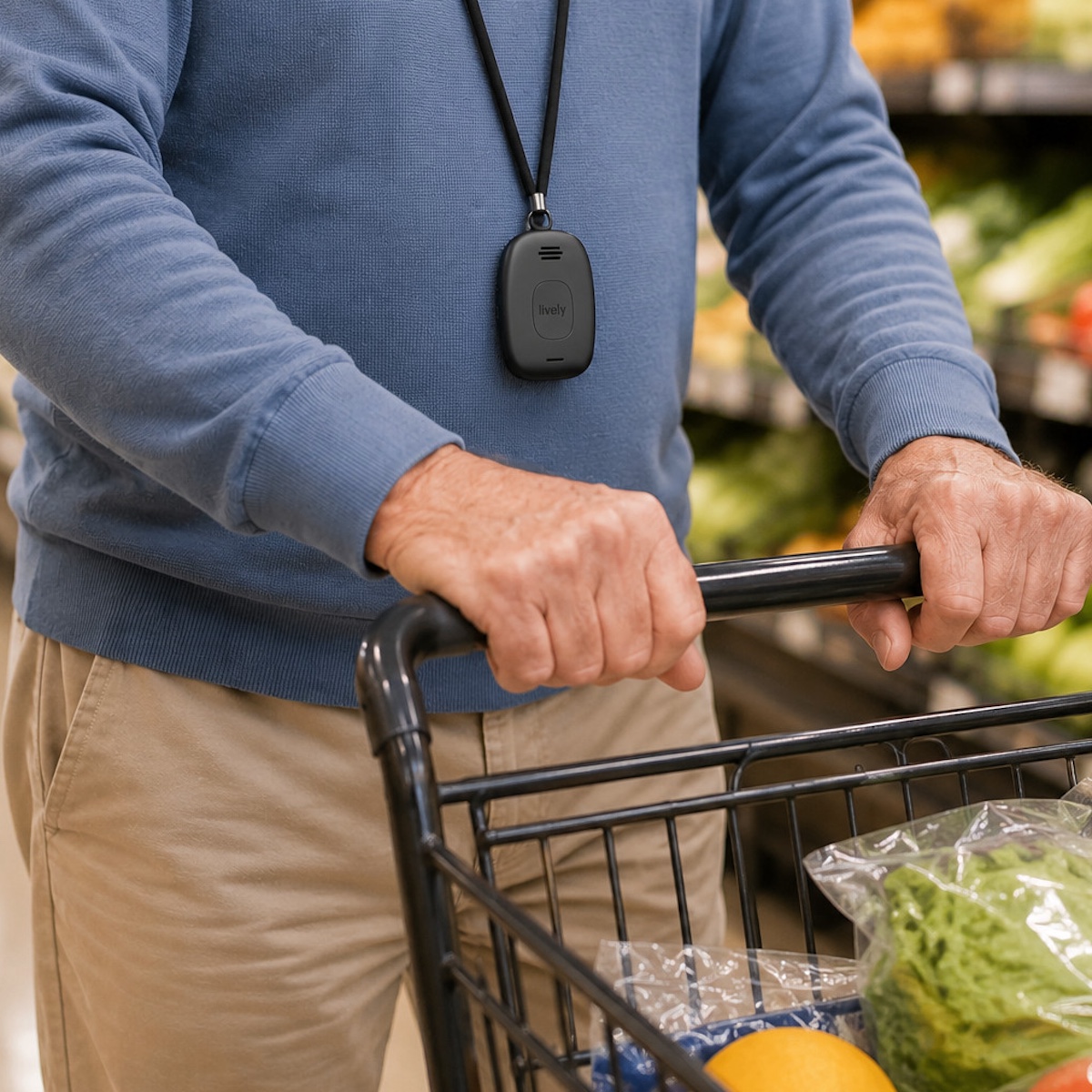
For example, a device like Lively Mobile2 is designed for use both inside and outside the home, with one-button access to help, enhanced GPS, two-way communication, and optional fall detection.
That kind of setup makes more sense for a parent who is still active but needs a safety net that follows them.
2. Make Location Tracking a Priority
When your parent is outside the home, calling for help is only part of the problem.
The other part is being found. If they fall on a walking route, become disoriented, or cannot clearly describe where they are, location tracking can make the emergency response much more practical.
This is why GPS or enhanced location tracking should be one of your main criteria rather than a nice bonus.
The point is not to monitor your parent’s every move.
The point is much simpler: “If something happens, I want help to be able to locate you quickly.”
That is also a much better way to explain it to them. Not as control or surveillance, but as a practical safety measure that protects their independence.
3. Look For Two-Way Communication Through The Device
Some devices send alerts. Others let your parent actually speak with a response agent directly through the device.
Choose the second kind if possible, because emergencies are not always obvious.
For instance, your parent may need to explain that they fell but are conscious. Or that they are having chest pain. Or that they feel confused.
If you've got a medical device with two-way communication, a trained response agent can talk with the device, assess the situation, confirm its location, and contact emergency services or family if needed.
4. Consider Fall Detection, Especially If They Live Alone
If your parent has already fallen, has balance issues, gets dizzy, uses certain medications, showers alone, or spends long stretches of the day without anyone nearby, automatic fall detection can be valuable.
If a fall is detected, the device can connect to help even if your parent cannot press the button.
When comparing devices, check whether fall detection is available, whether it costs extra, and whether the device has to be worn a certain way for the feature to work properly.
The details matter.
5. Pick Something They Will Actually Wear
This may be the most practical point of all. The best medical alert device is ultimately the one your parent will actually keep on, so our advice is to look for something lightweight, wearable, and easy to charge.
Also:
- Check whether it can be worn in more than one way, such as on a lanyard, belt clip, pocket, or purse.
- Look for water resistance in specs, especially because bathrooms and showers are common places for falls.
- Think about setup, because if the device requires complicated installation, a landline, multiple parts, or too much maintenance, it may become another thing your parent avoids.
- Parents Are Prioritising Breathable, Sustainable Fabrics For Children's Seasonal Sleepwear
- Our Homemade Christmas Printables, Made With AI: What Worked, What Didn't, and What I'm Saving for Next Year
- At-Home vs. In-Lounge IV Therapy in the Hudson Valley: Which Makes More Sense?
- Can Passengers Pursue Compensation After a Car Accident?




The rule of thumb with medical alert devices is: Simpler is better.
A device that can be worn daily, used with one button, charged easily, and taken outside the home is much more likely to become part of their routine. And that is the real goal.





Leave a Reply