

Every parent knows the struggle: we want our homes filled with toys that stimulate our children's minds, expand their vocabularies, and prepare them for school.
Yet, the moment a toy starts looking or feeling like homework, kids instantly tune out.
Children are naturally drawn to what feels effortless, comforting, and deeply rooted in their own imaginations.
The most profound, lasting cognitive development happens on the living room rug, inside the rich world of learning through play.
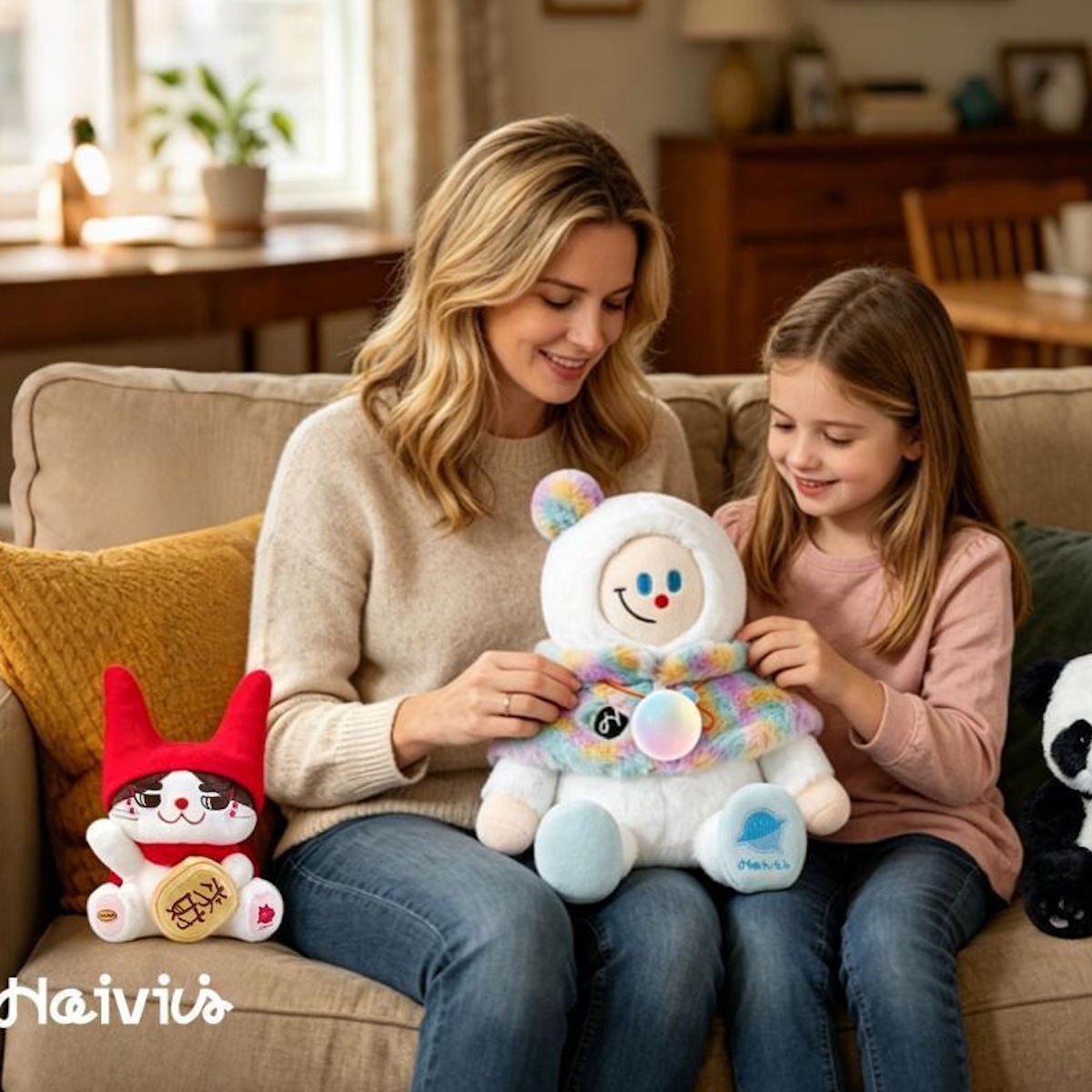
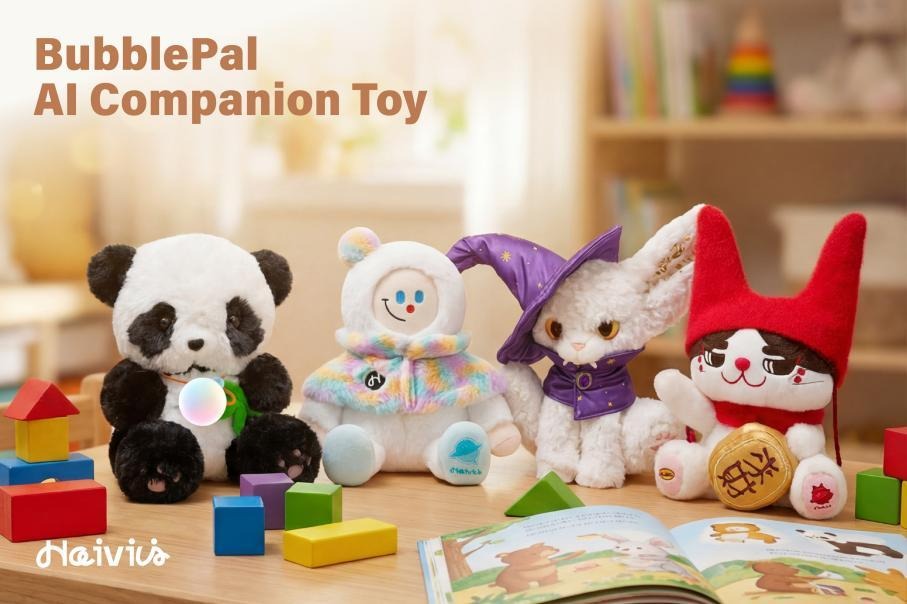
Instead of introducing a cold, tech-heavy gadget, BubblePal by Haivivi transforms a source of comfort your child already loves into an interactive plush toy that acts as an active, intelligent partner in conversation.
At a time when many families are trying to reduce screen time, this kind of screen-free learning toy gives children a way to ask questions, tell stories, and express feelings through voice-based play.
Jump to:
Meet BubblePal: Giving Your Child's Favorite Toy a Voice
At first glance, BubblePal doesn't look like advanced technology, which is entirely by design.
It is a sleek, durable, pendant-style smart plush toy device created by Haivivi that safely attaches to any standard teddy bear, stuffed bunny, or dinosaur.
Turning an existing toy into an AI conversation toy completely bypasses the need for shiny, addictive digital screens.
The magic is beautifully simple for little hands to master: Children press and hold the large "Bubble Button" on the front of the device to speak aloud.
They can ask a question, share a secret, or enjoy imaginative play. When they press the button, the message is sent directly to the cloud-based AI companion for children via the Haivivi Pal app.
Within moments, their beloved stuffed animal responds back in a warm, friendly voice. It turns a passive, static object into a deeply responsive toy that talks with kids in real time.
Why Conversational Play Matters for Kids Ages 3-8
Early childhood experts consistently emphasize that children learn best through active verbal engagement and storytelling toy for children interactions.
During the critical years of kids ages 3-8, the brain is rapidly developing language structure and social-emotional awareness.
For busy parents, handling endless questions during dinner routines or work messages can be exhausting. T
his best AI toy for kids serves as a gentle support in the background of family life, meeting children inside their own imaginations.
Instead of simply absorbing videos from a tablet, your child becomes the co-director of their own play.
Consider a common parenting scenario: your child encounters an abstract concept and turns to their toy to ask, “Why do tears come out when I cry?” Instead of a dry, scientific answer, the AI toy for kids explains the concept in simple, age-appropriate language.
Then, it gently turns the question back around: “What usually makes you feel better when you are sad?” By doing this, a simple query effortlessly shifts into a lesson in self-awareness.
Five Practical Play Ideas to Try at Home
For readers looking for an actionable parent-child activity toy, here are five incredibly fun, developmental ways to use an AI storytelling toy in your daily family routine:
The Story Builder: Perfect for rainy afternoons. You, your child, and their plush companion take turns creating a completely original story, one sentence at a time.
The Feelings Friend: Children can freely ask their toy questions about complex feelings like happiness, fear, anger, or making mistakes at school, helping them build essential social-emotional vocabulary.
Adventure Time Simulator: Invite your companion to guide an imaginary expedition to the deepest parts of the ocean, a hidden prehistoric jungle, or a distant planet in outer space.
The Open-Ended Question Jar: When your child says they are bored, the device can prompt your little one with fun, brain-teasing thoughts like, “If you could transform into any animal for a single day, what would you be?”
Bedtime Wind-Down: Swap high-energy play for calming, gentle bedtime stories before sleep. The AI storyteller toy mode can softly narrate a soothing tale to ease them smoothly into sleep.
A Truly Screen-Free Alternative with Parent Peace of Mind
This educational toy for preschoolers and preschool learning toy offers a refreshing, hands-on path forward.
Because it relies entirely on voice-based interaction, it satisfies a child's deep natural curiosity while keeping their eyes up, supporting healthy screen-free play.
While your child enjoys an imaginative friendship, the companion app works quietly in the background. Through the dashboard, parents can access secure chat logs and intuitive mood-tracking data.
This hidden feature provides a clear window into your child’s inner world, giving you the perfect talking points for real-world family conversations.
Haivivi was founded around a simple idea: where imagination comes to life. BubblePal reflects that idea in a practical, family-friendly way.
- Parents Are Prioritising Breathable, Sustainable Fabrics For Children's Seasonal Sleepwear
- Our Homemade Christmas Printables, Made With AI: What Worked, What Didn't, and What I'm Saving for Next Year
- At-Home vs. In-Lounge IV Therapy in the Hudson Valley: Which Makes More Sense?
- Can Passengers Pursue Compensation After a Car Accident?




It does not ask children to abandon their favorite stuffed animal for a new device; instead, it gives that familiar toy a voice, a personality, and a new role in the child’s world of learning.
To explore how to transform your child's favorite stuffed animal into an interactive learning toy for ages 3-8, check out the official Haivivi Website or join the creative parenting community on Instagram for daily play inspiration.
TikTok: https://vt.tiktok.com/ZTBFqpcWX/
Email: [email protected]





Leave a Reply