

For many hopeful parents, the IVF process feels like a handoff. You spend weeks prepping your body, tracking follicles, and undergoing the egg retrieval. Then, the lab doors close, and you’re left waiting for a phone call.
It can feel like a black box mystery, but what happens behind those doors is a miracle of modern science. Here is the day-by-day journey of your embryos from retrieval to transfer.
Jump to:
Day 0: Retrieval and fertilisation
The journey begins the moment the eggs are retrieved. They are immediately whisked into the embryology lab, where they are placed in a special fluid that mimics the environment of the fallopian tubes.
There are two ways fertilisation happens:
- Conventional insemination: Thousands of healthy sperm are placed in a dish with the egg, allowing natural selection to take place as one sperm penetrates the egg.
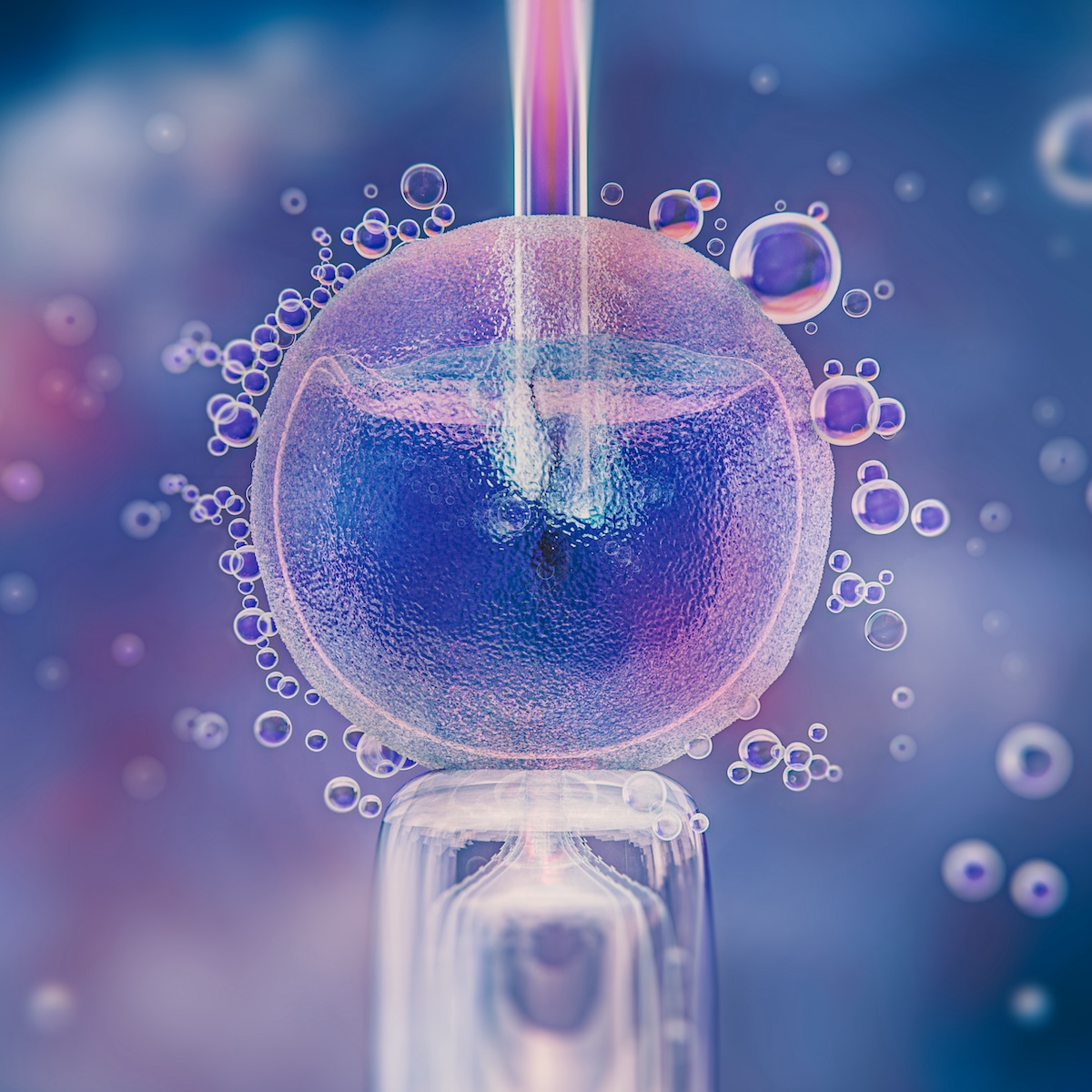
- ICSI (Intracytoplasmic Sperm Injection): A single, high-quality sperm is selected and injected directly into the centre of the egg. This is often used for male-factor infertility or previous low fertilisation rates.
Day 1: Fertilisation check
About 16 to 18 hours later, the embryologist looks for two small circles called pronuclei. These represent the genetic material from the egg and the sperm. If two are present, the egg is officially a zygote.
Days 2 & 3: The cleavage stage
The zygote begins to divide. On Day 2, it should ideally have 2 to 4 cells; by Day 3, it should reach 6 to 8 cells. At this stage, the embryo is living off the energy stores provided by the original egg.
Day 4: The morula stage
This is the awkward teenage phase of an embryo. The cells begin to compact and fuse together into a solid ball called a morula.
It’s no longer possible to count individual cells because they are working hard to transition into the next, most critical stage.
Days 5, 6, & 7: The blastocyst
This is the gold standard of the IVF lab. A blastocyst is a highly developed embryo made of hundreds of cells, now organised into two distinct parts:
- The Inner Cell Mass (ICM): These cells will eventually become the baby.
- The Trophectoderm: These cells will become the placenta.
Not every embryo makes it to the blastocyst stage. It is a rigorous natural "attrition" process where only the strongest, most genetically viable embryos continue to grow.
Biopsy and freezing
Once an embryo reaches the blastocyst stage, a few things may happen:
- Grading: Embryologists assign a grade (like 4AA or 3BB) based on how expanded the embryo is and the quality of the ICM and placenta cells.
- PGT-A Testing: If you’ve opted for genetic testing, a tiny sample of the placenta cells is biopsied and sent to a lab to ensure the embryo has the correct number of chromosomes (46).
- Vitrification (flash freezing): Most embryos are now frozen using a high-speed process called vitrification, which prevents ice crystals from forming, keeping the embryo safe until your body is ready for transfer.
Trusting the Science
It is completely normal to feel anxious while your embryos are in the lab. Remember that the embryology team are the first caregivers your children will ever have, monitoring temperature, light, and pH levels around the clock to give them the best possible start.
- Parents Are Prioritising Breathable, Sustainable Fabrics For Children's Seasonal Sleepwear
- Our Homemade Christmas Printables, Made With AI: What Worked, What Didn't, and What I'm Saving for Next Year
- At-Home vs. In-Lounge IV Therapy in the Hudson Valley: Which Makes More Sense?
- Can Passengers Pursue Compensation After a Car Accident?




If you’re looking to begin your IVF journey, Zita West has what you need, with a specialist range of IVF support supplements that optimise the chances of IVF success by providing you with the optimal amount of nutrients. Get in touch for more information!





Leave a Reply