

People talk about oolong tea “burning fat” like it’s some kind of cheat code. Like you drink a cup and your jeans magically fit again. Real talk: it’s not magic. But it’s not nothing either.
The effect is usually small on its own. But it can make weight loss easier by swapping out sugary drinks, and building a better routine you can stick with.
In this post, we’ll break down how oolong tea and weight loss are connected and what it does for weight loss. Then we’ll get practical: the best times to drink it, how many cups make sense, and the simple habits that make oolong way more effective.
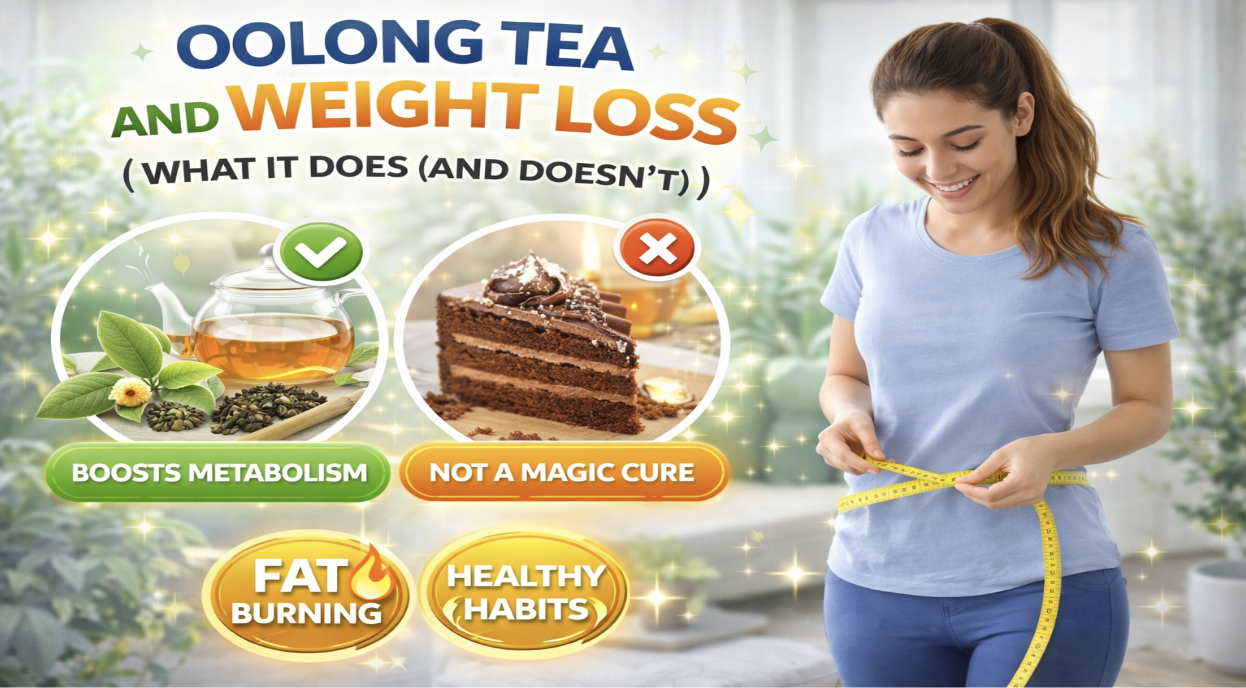
Why People Think Oolong Tea and Weight Loss are Connected
A regular cup of tea isn’t exciting enough for the internet. Everything has to be a hack.
That’s how oolong gets labeled “fat-burning tea.” It’s a cleaner story than, “This is a nice drink and you might feel better.”
Also, the belief didn’t appear out of thin air. Tea has a long-standing reputation as a “meal companion” in many cultures. This is especially true after rich food, as it cuts through that heavy, greasy feeling.
Still, that’s not proof it melts body fat. It’s more like… tea feels helpful, so people assume it is useful.
Now for the boring part that actually matters: when someone starts drinking organic oolong tea, they usually stop drinking something else. Soda, sweet iced tea, or fancy coffee drinks. And that swap is where the weight-loss results typically come from.
The Science, Without the TED Talk
When people say “oolong helps with weight loss,” they’re usually not talking about dramatic scale changes. Most studies look at smaller signals that could help over time.
Energy expenditure: That’s just “how many calories you burn in a day.” Some trials see a small bump after oolong, but it’s not the kind of bump that cancels a late-night pizza situation.
Fat oxidation: That’s “what fuel your body is burning right now.” More fat oxidation sounds exciting, but it doesn’t automatically mean you’ll lose fat long-term. It’s a moment-in-time measurement, not a before-and-after photo.
Appetite and cravings: Tea doesn’t need to be magical to be useful. If oolong replaces a sweet drink, delays a snack, or becomes your “done eating” signal after dinner. That’s where the real difference tends to show up.
So what does the research suggest? There may be a slight boost in calorie burn and fat oxidation. It’s not huge, and it won’t outmuscle a diet built on liquid sugar and random snacking.
But stacked on top of good habits? It can help. Not because oolong is a fat-loss cheat code - but it makes the habits easier to repeat.
The 5 Ways Oolong Can Support Weight Loss
Weight loss still comes down to the boring basics: what you eat, what you drink, and what you do most days. Oolong can’t override those, but it can make the basics easier to stick with. Here are the main ways tea helps in real life;
The “Caffeine Got Me Moving” Effect
This is the one that actually shows up on the scale for a lot of people. Not because oolong is magic, but because it replaces liquid calories you barely notice.
Here’s what that swap looks like in numbers (rough, but realistic):
- 1 can of soda (12 oz) is often around 140-170 calories.
- 1 bottle of sweet iced tea can land around 120-200+ calories.
- 1 glass of juice (8-12 oz) is commonly 100-180 calories.
- A “coffee” with syrup + milk can easily be 200-400+ calories.
Swap that for unsweetened oolong, and you’re basically at 0 calories (unless you start adding sugar, milk, honey… then you’re just rebuilding the problem).
Here’s the simple way to make the swap actually stick:
- Pick one “default drink.” The one you grab on autopilot (afternoon soda, morning sweet latte, lunch juice).
- Replace it 5 days a week. Not “forever starting Monday.” Just 5 days.
- Make it easy: keep a thermos at work, cold-brew a pitcher, or set up a 2-minute routine at home.
A practical example that’s almost too effective:
If your usual afternoon drink is a soda (~150 calories) and you swap it for oolong 5 days a week. That’s roughly 750 calories less per week - without touching your meals.
That’s why this works. No hype or detox, just a clean swap you can repeat.
The “I want something after I eat” fix (post-meal reset)
A lot of “extra calories” don’t come from the meal. They come from the after.
You eat, you’re full, and then your brain goes: “Okay… but I want something.” Dessert. a sweet drink or a little snack while you scroll.
Oolong is weirdly good here because it gives you that “closing signal” without adding calories.
- It replaces the usual after-meal extra: instead of dessert or a sweet drink, you get a warm, satisfying finish.
- It helps you feel ‘done’: tea becomes the line between eating and not eating.
- It cuts the heavy feeling after rich food: not magic, just warm + slightly toasty/bitter = palate reset.
How to use it so it actually works: drink a cup right after lunch or dinner (not an hour later), keep it unsweetened, and treat it like your “kitchen closed” routine.
The “This Stops Me From Random Snacking” Trick
Most snacking isn’t hunger. It’s boredom, stress, or “I just want a little something while I’m doing this.”
Oolong helps because it buys you time. A warm drink gives your mouth and hands something to do. And cravings usually cool off if you don’t feed them instantly.
Here’s how to make it concrete (and actually useful):
- Use it at your danger time: For most people, that’s mid-afternoon (2-5 pm) or late night. Don’t wait until you’re already elbow-deep in chips.
- Give it 15 minutes: Drink the tea, do something else, then reassess. If you’re still genuinely hungry, eat. If not, it was just a wave of craving.
- Keep it unsweetened: Sugar/honey turns “anti-snack” tea into… a snack.
The “Caffeine Got Me Moving” Effect
Caffeine doesn’t “melt fat.” It just makes you feel more awake, more capable, and way less tempted to turn into a couch goblin at 3 pm.
That matters because weight loss usually isn’t one heroic workout. It’s the repeatable stuff - moving a bit more, sticking to routines, and not eating just because you’re tired.
- You move more without thinking about it: short walks feel easier, errands happen faster, steps creep up.
- Workouts feel more doable: if you usually drag yourself to exercise, tea can make the session feel less miserable.
- You snack less out of fatigue: a lot of “cravings” are just low energy pretending to be hunger.
- Timing is everything: late morning or early afternoon works best, and if it messes with sleep, it backfires.
- Start small: one cup is enough to tell if caffeine helps you—or just makes you jittery.
So no, oolong isn’t burning fat for you. It’s making the “do the healthy thing” option feel easier.
The “my sweet tooth calmed down” bonus
Drink unsweetened oolong regularly, and soda starts tasting like straight-up syrup.
Oolong didn’t “destroy” anything - your palate just recalibrated once sugar stopped showing up everywhere.
- Sweet drinks stop feeling necessary
- Dessert becomes optional
- Cravings get quieter
How to make it happen without forcing it: brew the tea so it tastes good (not bitter), don’t add honey every single time, and give it about two weeks before you judge it. That’s usually when people notice the shift.
How to Drink Oolong for Weight Loss
You don’t need a complicated routine. You need a simple swap you’ll actually repeat on regular weekdays.
Step 1: Pick your “weak moment.”
The one time of day you always grab something sugary or snacky. Afternoon soda. Sweet latte. Post-dinner dessert. That one.
Step 2: Swap in unsweetened oolong for that moment.
Not “drink tea and keep everything else.” Replace the thing.
Step 3: Do it 5 days a week for 2 weeks.
Not forever. Just long enough to see if it helps you stick to better choices.
Step 4: Time it based on the problem you’re solving.
- If you’re replacing sweet drinks, late morning or early afternoon is perfect.
- If you’re fighting random snacking, drink it right before your usual snack window.
- If it’s the “I want something after I eat” habit, drink it right after lunch or dinner.
Step 5: Keep it boringly unsweetened.
Sugar, honey, and sweet cream turn “weight-loss tea” into “liquid snack.” If it tastes too bitter, fix the brew - not the sugar.
Step 6: Keep the dose simple: 1-3 cups a day.
Start with 1 cup/day. If caffeine feels fine, go to 2. Only go to 3 if your sleep stays solid and you’re not feeling jittery.
Step 7: Protect your sleep like it’s part of the plan.
If tea messes with your sleep, drink it earlier. Bad sleep makes cravings louder the next day, and then you’re playing on hard mode.
How to Choose the Right Oolong (So You’ll Actually Stick With)
If you’re choosing oolong for “weight loss,” don’t overthink the science part first. Pick one you’ll drink plain. Because the minute you start adding honey, every time. You’re back to training your taste buds to want sweet stuff.
Lighter, floral oolongs are the easiest starting point. They’re smoother and don’t usually taste bitter unless you really mess up the brew. If you like coffee-ish flavors, go for roasted oolong. It’s toasty, cozy, and weirdly good after meals.
One more thing: caffeine. If it messes with your sleep, it’s not helping. Drink it earlier or brew it lighter.
Quick Recap: Oolong Tea for Weight Loss
Oolong isn’t a weight-loss shortcut. It’s a solid “supporting character” that can make the boring stuff easier.
If you want to see if it works for you, don’t do the whole lifestyle overhaul thing. Pick one weak spot (soda, sweet coffee, post-dinner snacking), swap in unsweetened oolong, and run it for two weeks. Same you, same life - just one change you can actually repeat.
And if nothing else? You still end up drinking something that tastes good and doesn’t come with 200 sneaky calories. That’s a win.





Leave a Reply