

Parenting in the digital era has its own set of unique challenges, as bullying can now also follow your children to their homes, all through their devices and the internet.
Cyberbullying can look like anything from mean messages, fake accounts, or sharing private messages without consent.
For those experiencing it, the harassment can feel constant and never-ending. The point is that while you may not be able to stop it, you can still provide comfort and support for your children.
That means being open, honest, and reassuring in conversation so your child feels safe and has the right tools to navigate the online world safely.
Jump to:
Understanding What Cyberbullying Looks Like
Cyberbullying can sometimes be challenging to recognise, especially for those who didn’t necessarily grow up on the internet in the same way our children are.
Cyberbullying can look like obvious mean messages, like those that spread embarrassing photos, to subtler bullying, such as being excluded from group chats or being teased using emoji reactions. Sometimes, children don’t even recognise that it’s bullying.
That’s why it’s essential to have a connection to your child's digital life. You don’t have to overtly monitor them in their online activities, but asking casual questions like, “Who do you enjoy chatting with after school?” or “What’s your favorite app?” can invite an extended conversation.
Why Talking Matters
Many children who are being cyberbullied don’t tell their parents because they fear getting blamed or having their devices taken away.
When something goes wrong, the best thing that a parent can offer is to listen first; avoid being too quick to react or punish.
Simple phrases like“That sounds tough” or “I'm glad you told me” can make a big difference in the situation.
Showing empathy helps children feel supported and not alone. It's about gaining their trust so they can feel secure sharing what's happening and reassured that none of it is their fault.
Setting boundaries and taking action can come later; understanding and support come first.
Setting Healthy Online Habits
Children and teenagers underestimate how fast information can spread online.
Explain that anything posted, seemingly private messages or otherwise, can spread to others in just a matter of seconds and be extremely difficult to remove from the internet.
Remind them to stop and think before posting, considering whether they would want others to see it.
It also helps to remind them that kindness matters online just as much as it does in person. If they wouldn’t say something face-to-face, they shouldn’t type it.
Staying Safe in the Digital Space
Once your child is old enough to use devices like phones and laptops, and to engage with social media, start the conversation about online safety in practical, basic terms.
Tell themthat personal information, such as home addresses, school names, and passwords, should remain private.
Encourage your child to use strong passwords and teach them how to block or report anyone who’s behaving inappropriately or creepily.
You can also install privacy tools to help protect your online presence. For example, VPN software adds an extra layer of protection when using public Wi-Fi in cafés, schools, and airports.
You could explain it to your kids as a digital lock to help keep their information safer. The intention isn't to scare them, but to teach them to use technology wisely.
🤖 Looking For An Answer?
Ask AI to summarise this post to see if the article answers your questions:
Recognizing When Something Is Wrong
Not every child will come right out and say they’re being bullied. You may notice changes in their behavior instead.
Look for signs such as:
- Suddenly becoming quiet or withdrawn.
- Avoiding phones or computers.
- Lack of interest in activities that used to be enjoyable.
- Trouble sleeping or concentrating.
- A decline in school performance.
If you notice these signs, communicate calmly and ask whether they’re having issues online or with their peers.
Even if they refute this, your support shows that they can always trust you.
If bullying is confirmed, retain the evidence, report it, and seek assistance from the school or authorities as needed.
The Bigger Picture: Why This Matters
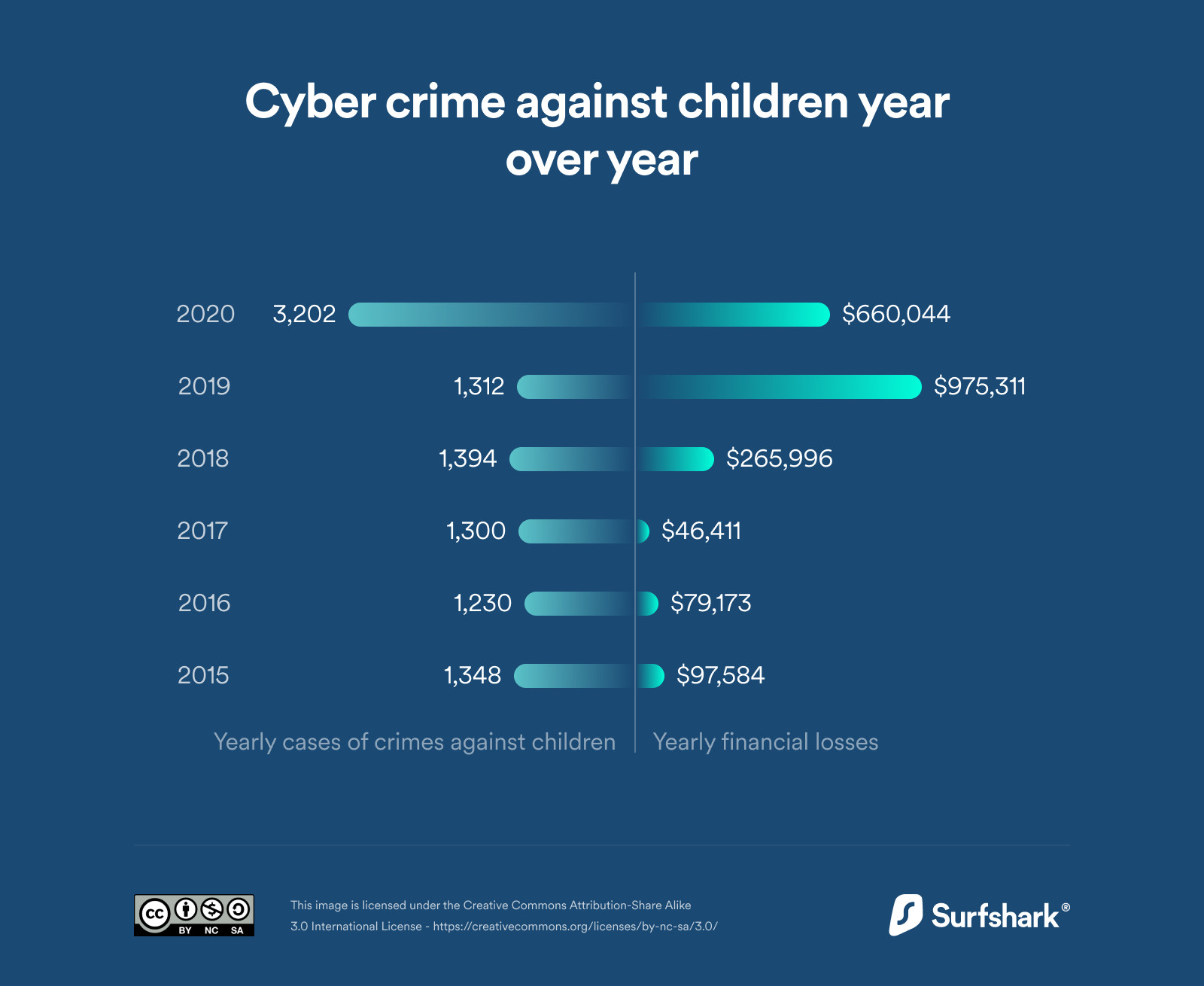
Cyberbullying is part of a wider issue. As online use grows, so do risks like phishing and identity theft. In fact, in 2020, cybercrime against children, such as phishing and cyberbullying, increased by 144% compared to 2019. The image below shows how much these incidents have grown and why awareness is critical.
The increase underscores the importance of teaching children not only how to stay safe but also how to recover emotionally when something goes wrong.
Helping Children Build Resilience
Even if you take all the care in the world, children can still be subjected to cyberbullying or mean comments online. It's their response that counts.
Teach them to step away, take a few deep breaths, and talk to someone they trust. Encourage them not to respond to mean messages, as reacting often escalates the situation.
You can also help by putting more focus on empathy, asking,“How do you think the other person felt?” or “What could you say to make someone feel supported?”
These build kindness and emotional strength, helping protect children from the effects of bullying.
- Parents Are Prioritising Breathable, Sustainable Fabrics For Children's Seasonal Sleepwear
- Our Homemade Christmas Printables, Made With AI: What Worked, What Didn't, and What I'm Saving for Next Year
- At-Home vs. In-Lounge IV Therapy in the Hudson Valley: Which Makes More Sense?
- Can Passengers Pursue Compensation After a Car Accident?




Final Thoughts
The point is, talking about cyberbullying isn't a one-time chat. It's an ongoing conversation that evolves as your kid grows. Keep it open, honest, and judgment-free. Celebrate the times they use the internet responsibly and show kindness to others.
The internet can be a fantastic space for learning, creativity, and connection. With your guidance, your child can explore the internet safely and confidently, knowing they have someone to turn to whenever things go wrong.





Leave a Reply