

Hassle-Free layering for Kids' School Uniforms makes it easier for parents to keep children comfortable in changing weather.
Many families look for school uniform layering tips that balance warmth, comfort and dress code requirements.
Mornings often start chilly, while afternoons warm up, making layers the most practical solution.
Light sweaters, cardigans and vests are easy to add or remove throughout the school day. Choosing breathable fabrics helps kids stay cosy without overheating during class or recess.
Parents appreciate simple clothing strategies that reduce stress during busy school mornings.
By following kids' school clothing ideas, you can prepare outfits that are neat, versatile and weather-appropriate. Smart layering ensures children feel confident, focused and ready for learning all day long.
Jump to:
Layering: A Practical Approach
Layering is more than just adding clothes on top of each other.
It’s a practical approach that allows kids to adapt to changing weather while maintaining a polished school look.
In the fall, mornings might be brisk, afternoons sunny, and evenings cool again.
Without layers, kids may end up too hot or too cold, leading to discomfort, distraction, and unnecessary wardrobe stress.
Layering also prevents constant calls to the school office for forgotten sweaters or jackets.
With thoughtful preparation, kids can peel off or put on layers as needed, giving them independence while you enjoy peace of mind.
Understanding Each Layer of School Uniforms
Choosing the right base layer
The foundation of any effective school outfit is the base layer. For uniforms, this usually means a polo shirt, button-up, or blouse.
- Lightweight fabric: Cotton or cotton blends are breathable and keep kids comfortable indoors.
- Proper fit: Too-tight shirts make layering uncomfortable, while oversized ones look sloppy under sweaters or jackets.
- Neutral colors: Stick to the school’s uniform policy, usually solid colors like white, navy, or light blue.
A good base layer should feel comfortable against the skin while looking sharp enough to be worn on its own when classrooms get warm.
Adding mid-layers for comfort
The mid-layer is where flexibility comes into play. Sweatshirts, light sweaters, and vests are the most common options.
Sweatshirts come in more handy during the fall and winter seasons.
A school sweatshirt for fall season and wintertime strikes the right balance between warmth and breathability, making it suitable for changing temperatures.
Pairing a school sweatshirt for these seasons with a light base layer also allows students to adjust easily as the day warms up.
Sweatshirt pairings include sweaters or cardigans, and vests. The key is to select mid-layers that are easy to slip on and off, without adding bulk.
The outer layer for outdoor protection
Fall mornings often call for something extra. Jackets and coats protect kids during the commute, but they should be easy to store during school hours.
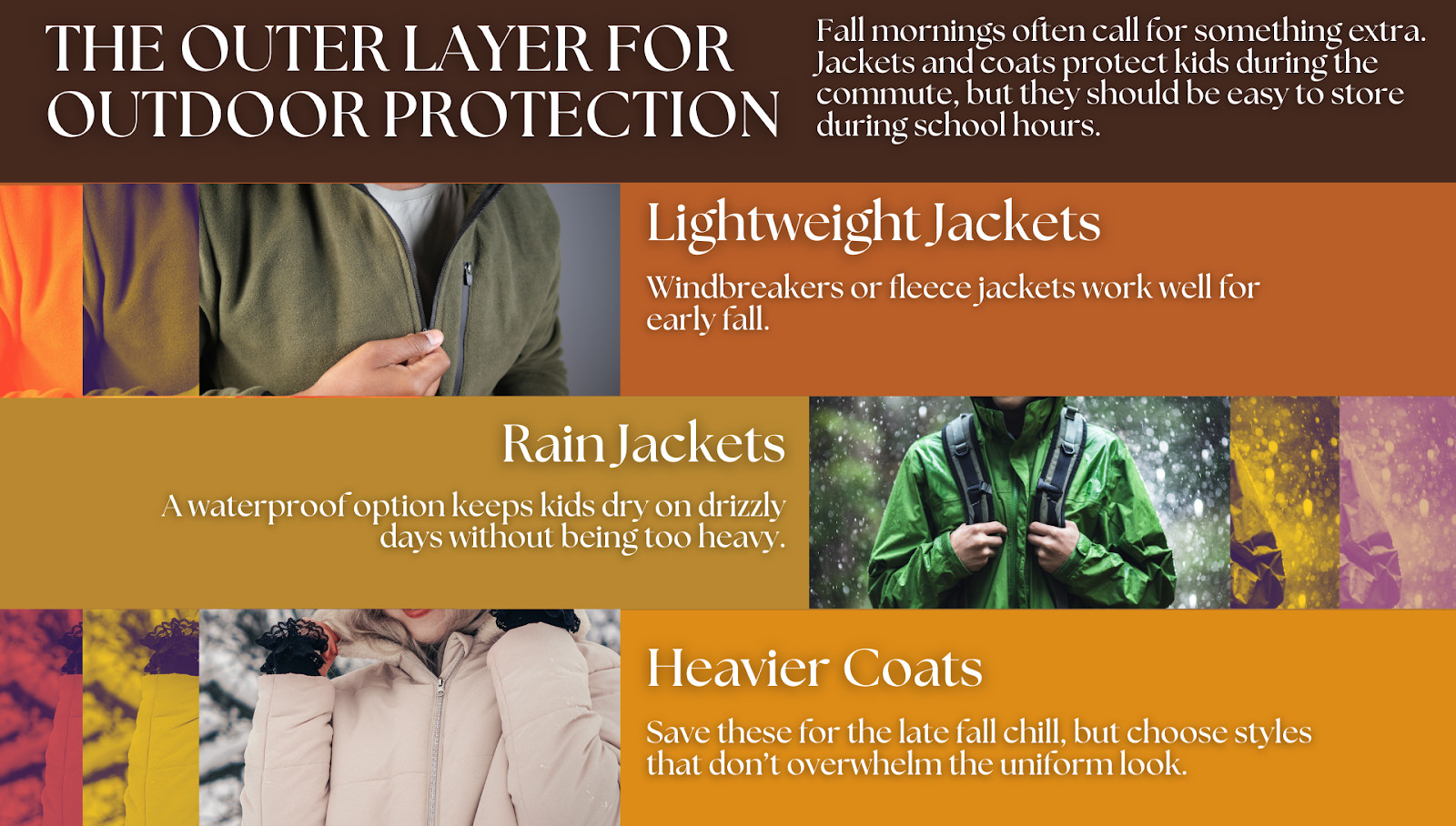
- Lightweight jackets: Windbreakers or fleece jackets work well for early fall.
- Rain jackets: A waterproof option keeps kids dry on drizzly days without being too heavy.
- Heavier coats: Save these for the late fall chill, but choose styles that don’t overwhelm the uniform look.
Encourage your child to hang their outer layer in a designated spot at school so it doesn’t get lost or crumpled.
More Tips: From Fabric Choices to Accessorizing

Smart Fabric Choices For All-Day Wear
Fabric selection plays a significant role in comfort and durability:
- Cotton blends: Soft, breathable, and machine-washable.
- Fleece: Lightweight, cozy, and warm without bulk.
- Wool: Ideal for colder days but can be itchy if not appropriately lined.
- Moisture-wicking materials: Great for kids who run around during recess and sports.
Parents should also prioritize fabrics that are easy to wash, stain-resistant, and durable enough to withstand daily wear and tear.
🤖 Looking For An Answer?
Ask AI to summarise this post to see if the article answers your questions:
Balancing Comfort And Dress Code
Every school has its own guidelines for uniforms, and layering can sometimes make parents nervous about bending the rules. To keep things simple:
- Stick to school-approved colors and styles.
- Choose items from the school’s recommended vendor if available.
- Avoid flashy logos, patterns, or accessories that may be prohibited.
Confirm with the school handbook if unsure about a particular item.
By staying within guidelines, kids can enjoy the comfort of layers without risking dress code violations.
Accessories that support layering
Layering isn’t just about shirts and jackets. Accessories help children adapt to fall’s unpredictable weather.
- Scarves: Lightweight scarves add warmth but should be easy to remove.
- Hats and gloves: Useful for outdoor play, but make sure they comply with school rules.
- Tights or leggings: Great for girls who wear skirts or dresses, offering extra warmth without breaking uniform standards. Stylistically speaking, they must match the student’s shoes as well.
These small additions go a long way in keeping kids comfortable and prepared.
Practical Tips for Parents
Getting layering right isn’t just about choosing clothes. It’s also about setting up routines and habits that make mornings easier.
- Lay out clothes the night before: Avoid morning chaos by preparing complete outfits, including layers, the night before.
- Label everything: With multiple kids wearing similar uniforms, labeling prevents mix-ups and lost clothing.
- Pack a backup layer: A lightweight sweater or extra pair of tights in the backpack ensures your child has options.
- Teach independence: Encourage your child to add or remove layers themselves based on how they feel.
- Check the forecast together: Make it a routine to review the day’s weather so your child learns how to dress appropriately.
Common mistakes to avoid
Even with the best intentions, parents can run into layering pitfalls. Here’s what to watch out for:
- Over-layering: Too many pieces can make kids sweaty and uncomfortable.
- Ignoring fit: Bulky layers restrict movement and look untidy.
- Wrong fabrics: Overheating or shivering often comes from fabrics that don’t match the weather.
- Neglecting durability: Cheap fabrics may look fine at first but wear out quickly with daily use.
Being mindful of these mistakes saves time, money, and unnecessary stress.
- Parents Are Prioritising Breathable, Sustainable Fabrics For Children's Seasonal Sleepwear
- Our Homemade Christmas Printables, Made With AI: What Worked, What Didn't, and What I'm Saving for Next Year
- At-Home vs. In-Lounge IV Therapy in the Hudson Valley: Which Makes More Sense?
- Can Passengers Pursue Compensation After a Car Accident?




Hassle-Free Layering at Your Fingertips
Layering school uniforms doesn’t have to be complicated.
By starting with breathable base layers, adding flexible mid-layers, and keeping a weather-appropriate outer layer handy, you can make sure your child is comfortable throughout the school day.
Thoughtful fabric choices, adherence to dress codes, and practical accessories give parents a complete system for hassle-free mornings.
With a bit of planning, layering becomes second nature, and parents gain peace of mind knowing their kids are well-prepared, confident, and comfortable as they head off to school each day.





Leave a Reply