

There’s a quiet revolution happening in women’s health, one that doesn’t rely on daily pills or monthly prescriptions. Intrauterine devices (IUDs) are becoming an increasingly popular form of long-term birth control, with millions of women choosing them for their reliability, convenience, and minimal maintenance. Yet, despite their rising use, confusion still surrounds the two primary types: copper IUDs and hormonal IUDs.
From conversations in clinics to private group chats, women often ask the same question:
“What’s the real difference—and which one is right for me?”
Yes, both copper and hormonal IUDs sit in the uterus and prevent pregnancy for years at a time. And yes, they’re both over 99% effective. But that’s where the similarities end.
The differences in how they work, how they feel, and how they impact your body can be significant and those nuances matter. Especially when we consider that an IUD isn’t just a medical device, it’s something you live with, quite literally, for years.
This guide breaks down those differences, providing you with clear, evidence-based insights. Understanding how each IUD works is the first step to making an informed choice.
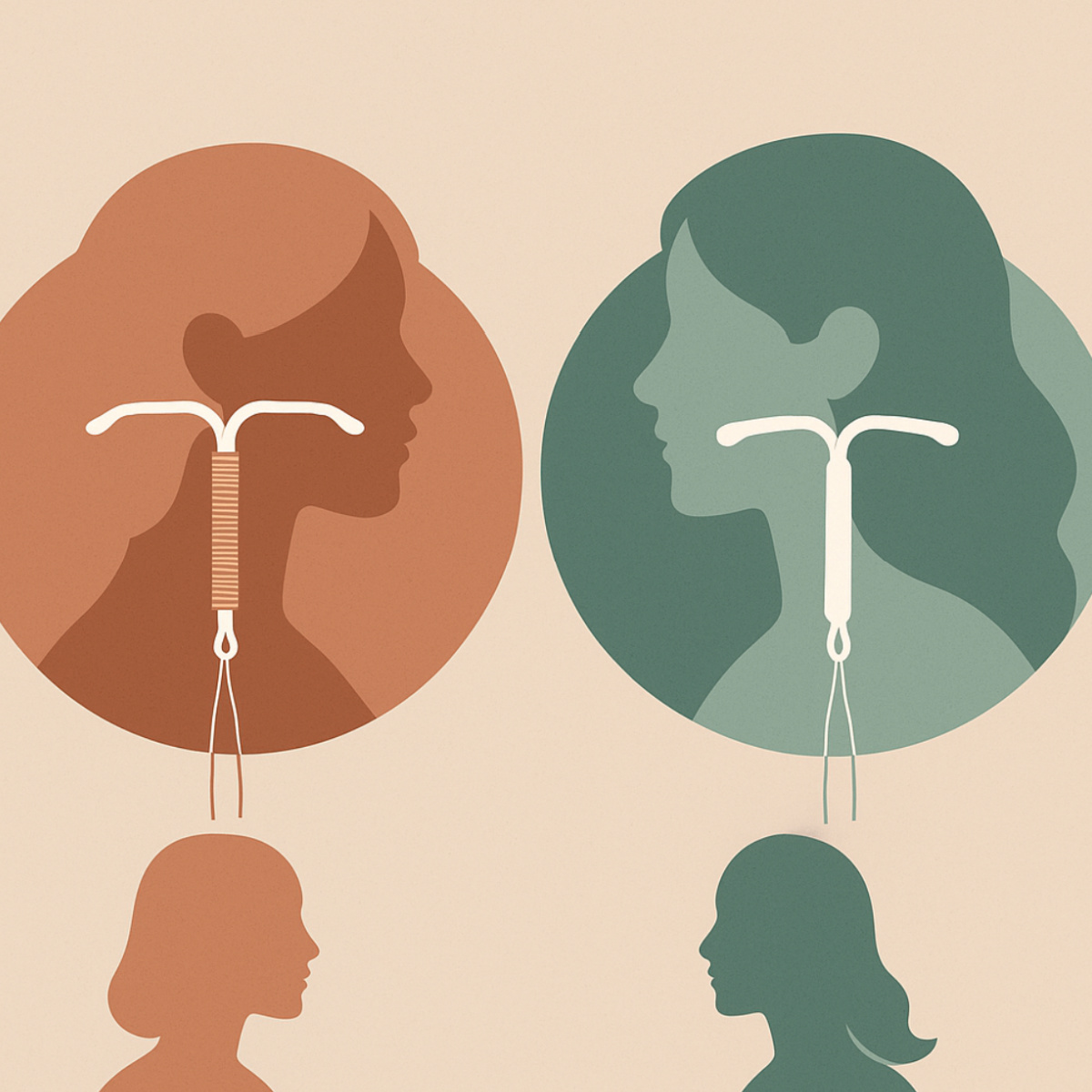
How Copper IUD Works
The copper IUD is often referred to as the “set-it-and-forget-it” method of birth control, but what makes it unique is that it’s completely hormone-free. Instead of altering your hormonal cycle, it relies on the natural properties of copper to prevent pregnancy.
The Mechanism: How Does It Work?
At its core, the copper IUD is a small, T-shaped plastic device wrapped in a fine copper wire. Once inserted into the uterus by a healthcare provider, the copper begins to work almost immediately:
- Copper ions are released into the uterine environment.
- These ions are toxic to sperm, impairing their motility and viability.
- This makes it virtually impossible for sperm to reach or fertilise an egg.
Because it doesn’t interfere with your hormones, the copper IUD allows your natural menstrual cycle to continue. For some, that’s a major advantage. For others, especially those prone to heavier periods, it may present challenges.
Key Attributes of the Copper IUD (e.g. Paragard)
| Feature | Description |
| Hormone-Free | Yes — relies on copper's natural spermicidal effect |
| Duration | Up to 10–12 years of protection |
| Onset of Action | Immediately effective after insertion |
| Ovulation | Unaffected — your body continues its natural hormonal cycle |
| Emergency Use | Can also be used as emergency contraception if inserted within 5 days |
The Hidden Benefit: No Hormonal Interference
One of the most under-discussed advantages of the copper IUD is its respect for hormonal autonomy. For women who are sensitive to hormonal fluctuations, those who experience mood swings, migraines, or skin flare-ups on other birth control, this can be a game-changer.
But it’s not without trade-offs. Increased menstrual cramping and heavier bleeding, especially in the first few months, are common. These side effects can fade with time, but for some, they persist.
So, while the copper IUD excels at being discreet, long-lasting, and hormone-free, it’s not necessarily a one-size-fits-all solution.
How Hormonal IUD Works (Hormonal IUD → mechanism → progestin release)
If the copper IUD is the minimalist, the hormonal IUD is the technician—harnessing a precise release of hormones to alter the body’s natural environment in ways that prevent pregnancy, often with additional health benefits.
Unlike its copper counterpart, the hormonal IUD releases a synthetic hormone called progestin (specifically levonorgestrel), which mimics the body’s natural progesterone. This is the same hormone used in many birth control pills, but in the IUD, it’s delivered locally, directly into the uterus, and in far smaller doses.
How It Works: A Multi-Layered Defence
The hormonal IUD prevents pregnancy through a combination of three mechanisms:
- Thickens cervical mucus: This forms a barrier that makes it difficult for sperm to enter the uterus.
- Suppresses endometrial lining growth: The uterus lining stays thin, making it less hospitable for implantation.
- Sometimes inhibits ovulation: In some women, progestin can stop the ovaries from releasing an egg, though this isn't the primary mechanism.
A Breakdown of Hormonal IUD Types
| Brand Name | Hormone Dose | Duration | Approved Uses Beyond Contraception |
| Mirena | 52 mg | Up to 8 years | Heavy menstrual bleeding, endometriosis |
| Kyleena | 19.5 mg | Up to 5 years | Contraception only |
| Jaydess | 13.5 mg | Up to 3 years | Often used for younger women or those who haven’t had children |
| Levosert | 52 mg | Up to 6 years | Often NHS prescribed alternative to Mirena |
Each brand differs slightly in hormone dose and duration, which can impact how your body responds, particularly in terms of side effects and how much bleeding you experience over time.
Hormonal IUD as a Lifestyle Tool
One often-overlooked benefit of the hormonal IUD is its role in menstrual management. Many users report lighter, shorter periods, or none at all. For women dealing with iron-deficiency anaemia or chronic period pain, this can be a transformative relief.
However, like any hormonal method, it’s not without potential drawbacks. The key difference? These effects tend to diminish over time, and because the hormone is released locally, not systemically, many find the hormonal IUD far more tolerable than oral contraceptives.
In short, the hormonal IUD offers precision: targeted hormone delivery, long-term cycle control, and therapeutic benefits. But it also demands that we respect individual variability, what feels like freedom for one woman might feel like interference for another.
🤖 Looking For An Answer?
Ask AI to summarise this post to see if the article answers your questions:
Key Differences in Duration, Cost, and Side Effects
Choosing between a copper and hormonal IUD isn’t just about the science, it’s about how these devices fit into real lives. From financial investment to how your body may respond, the practical differences between the two can be the deciding factor.
Here’s a breakdown of how the copper and hormonal IUDs compare across three critical dimensions: duration, cost, and side effects.
1. Duration: How Long Do They Last?
| Feature | Copper IUD (e.g. Paragard) | Hormonal IUD (e.g. Mirena, Kyleena) |
| Effective Duration | Up to 10–12 years | 3–8 years, depending on the brand |
| Immediate Protection | Yes | Yes (Mirena/Kyleena); some brands recommend 7 days |
| Fertility Return | Immediate after removal | Immediate after removal |
Summary:
The copper IUD lasts longer, potentially over a decade, making it appealing for those wanting a set-and-forget option. Hormonal IUDs require more frequent replacements but may be more adaptable for women with changing needs or cycles.
2. Cost: What’s the Investment?
| Cost Element | Copper IUD | Hormonal IUD |
| Upfront Cost | Typically $600–$1,200 (without insurance) | Typically $700–$1,500 (without insurance) |
| Insurance Coverage | Often fully or partially covered under most U.S. health insurance plans | Often fully or partially covered |
| Cost Over Time | Lower annual cost due to longer protection (up to 12 years) | Slightly higher per year due to shorter duration (3–8 years) |
Summary:
When insurance coverage is in place, out-of-pocket costs can be minimal for both options. Without coverage, the copper IUD may offer better long-term value, especially when used for its full 10–12 year lifespan. The hormonal IUD, while slightly more expensive and shorter-lasting, may still be worth the investment for those seeking menstrual symptom relief or hormone-regulated cycles.
3. Side Effects: What Might You Experience?
| Category | Copper IUD | Hormonal IUD |
| Bleeding Pattern | Often heavier periods, especially early on | Usually lighter periods or amenorrhea over time |
| Cramping | Can increase in the first few months | Often reduced over time |
| Hormonal Effects | None (no hormones involved) | Possible mood changes, skin issues, or breast tenderness (usually temporary) |
| Menstrual Relief | None | May relieve pain and heavy bleeding |
| Adaptation Period | Up to 6 months | Typically 3–6 months |
Summary:
If you're hormone-sensitive, the copper IUD gives your body space. If you're period-fatigued or dealing with conditions like endometriosis or menorrhagia, the hormonal IUD may offer real relief.
A Quick Comparison Chart
| Feature | Copper IUD | Hormonal IUD |
| Hormone-Free | ✅ Yes | ❌ No |
| Duration | 10–12 years | 3–8 years (brand dependent) |
| Period Changes | Heavier, crampier | Lighter, fewer, or no periods |
| Immediate Fertility Return | ✅ Yes | ✅ Yes |
| Hormonal Side Effects | ❌ None | ✅ Possible, usually mild |
| Non-Contraceptive Benefits | ❌ None | ✅ Treats bleeding & pain issues |
The Real Question: What Matters Most to You?
There’s no objectively “better” option, just better aligned choices for your needs.
Which Option Fits Your Needs
Choosing between a copper and hormonal IUD isn’t about finding the “best” one, it’s about aligning your priorities, body, and lifestyle with the device that best supports your well-being.
To make that decision clearer, let’s explore some real-world considerations that often shape the choice, and match them to the IUD option that might make the most sense.
1. “I want reliable birth control without touching my hormones.”
✅ Copper IUD
- Ideal for individuals sensitive to synthetic hormones or those who prefer a more natural approach.
- Preserves the body’s natural hormonal rhythm.
- Suits those with regular, manageable periods pre-insertion.
2. “I’m struggling with heavy or painful periods and want relief.”
✅ Hormonal IUD (e.g. Mirena)
- Reduces menstrual bleeding—some users stop bleeding altogether.
- Offers therapeutic benefits for conditions like endometriosis, fibroids, and anaemia.
- Often chosen by women in perimenopause to manage cycle irregularities.
3. “I want something long-term and low-maintenance.”
✅ Both, But Copper IUD Lasts Longer
- Copper IUD offers up to 12 years of protection with no hormonal shifts.
- Hormonal IUDs last 3 to 8 years, depending on brand, and may need earlier replacement.
- Both are effective within minutes of insertion (depending on brand), and both allow quick return to fertility.
4. “I’ve never had children, can I still get an IUD?”
✅ Yes, But Hormonal IUDs May Be More Comfortable
- Devices like Jaydess and Kyleena are specifically designed for smaller uteruses and nulliparous women (those who haven’t given birth).
- Copper IUDs are still an option but may feel less comfortable during insertion for some.
- A skilled provider makes all the difference here, always ask about experience with first-time IUD users.
Personal Priorities Matter Most
Rather than thinking of IUDs as interchangeable, it helps to think of them as tools with different strengths.
Use this mindset:
| Priority | Best Fit |
| Hormone-free contraception | Copper IUD |
| Relief from heavy bleeding | Hormonal IUD |
| Longest possible duration | Copper IUD |
| Lighter/no periods | Hormonal IUD |
| Lower risk of hormonal side effects | Copper IUD |
| Smaller device / first-time use | Hormonal IUD (Jaydess/Kyleena) |
Final Thoughts: You Don’t Have to Decide Alone
Too often, women are handed a recommendation without a meaningful conversation. But contraception is not just a clinical choice, it’s a personal, lived experience.
Ask yourself:
- How do I feel about my natural cycle, do I want to keep it or manage it?
- Have I had negative reactions to hormonal birth control before?
- Do I value a longer-lasting device, or am I okay replacing it in a few years?
- Would lighter periods significantly improve my quality of life?
And most importantly, do I feel heard by my provider?
Think Like a Curator, Not Just a Consumer
The best contraceptive choice isn’t about trends or convenience. It’s about curating your health strategy with intention. Your body is not a passive recipient of healthcare; it’s an active participant. So take your time. Ask questions. Trust your experience.
There’s power in knowing your options, and even more in choosing the one that fits your life, not just your uterus.





Leave a Reply